Key Takeaways
- Intraday trading = all positions opened and closed within the same trading day
- Over 90% of intraday traders lose money — discipline and strategy are non-negotiable
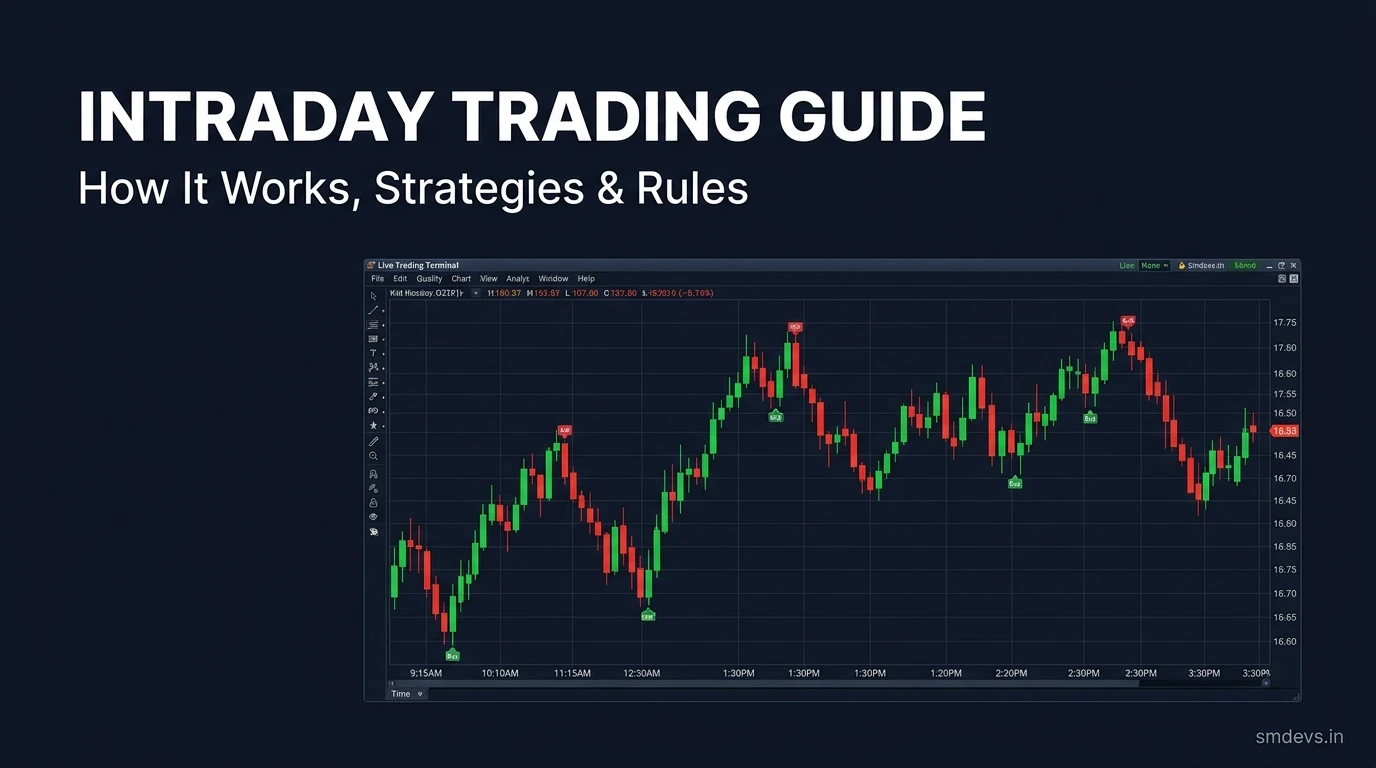
- Best intraday windows: 9:15–11:15 AM and 2:00–3:20 PM
- Always use a stop loss — never average down in intraday
- Intraday profits taxed as speculative business income in India (not capital gains)
Intraday trading — also called day trading — is the practice of buying and selling financial instruments within the same trading day, so that all positions are closed before the market closes. Unlike investing or swing trading, intraday traders do not hold positions overnight. Every trade opened during the session must be squared off (closed) by the end of the day, typically by 3:20 PM for Indian equity markets.
In India, intraday trading happens primarily on the NSE (National Stock Exchange) and BSE (Bombay Stock Exchange), with trading hours from 9:15 AM to 3:30 PM IST on weekdays (Monday to Friday). The appeal is clear: the possibility of making profits from short-term price movements without the risk of overnight gaps or news-driven moves. The reality, however, is more nuanced — and understanding it properly is what separates the profitable minority from the losing majority.
How Intraday Trading Works
When you place an intraday order, you tag it as "Intraday" or "MIS" (Margin Intraday Square-off) in your trading platform. This tells your broker that you intend to close the position on the same day. If you forget to square off, most brokers will automatically close your positions at a specified time (typically 3:20 PM) to prevent overnight exposure.
The mechanics of an intraday trade:
- Market Open (9:15 AM): You identify a stock showing a setup — perhaps a breakout above yesterday's high, or a gap-up with momentum continuation signals.
- Entry: You place a buy (long) or sell short order at your planned entry price. With intraday margin, you can trade with more quantity than your cash balance allows (leverage varies by broker, typically 3–5× for equity intraday).
- Stop Loss: You immediately place a stop-loss order below your entry (for longs) or above (for shorts) to limit your downside.
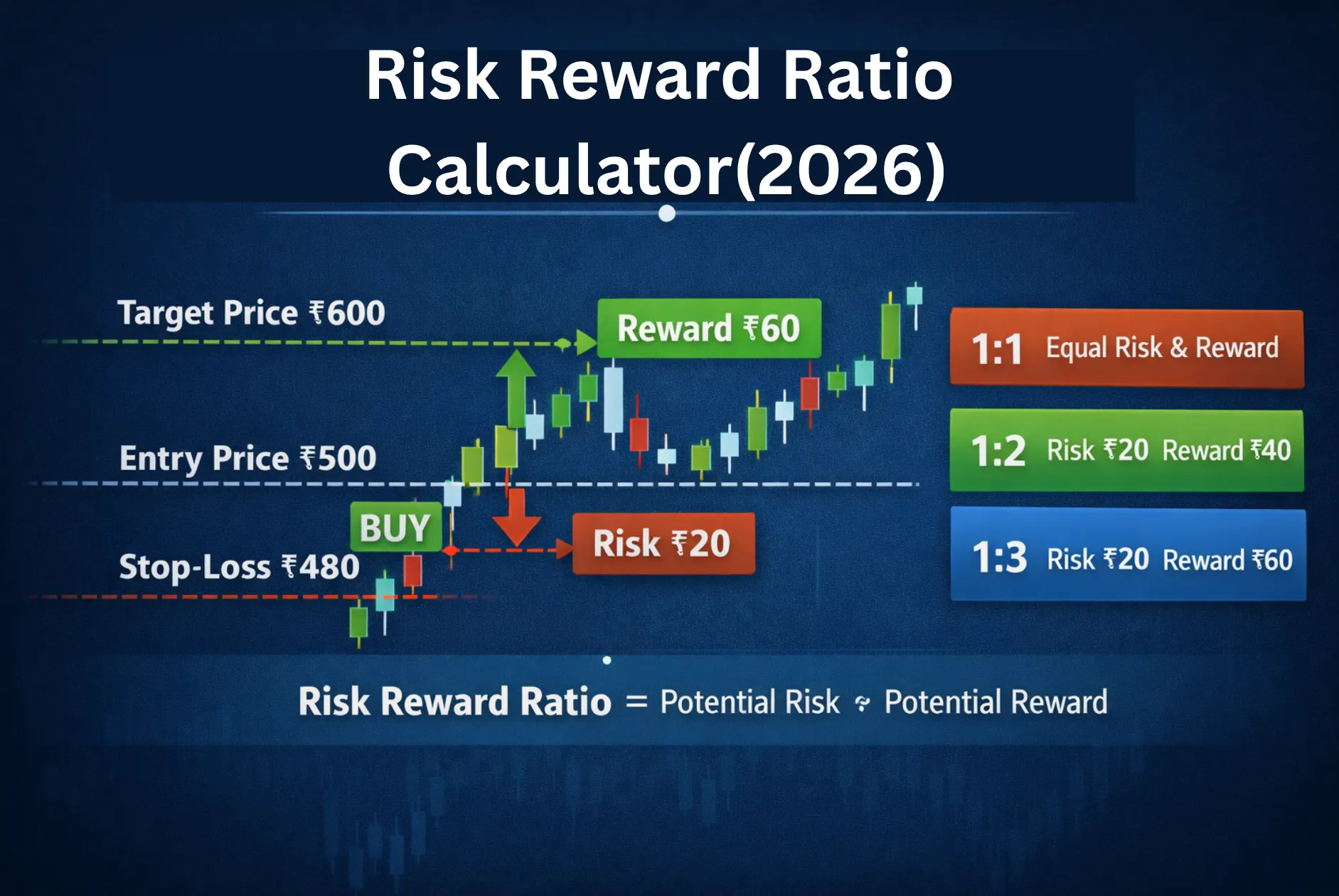
- Target: You set a price target based on your reward-to-risk ratio. Most professional intraday traders require at least 2:1 RR on every trade.
- Exit: You exit when price hits your target, hits your stop loss, or by 3:20 PM — whichever comes first.
Key Takeaways
- Over 90% of intraday traders lose money. This is not a myth — multiple SEBI studies have confirmed this. Understanding why the majority loses is the first step to being in the minority that doesn't.
- Capital preservation is the primary job of an intraday trader. Never risk more than 1–2% of your trading capital on any single intraday trade.
- Successful intraday trading requires a written, backtested strategy. Trading on gut feel, tips, or news is gambling, not trading.
- Leverage amplifies both gains and losses. The same 5× leverage that can double your money in a week can wipe your account in a day if misused.
- The best intraday traders make fewer, higher-quality trades. Overtrading (FOMO trading, revenge trading) is the most common reason profitable strategies produce losses in practice.
Types of Intraday Trading Strategies
1. Breakout Trading
The most popular intraday strategy. A breakout occurs when price moves decisively above a resistance level or below a support level with strong volume. The theory: when price breaks out of a range or a key level, it often continues in the direction of the breakout as stop losses trigger and new participants enter.
How to trade breakouts:
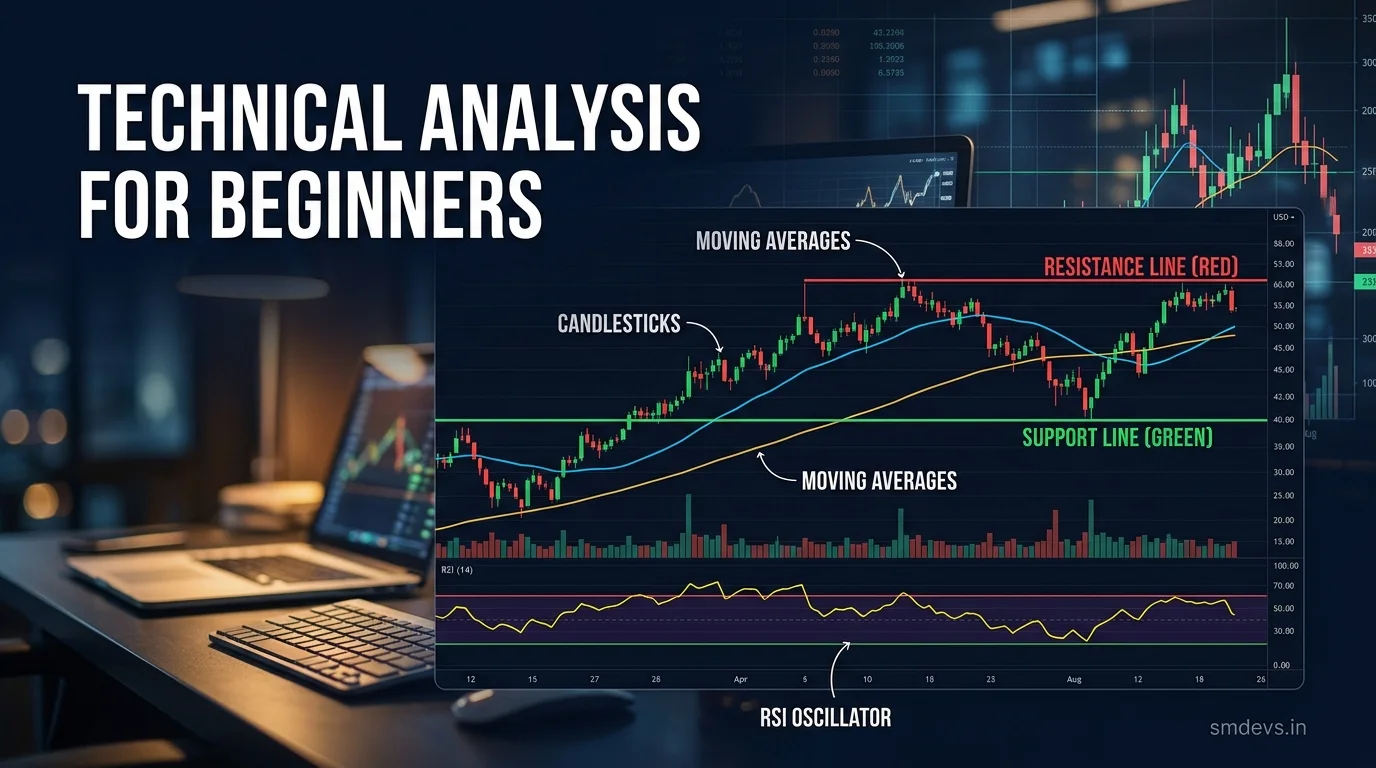
- Identify the key level (yesterday's high, a consolidation range, a VWAP level, an opening range high/low)
- Wait for price to close above/below the level on a 5-minute or 15-minute candle with higher-than-average volume
- Enter on the candle after the breakout candle (not during — breakout candles can be traps)
- Stop loss below the breakout candle's low (for bullish breakout)
- Target: the next key resistance level, or 2× the stop loss distance
2. Opening Range Breakout (ORB)
A specific breakout strategy that uses the first 15 or 30 minutes of trading as the reference range. The high and low established during the first 15 minutes (9:15–9:30 AM) define the "opening range." A breakout above the OR high is a bullish signal; a breakdown below the OR low is bearish.
The ORB is one of the highest-probability intraday setups because the first 15–30 minutes typically establish the day's initial sentiment — and breakouts from this range tend to continue in the direction of the breakout through the first half of the session.
3. VWAP Trading
VWAP (Volume Weighted Average Price) is the average price at which a stock has traded throughout the day, weighted by volume. It serves as the key intraday fair value reference. Institutional buyers and sellers execute around VWAP, making it a powerful support and resistance level.
VWAP trading rules:
- Price above VWAP = bullish intraday bias; look for long setups on pullbacks to VWAP
- Price below VWAP = bearish intraday bias; look for short setups on rallies to VWAP
- Strong breakouts above VWAP with volume often continue; weak tests of VWAP with low volume often fail
4. Momentum Trading
Momentum trading capitalizes on stocks making unusually large moves on high volume — typically triggered by news, earnings, or significant sector developments. The strategy is to identify the momentum early, enter in the direction of the move, and exit before the momentum exhausts.
Tools for identifying momentum: volume scanners, pre-market movers lists, news feeds, and market breadth indicators.
Risk: Momentum moves can reverse violently. Strict stop losses and quick profit-taking are essential. Never chase momentum after the initial move — enter on the first pullback to VWAP or a key moving average.
5. Scalping
Scalping involves making many small trades throughout the day, each targeting a very small price move (a few points or ticks). Scalpers may make 20–50 trades per day, each held for seconds to minutes. The goal is to accumulate small, consistent profits that add up to a meaningful daily return.
Scalping requires: lightning-fast execution (direct market access or very fast platforms), extremely tight risk management, deep knowledge of Level 2 order flow, and the psychological discipline to cut losses instantly without hesitation. It is not recommended for beginners.
Intraday Trading Rules Every Trader Must Follow
- Always use a stop loss. In intraday trading, the market can move against you within seconds. A stock that is down 5% can be down 10% before you react. A hard stop loss order is non-negotiable.
- Square off all positions before 3:20 PM. Holding intraday positions into the close turns an intraday trade into a delivery position — with different margin requirements and overnight exposure to news. Most brokers auto-square after 3:20 PM, but at unfavourable prices. Close your own positions first.
- Trade only in the first 1–2 hours and the last 1 hour. Market liquidity and volatility are highest in the first 1–2 hours (9:15–11:15 AM) and the last 1 hour (2:30–3:30 PM). Mid-session (11:30 AM–2:00 PM) is typically slow, choppy, and generates more false signals than actionable setups.
- Never average down in intraday. Averaging down (buying more as the price falls) is a capital-preservation disaster in intraday trading. Your stop loss exists precisely to prevent this. If your stop is hit, take the loss and move on.
- Set a daily maximum loss limit. If you lose more than 3% of your account in a single session, stop trading for the day. Bad days happen. Protect yourself from turning a bad day into a catastrophic week.
- Do not overtrade. Most successful intraday traders take 2–5 trades per day. Every additional trade beyond your high-quality setups increases exposure without proportionally increasing your edge.
Intraday Trading vs. Delivery Trading vs. Swing Trading
| Factor | Intraday | Delivery | Swing |
|---|---|---|---|
| Hold time | Minutes to hours | Months to years | Days to weeks |
| Margin available | 3–5× in India | No margin (full capital required) | Limited (varies by broker) |
| Overnight risk | None | Full | Full |
| Capital required | Lower (due to leverage) | Full position value | Moderate |
| Time commitment | Full-time during market hours | Minimal (review monthly/quarterly) | 30–60 minutes daily |
| Skill level required | High | Medium | Medium-High |
| Tax treatment (India) | Speculative business income | LTCG/STCG | STCG |
Tax on Intraday Trading in India
In India, intraday trading profits are classified as speculative business income — not capital gains. This has important tax implications:
- Intraday profits are added to your total income and taxed at your applicable income tax slab rate (up to 30% for the highest slab).
- Speculative losses can only be set off against speculative income, not against other sources of income.
- Speculative losses can be carried forward for up to 4 years (vs. 8 years for non-speculative business losses).
- If your trading turnover exceeds ₹1 crore in a year, a tax audit is mandatory.
- STT (Securities Transaction Tax) is paid on every intraday transaction — 0.025% on the sell side for equity intraday.
Always consult a chartered accountant for personalized tax advice on your trading activity.
Best Stocks for Intraday Trading in India
Not all stocks are suitable for intraday trading. The best intraday stocks have:
- High liquidity: High average daily volume ensures you can enter and exit positions quickly at tight bid-ask spreads. Focus on Nifty 50 and Nifty Next 50 stocks.
- High volatility: Sufficient intraday price movement to generate meaningful profits after transaction costs. Look for stocks with average daily ranges of at least 1–2%.
- Strong correlation with index: Stocks that move predictably with Nifty or Bank Nifty are easier to directionally trade.
- News or catalyst: Stocks with a specific reason to move on that day (earnings, F&O expiry, sector news) offer cleaner directional trades.
Common intraday trading vehicles in India include large-cap stocks (Reliance, HDFC Bank, Infosys, TCS), Nifty 50 futures, Bank Nifty futures, and liquid F&O contracts.
Frequently Asked Questions
How much capital do I need to start intraday trading in India?
There is no official minimum capital requirement for intraday trading in India. However, with most brokers offering 3–5× intraday leverage on equity, you can trade stocks worth ₹15,000–25,000 with ₹5,000 in your account. Practically speaking, starting with less than ₹25,000–50,000 makes risk management very difficult — position sizes become too small to be meaningful after transaction costs, and a few losses can wipe the account. Most professional intraday traders recommend starting with at least ₹1–2 lakh to allow proper position sizing while risking only 1–2% per trade.
Is intraday trading profitable?
For a small percentage of disciplined, skilled traders, yes. SEBI data consistently shows that over 70–80% of individual intraday traders lose money in any given year, and only about 1–5% are consistently profitable over multiple years. The key differentiators of profitable intraday traders are: a clearly defined, backtested strategy; strict risk management (never more than 1–2% risk per trade); a trading journal that tracks performance systematically; and the psychological discipline to follow rules under pressure. Profitability in intraday trading is achievable, but it requires treating it as a serious skill — not a quick-money scheme.
What is the best time for intraday trading in India?
The best intraday trading windows in India are: 9:15 AM – 11:15 AM (first two hours — highest volume, strongest momentum, clearest trend direction) and 2:00 PM – 3:20 PM (last 90 minutes — institutional rebalancing, options expiry activity, and closing range setups). The mid-session period (11:30 AM – 1:30 PM) is typically choppy and low-volatility — experienced traders often avoid initiating new positions during this window.
What indicators are best for intraday trading?
The most widely used intraday indicators are: VWAP (intraday fair value and institutional reference), 9 EMA and 20 EMA (trend direction and dynamic support/resistance), RSI-14 (overbought/oversold and divergence), and MACD (momentum confirmation). Volume indicators (OBV, volume bars) are essential for validating breakouts. Most professional intraday traders use 2–3 indicators maximum — too many indicators create conflicting signals and decision paralysis.
Can I do intraday trading without a demat account?
For equity intraday trading in India, you need a trading account (with a broker) and a demat account (to hold shares if you accidentally don't square off). For futures and options intraday trading, a demat account is required but shares are not delivered — F&O are settled in cash. You cannot do equity intraday trading legally in India without both a trading and demat account with a SEBI-registered broker.
Your Next Step
Before you place your first intraday trade, master the 5 Golden Rules of Trading Risk Management and the Position Sizing Formula. For the technical analysis skills that identify intraday setups, study the Candlestick Patterns guide and the RSI Indicator guide.