Key Takeaways
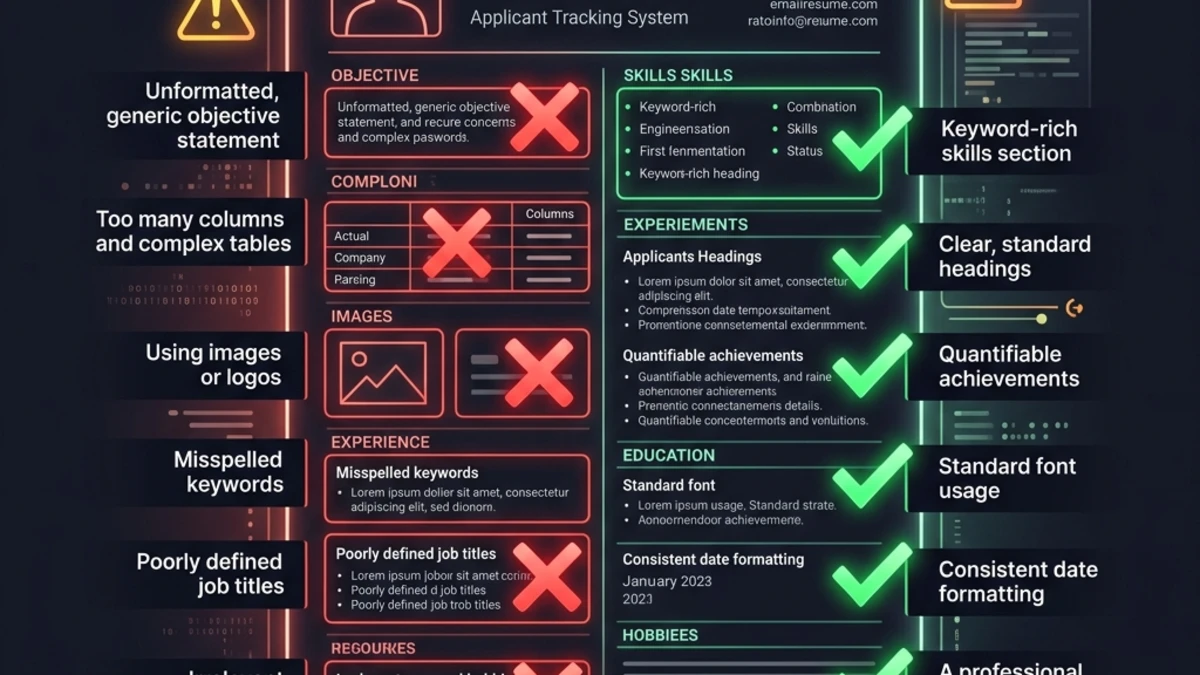
- Using tables, columns, or design templates is the #1 ATS formatting mistake — always use single-column layouts.
- Missing a professional summary costs you valuable keyword real estate and first-impression impact.
- Generic resumes without JD-specific keywords score poorly — always tailor for each application.
- Action-only bullet points without metrics ("managed a team") score far lower than quantified achievements.
- Run your resume through our free ATS checker before every application to catch these issues automatically.
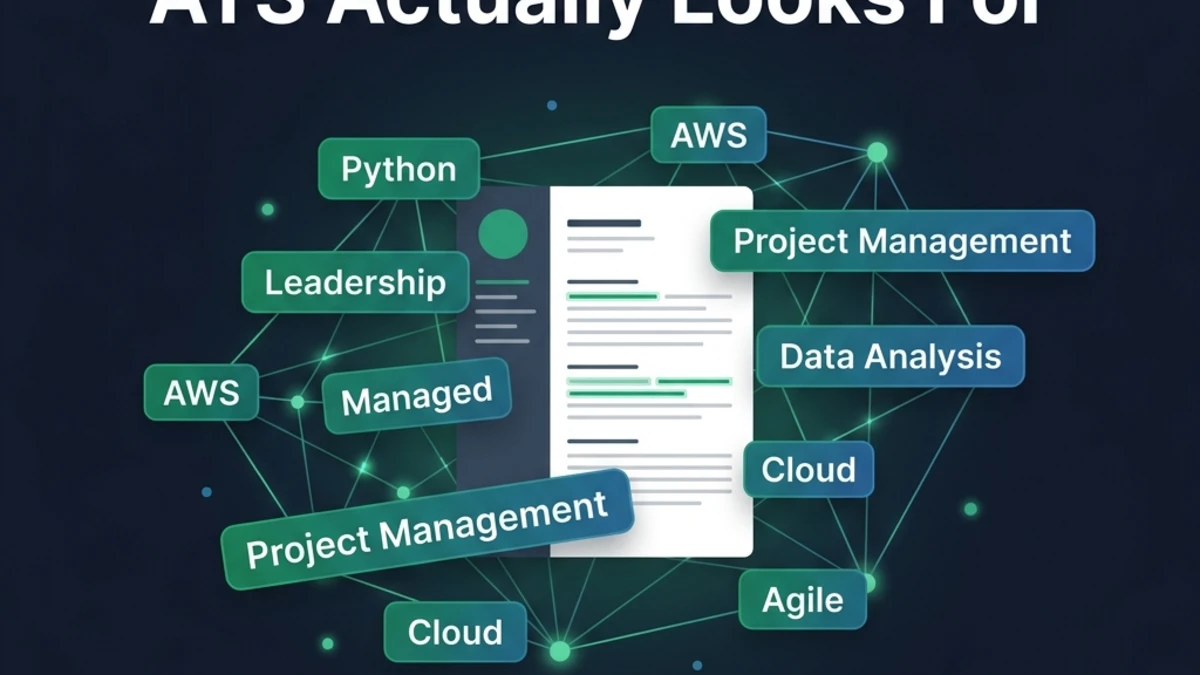
Your resume might look polished and professional — but if it's making any of these 10 mistakes, an ATS system is silently rejecting it before any human eyes see it. In fact, studies show that 75% of resumes are filtered out by ATS before reaching a recruiter, and the vast majority of rejections come from the same recurring mistakes.
Let's break down every mistake, why it matters, and exactly how to fix it. You can then verify your fixes with our free Resume Analyzer & ATS Optimizer.
Mistake #1: Using a Multi-Column or Design-Heavy Template
Why it fails: ATS systems read resumes linearly — left to right, top to bottom. Two-column layouts cause the parser to read across both columns simultaneously, creating garbled, out-of-order text. A section that says "Led a team of 12 engineers" in column 1 and "Python | JavaScript | AWS" in column 2 gets read as "Led a Python team | JavaScript of 12 | AWS engineers" — making your resume meaningless.
The fix: Switch to a clean, single-column layout. Use Google Docs or Word with a simple template. Avoid Canva, Enhancv, or Novoresume templates for ATS submissions — save those for networking or portfolio PDF links.
Mistake #2: No Professional Summary
Why it fails: Recruiters and ATS systems both expect a summary. ATS uses it as a keyword-rich zone, while recruiters use it for a quick first impression. Missing it means:
- Lower keyword match score (fewer places to include key terms)
- No hook for the human recruiter who reviews ATS-passed resumes
- No context for parsing the rest of your experience
The fix: Write a 3–5 sentence professional summary that includes your role title, years of experience, 2–3 core skills, and one key achievement. Place it immediately after your contact information. Check your summary strength with our section heatmap analyzer.
Mistake #3: Missing LinkedIn URL
Why it fails: In 2026, a missing LinkedIn URL is an instant credibility gap. Recruiters verify virtually every candidate on LinkedIn. More importantly, many ATS systems are now integrated with LinkedIn — a resume that includes a LinkedIn URL can trigger profile enrichment that adds data to your candidate record.
The fix: Add your LinkedIn URL in the contact section: linkedin.com/in/yourname. Customize your LinkedIn URL in settings to remove the random numbers. Make sure your LinkedIn profile is complete and matches your resume.
Mistake #4: Using Tables or Text Boxes
Why it fails: Tables and text boxes are common in templates downloaded from the internet. ATS parsers often completely skip content inside text boxes — meaning your skills, experience, or education may be invisible to the system.
The fix: Check your Word document by going to Edit > Find > Advanced Find and look for any text boxes. Better yet, paste your resume text into our analyzer to verify the text is being properly extracted.
Mistake #5: Submitting an Image-Based or Scanned PDF
Why it fails: If your resume was scanned, photographed, or created as an image, ATS systems literally cannot read it — they see a blank file with a picture. No text = no keywords = instant rejection.
The fix: Export your resume from Word or Google Docs as a PDF (not printed/scanned). Open the PDF in any reader and try to select/copy the text — if you can, the ATS can read it. If you can't highlight text, you have an image PDF.
Mistake #6: Using Non-Standard Section Headings
Why it fails: ATS systems are trained to find sections with standard names. When you get creative — "My Professional Journey," "What I Bring to the Table," "Skills & Superpowers" — the parser fails to categorize your information. Your work history may not register as "experience," and your certifications may not be found at all.
The fix: Use these exact standard headings:
- Professional Summary (or Summary, Profile)
- Work Experience (or Experience, Professional Experience)
- Education
- Skills (or Technical Skills, Core Competencies)
- Certifications
- Projects
Mistake #7: Zero Measurable Achievements
Why it fails: Action verbs without outcomes are one of the most common resume weaknesses. "Managed SEO campaigns," "Developed software features," "Led team meetings" — these statements tell ATS and recruiters nothing about your impact. Modern ATS systems scan specifically for quantifiable achievement patterns (numbers, percentages, dollar amounts).
The fix: Add a metric to every achievement bullet point where possible:
- ❌ "Managed the company's social media presence"
- ✅ "Grew Instagram following from 2,400 to 47,000 followers in 12 months, driving 23% of total website traffic"
Our Achievement Detector automatically highlights weak statements and shows you exactly which bullets need metrics.
Mistake #8: Generic Resume — Not Tailored to the JD
Why it fails: Sending the same resume to every job is the fastest way to maintain a 0% callback rate. ATS systems calculate keyword match scores specifically against the job description. A generic resume often scores 20–40% on JD match — far below the typical 60–70% threshold to pass automated screening.
The fix: For every application, paste the job description into our JD Match engine. It shows you exactly which keywords are in the JD but missing from your resume, so you can make targeted additions in 10 minutes.
Mistake #9: Burying Important Information Too Low
Why it fails: Many ATS systems give progressively less weight to content further down the document. If your most relevant skills are buried at the bottom of a 3-page resume below a 2012 internship, they may not significantly impact your score.
The fix: Front-load your resume. Put your Professional Summary, Skills section, and most recent/relevant experience at the top. Older, less relevant roles should be short (2–3 bullets max) or omitted entirely. Aim for 1–2 pages maximum.
Mistake #10: Incorrect or Inconsistent Contact Information
Why it fails: This one's obvious in theory but shockingly common: typos in email addresses, outdated phone numbers, or LinkedIn URLs that lead to 404 pages. If a recruiter wants to reach you after your resume passes ATS, a broken contact means a lost opportunity.
The fix: Triple-check every contact detail before submitting any application. Include: full name, professional email, phone number with country code (if applying internationally), city/state (full address not required), and LinkedIn URL.
The Complete ATS Resume Audit Checklist
- ☐ Single-column layout with no tables, text boxes, or columns
- ☐ Professional Summary present (3–5 sentences, keyword-rich)
- ☐ LinkedIn URL in contact section
- ☐ Standard section headings used throughout
- ☐ Submitted as text-based PDF or .docx (not image or scanned)
- ☐ At least 2–3 quantified achievements with numbers/percentages
- ☐ Resume tailored to the specific JD (keywords matched)
- ☐ Most important content in top half of page 1
- ☐ Contact information verified and correct
- ☐ ATS score checked with free Resume Analyzer before submitting
Frequently Asked Questions
How do I know if my resume is being rejected by ATS vs. a human recruiter?
It's difficult to know for certain, but high volume applications with zero responses (especially to companies you're clearly qualified for) often indicate ATS filtering. Low ATS scores on our free analyzer are a reliable indicator. If your score is below 65, ATS rejection is the likely culprit.
Can I use color on my ATS resume?
A small amount of color is generally fine — for example, dark blue or dark green headings. However, avoid color for body text, use high contrast, and never put critical information in colored text that might not parse correctly. When in doubt, black text on white background is always safe.
How long should my resume be for ATS optimization?
1–2 pages is optimal. ATS systems can technically process any length, but longer resumes tend to have lower information density and make it harder for recruiters to quickly find key information after ATS passes it. For experienced professionals (10+ years), 2 pages is acceptable. For others, 1 page is strongly preferred.
Should I include references on my resume?
"References available upon request" adds nothing and wastes valuable resume real estate. ATS systems don't scan references, and recruiters always know they can ask for them. Use that space for an additional achievement bullet or certification instead.
Fix Your Resume Today — For Free
You now know the 10 most common ATS-killing resume mistakes. The next step is to check which of these apply to your actual resume. Our free tool analyzes all of these factors in seconds:
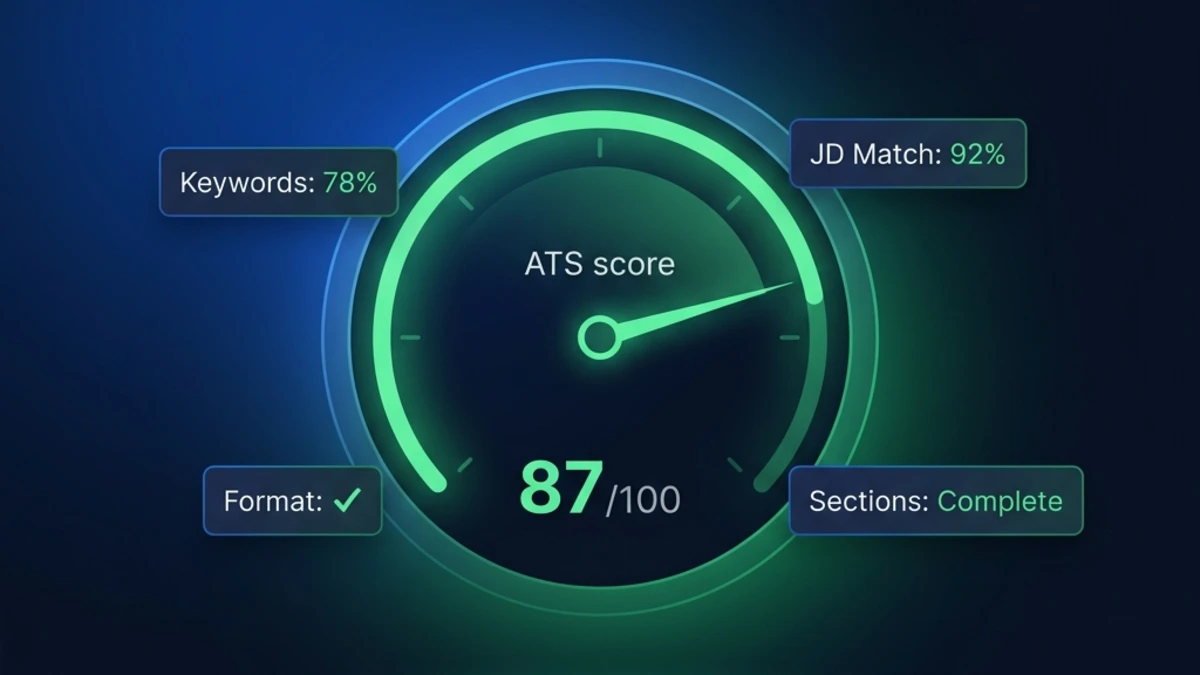
- ✅ ATS Score (out of 100)
- ✅ Section Heatmap (Strong / Needs Improvement / Weak)
- ✅ Achievement Detector (flags weak, metric-free bullets)
- ✅ Keyword Coverage Analysis
- ✅ JD Match Score (when you paste a job description)
- ✅ Priority Improvement Roadmap
No signup required. No data stored. 100% private — your resume is analyzed in your browser and never sent to our servers.