Key Takeaways
- Over 75% of resumes are rejected by ATS before a human reads them — formatting and keyword issues are the #1 cause.
- ATS systems rank resumes by keyword match, section completeness, and formatting compatibility — not by creativity.
- Use a clean single-column layout, standard section headings, and no tables, images, or text boxes.
- Mirror the exact language from the job description in your skills and experience sections.
- Use our free Resume Analyzer & ATS Optimizer at smdevs.in to check your ATS score before applying.
You spent hours crafting your resume. You tailored it for the role. You triple-checked for typos. And then... silence. No callback. No email. Nothing.
Here's what likely happened: your resume never reached a human recruiter. It was filtered out by an Applicant Tracking System (ATS) — the automated software that screens over 75% of job applications before a hiring manager sees them.
In this comprehensive guide, we'll break down exactly how ATS systems work, what causes resumes to fail, and give you a battle-tested strategy to beat ATS in 2026. Plus, you can check your own resume's ATS score instantly with our free Resume Analyzer & ATS Optimizer.
What Is an ATS and Why Does It Reject Your Resume?
An Applicant Tracking System is software used by employers to collect, parse, rank, and filter job applications. When you apply online, your resume doesn't go directly to a recruiter — it goes into the ATS first.
The ATS scans your resume for:
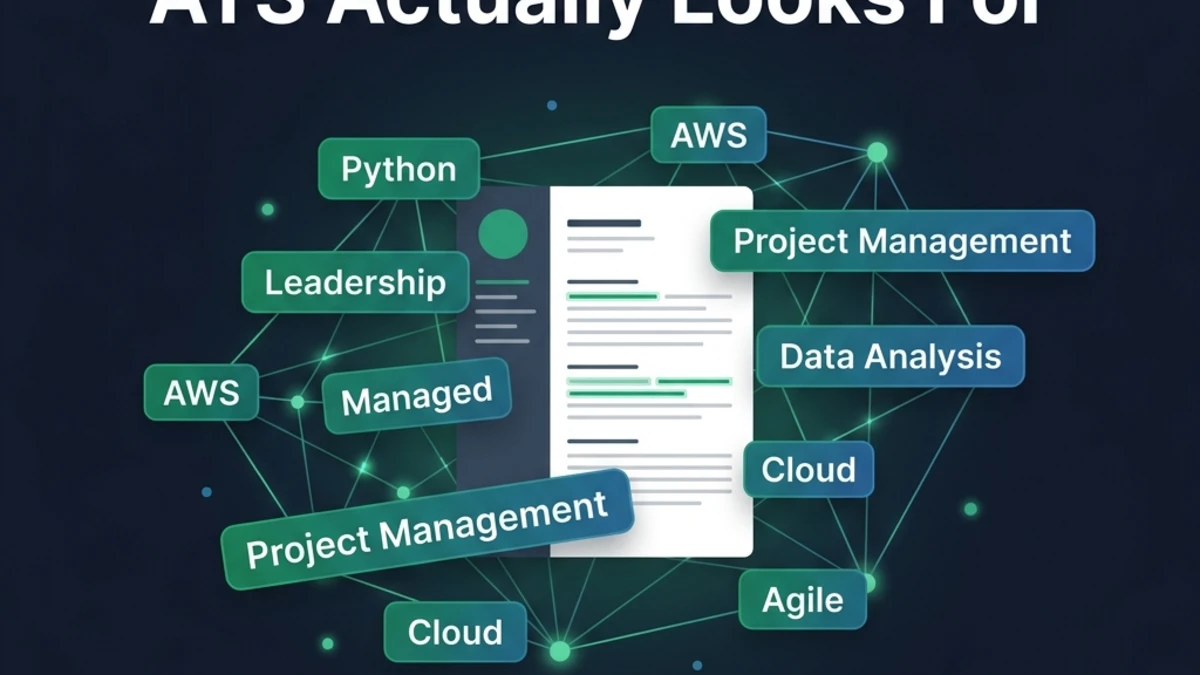
- Keyword match — Does your resume contain the skills and terms from the job description?
- Section structure — Can the ATS identify your contact info, experience, education, and skills sections?
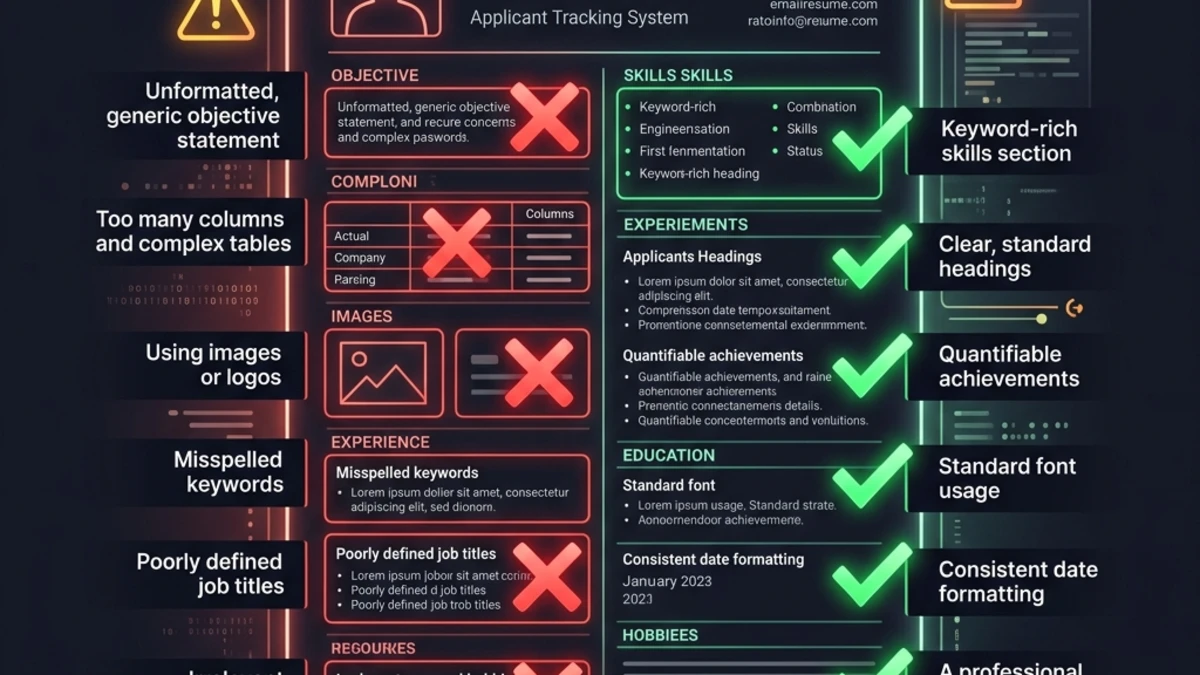
- Formatting compatibility — Is your resume in a format the ATS can parse (clean text, not tables or columns)?
- Experience relevance — Do your job titles and dates align with the requirements?
Resumes that don't score above a certain threshold are automatically rejected — often without any human review. This is why a resume that looks great visually can still fail ATS.
The Top 7 Reasons ATS Rejects Resumes
1. Wrong File Format
Always submit as a .docx or clean PDF. Avoid image-based PDFs (scanned documents), which ATS systems cannot parse. If in doubt, paste your resume text into our ATS checker to verify parsability.
2. Complex Formatting
Two-column layouts, tables, text boxes, headers/footers, and graphics confuse ATS parsers. The ATS reads your resume linearly — left to right, top to bottom. Fancy formatting breaks this reading order and causes critical information to be misread or skipped entirely.
3. Missing Keywords
This is the #1 killer. ATS systems are programmed to search for specific keywords from the job description. If your resume doesn't contain them — even if you have the skill — the system may disqualify you. Use our keyword analysis tool to identify gaps.
4. Non-Standard Section Headings
ATS systems look for standard section names: "Experience," "Education," "Skills," "Certifications." Using creative alternatives like "My Journey," "What I Bring," or "Expertise Center" will cause the ATS to fail to categorize your information correctly.
5. No Professional Summary
Many ATS systems give bonus weight to resumes with professional summaries that contain the target role's keywords. A missing or thin summary is a significant missed opportunity.
6. Inconsistent Date Formatting
ATS systems parse date ranges to calculate experience. Inconsistent formats (mixing "2020–2022" with "Jan 2023 to present") can cause parsing errors. Use a consistent format throughout.
7. Job Title Mismatch
If the job description says "Software Engineer" but your resume only says "Developer" or "Coder," the ATS may not recognize the match. Mirror exact job title language from the job description where it's an accurate representation of your role.
The ATS-Proof Resume Format: Step by Step
Step 1: Use a Single-Column, Clean Layout
Single-column Word documents or text-based PDFs are the safest bet. Avoid columns, sidebars, and design-heavy templates from sites like Canva — they look beautiful but are ATS disasters.
Step 2: Structure Your Sections in Order
Use this exact section order for maximum ATS compatibility:
- Contact Information (Name, Email, Phone, LinkedIn URL, Location)
- Professional Summary (3–5 sentences, keyword-rich)
- Skills (technical and soft skills, 8–15 keywords)
- Work Experience (reverse chronological, with dates)
- Education
- Certifications (optional but valuable)
- Projects (optional but recommended for tech roles)
Step 3: Mine the Job Description for Keywords
Read the job description carefully and extract:
- Required technical skills and tools
- Exact job title and seniority language
- Industry-specific terms and certifications
- Soft skills explicitly mentioned
Weave these keywords naturally into your professional summary, skills section, and experience bullets. Our JD Match engine does this automatically when you paste the job description.
Step 4: Use Action Verbs + Metrics
ATS systems score higher on resumes with quantifiable achievements. Instead of:
- ❌ "Responsible for managing the marketing team"
- ✅ "Led a 6-person marketing team, increasing organic traffic by 145% in 8 months"
Numbers and percentages signal concrete impact — something both ATS and recruiters reward heavily.
Step 5: Test Your Resume Before Applying
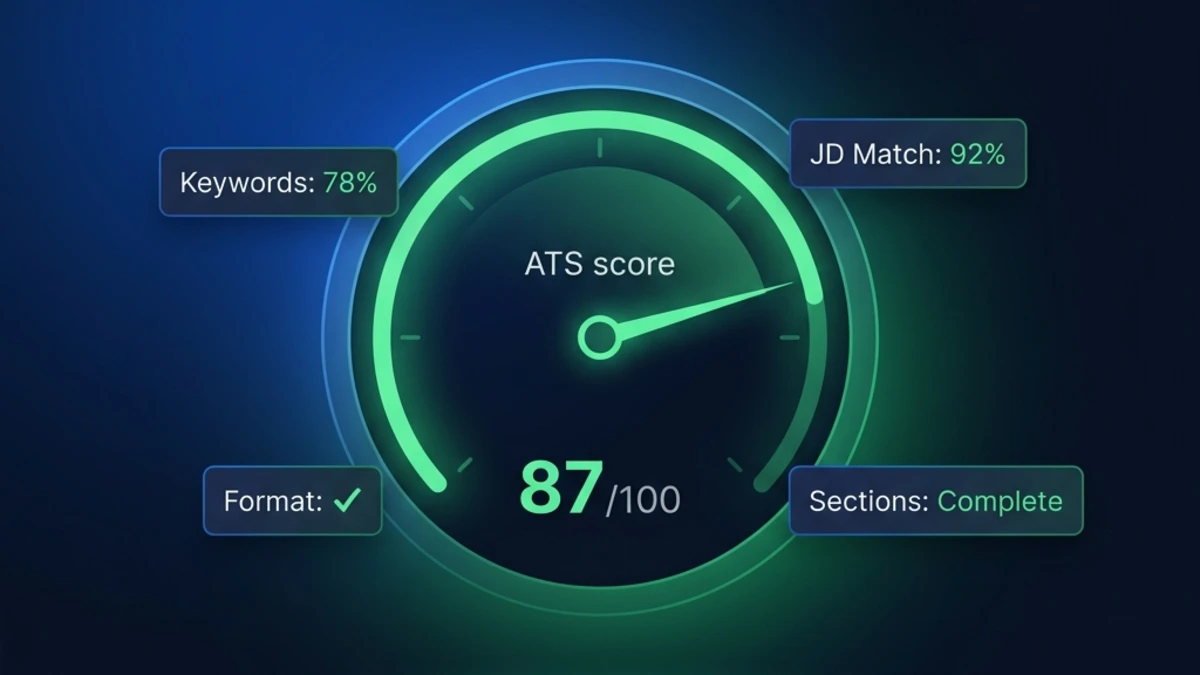
Before submitting any application, run your resume through our free ATS Resume Analyzer. You'll get:
- An ATS compatibility score
- Section-by-section heatmap
- Keyword gap analysis
- JD match score (if you paste the job description)
- Priority improvement roadmap
ATS Systems Used by Top Companies
Different companies use different ATS software, each with slightly different parsing capabilities:
- Workday — Used by Fortune 500 companies; strict keyword matching
- Taleo (Oracle) — Common in enterprise companies; prefers clean, plain-text resumes
- Greenhouse — Popular at tech startups; more flexible with formatting
- iCIMS — Common in healthcare and government; section headers are critical
- Lever — Used by fast-growing tech companies; good with PDF parsing
While each has nuances, the same core principles apply across all: clean formatting, keyword match, and complete sections.
ATS Score Benchmarks: What to Target
| ATS Score | Likelihood of Passing | Action Needed |
|---|---|---|
| 80–100 | ✅ Very High | Minor polish, apply with confidence |
| 65–79 | ⚠️ Moderate | Improve keywords and section completeness |
| 50–64 | 🔴 Low | Significant keyword and formatting overhaul needed |
| Below 50 | ❌ Very Low | Structural rebuild recommended |
Check your score now with our free ATS Resume Analyzer.
Frequently Asked Questions
Do ATS systems read all file types?
Most modern ATS systems can parse .docx and text-based PDFs. However, image-based PDFs, Pages files (.pages), and heavily formatted design templates are often misread. For maximum compatibility, use a clean .docx or a simple PDF exported from Word or Google Docs.
Does keyword stuffing help beat ATS?
No. While keywords are critical, stuffing them unnaturally (or hiding white text on white background — a practice that's been tried) can flag your resume as spam and get it penalized. Use keywords naturally in context — in your skills section, summary, and experience bullets.
Should I have a different resume for every job?
Yes, ideally. Tailoring your resume to each job description significantly improves your ATS score and keyword match. Use our JD Match feature to quickly identify which keywords to add for each specific application.
Do smaller companies use ATS?
Increasingly yes. While large enterprises have used ATS for years, many SMBs now use affordable or free ATS tools (like Breezy HR, Zoho Recruit) as their applicant volume grows. It's safe to assume any application submitted online passes through some form of automated screening.
Can I use our free ATS checker before applying to a real job?
Absolutely. Our Resume Analyzer & ATS Optimizer processes your resume 100% in your browser — nothing is stored or sent to our servers. It's completely private and free to use, with no signup required.
Conclusion: Beat the Bots, Impress the Humans
Getting past ATS is the first battle. But remember — ATS optimization shouldn't come at the cost of making your resume unreadable to humans. The best resumes are clear, keyword-rich, achievement-focused, and formatted for both machines and people.
Use the strategies in this guide, and validate your resume before every application with our free tool: