Key Takeaways
- ATS keyword matching is the #1 ranking factor — resumes with 60%+ keyword overlap get 3x more callbacks.
- Keywords fall into 4 categories: Hard skills, Soft skills, Industry terms, and Certifications.
- The best source for keywords is always the specific job description you're applying to.
- Place keywords in your Skills section, Professional Summary, and Experience bullet points — not hidden in white text.
- Use our free Resume Analyzer to instantly identify your keyword coverage and gaps.
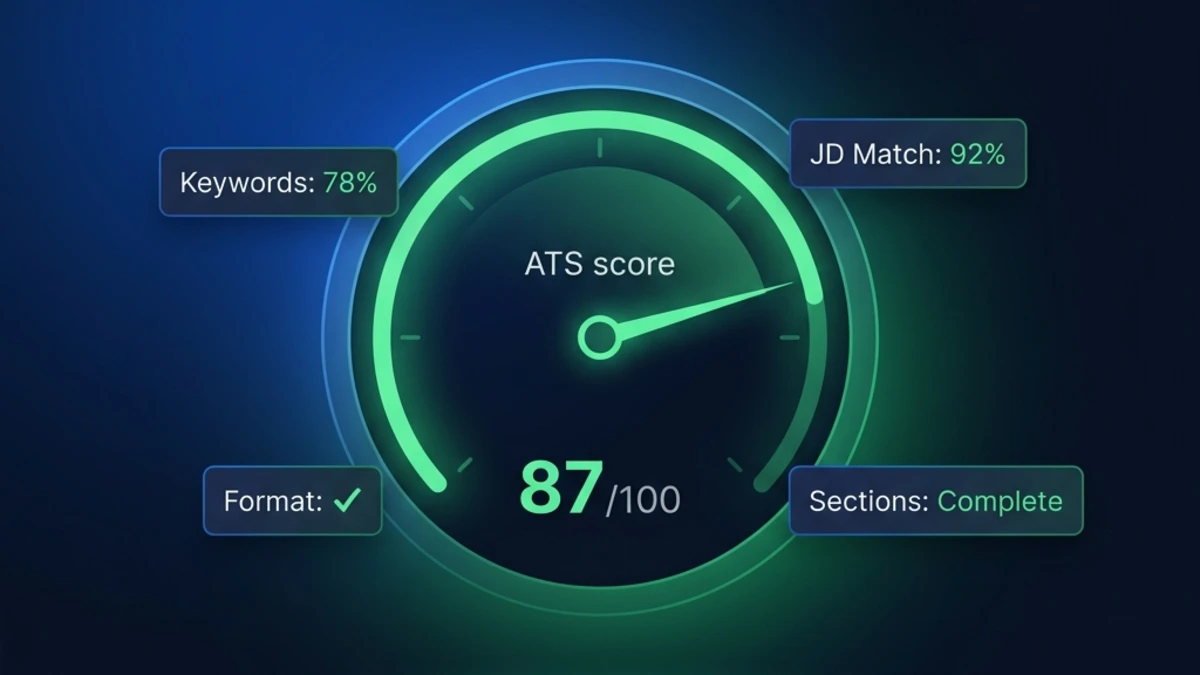
You've probably heard that keywords matter on your resume. But here's what most career guides don't tell you: not all keywords are weighted equally by ATS systems. Understanding which keywords matter most — and where to place them — can be the difference between an 82% ATS match and a 34% one.
In this guide, we'll go deep on resume keyword strategy: what ATS actually looks for, how to extract the right keywords from any job description, and how to weave them into your resume naturally. You can analyze your current keyword coverage instantly with our free Resume Keyword Analyzer.
How ATS Keyword Matching Works
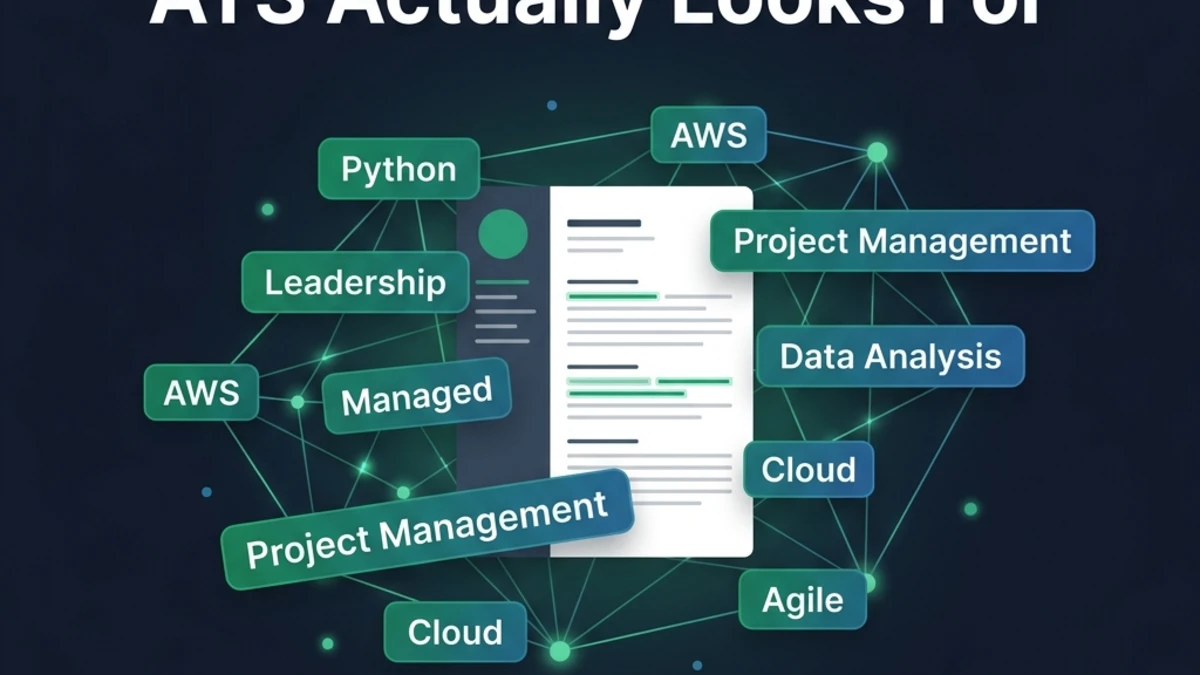
Modern ATS systems use several layers of keyword analysis:
1. Exact Match
The ATS searches for the exact string from the job description. If the JD says "React.js" and your resume says "ReactJS," some systems may not count it as a match. This is why mirroring the exact phrasing from the JD is crucial.
2. Semantic Match
More sophisticated ATS platforms (like Workday and Greenhouse) use natural language processing to understand synonyms and related terms. "Led" and "Managed" may score similarly for "leadership." However, never rely on this — always include the exact terms when possible.
3. Frequency Weighting
Keywords that appear multiple times in a job description carry more weight than those mentioned once. If a JD mentions "Python" in the required skills, preferred skills, AND role responsibilities — Python is a priority keyword. Mention it prominently in your Skills section and at least once in your Experience bullets.
4. Section Context
Keywords in your Skills section carry more weight than keywords buried deep in an experience bullet from 8 years ago. ATS systems understand document structure and weight recent, prominent placements higher.
The 4 Categories of ATS Keywords
Category 1: Hard Skills (Highest Weight)
These are specific, measurable technical abilities. They're the most heavily weighted by ATS systems because they're the most objective to match.
- Tech: Python, JavaScript, React, Docker, Kubernetes, AWS, SQL, TensorFlow
- Marketing: Google Ads, SEO, HubSpot, Salesforce, Google Analytics, A/B Testing
- Finance: Financial Modeling, Excel, Bloomberg, GAAP, Forecasting, Valuation
- Operations: Six Sigma, Lean, ERP, SAP, Process Improvement
Category 2: Certifications & Credentials (High Weight)
Certifications are often required fields in ATS systems. If a job requires PMP and you have it, the certification must appear exactly as stated:
- AWS Certified Solutions Architect
- Google Analytics Certified
- CPA, CFA, PMP, CISSP
- Salesforce Certified Administrator
Category 3: Soft Skills (Moderate Weight)
Soft skills are increasingly included in ATS keyword scans, particularly for management roles:
- Leadership, Team Management, Stakeholder Management
- Cross-functional Collaboration, Communication
- Strategic Planning, Problem-Solving, Mentoring
Include these in your Professional Summary and experience context, not just as standalone bullet points.
Category 4: Industry & Role-Specific Terms (Variable Weight)
These vary by industry and role. Some examples:
- Healthcare: EHR, HIPAA compliance, clinical trials, patient outcomes
- Legal: Contract negotiation, due diligence, litigation, compliance
- E-commerce: GMV, CAC, LTV, conversion rate optimization, Shopify
How to Extract Keywords from Any Job Description
The most effective keywords for any specific application always come from the job description itself. Here's a systematic extraction process:
Step 1: Copy the Full Job Description
Copy the complete JD — don't just skim it. "Preferred qualifications" sections often contain high-value keywords that most applicants miss.
Step 2: Highlight All Nouns and Noun Phrases
Job descriptions are dense with meaningful nouns: tools, technologies, methodologies, and role titles. Highlight every noun or noun phrase that represents a skill or qualification.
Step 3: Identify Frequency
Words mentioned multiple times are priority keywords. If "data-driven" appears 3 times and "analytical" once, "data-driven" is more critical to include.
Step 4: Use Our JD Match Tool
Paste the job description directly into our Resume Analyzer's JD Match section. It automatically extracts and compares keywords from the JD against your resume, showing you exactly which keywords you're missing and which are already matched.
Where to Place Keywords in Your Resume
Priority Zone 1: Professional Summary
Your summary is scanned first and carries significant weight. Include your primary role keyword, 2–3 top hard skills, and your most relevant industry term.
Example: "Senior Data Engineer with 7 years of experience in Python, Spark, and AWS. Specialized in building scalable data pipelines and real-time streaming architectures for fintech applications."
Priority Zone 2: Skills Section
Your skills section is a dedicated keyword zone. List your hard skills, tools, certifications, and key methodologies here. ATS systems specifically scan this section for exact matches.
Priority Zone 3: Experience Bullets
Weave keywords into achievement-focused bullet points. Every bullet should start with an action verb and include at least one keyword in context:
- ❌ "Worked on various Python projects for the data team"
- ✅ "Architected Python-based ETL pipelines processing 50M+ records daily, reducing data latency by 67%"
Avoid: Keyword Stuffing
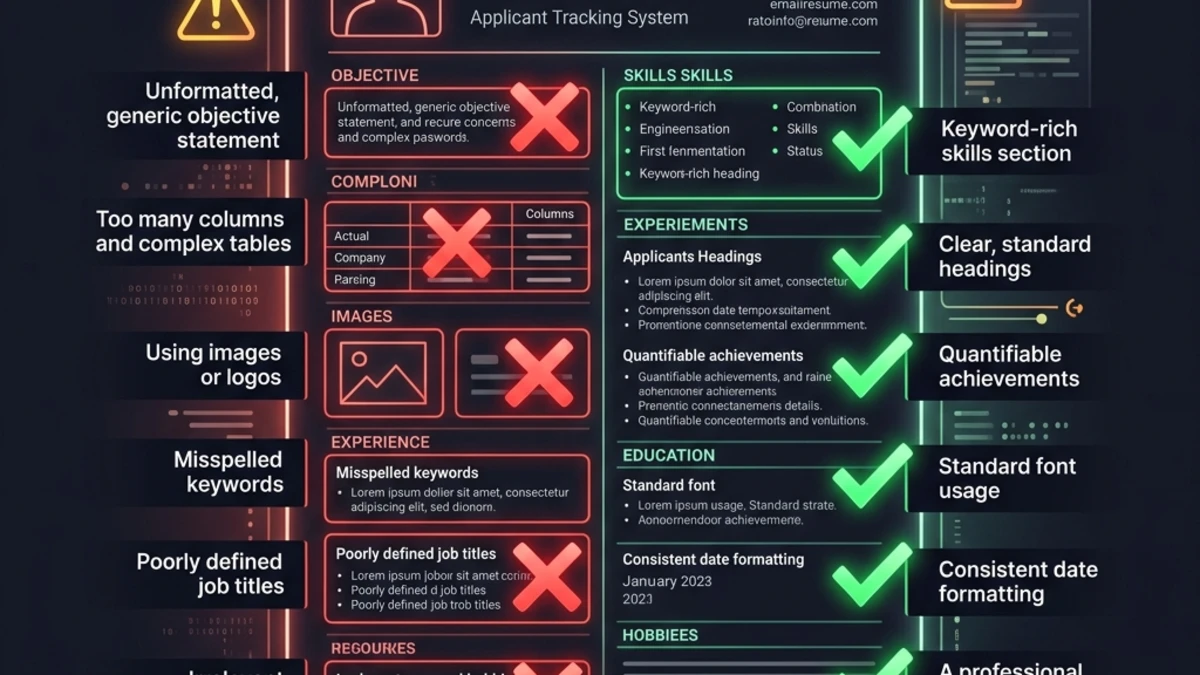
Listing 50 skills in your skills section or repeating keywords unnaturally reads as spam — both to ATS systems and human recruiters. Aim for quality placement in context rather than raw frequency.
Resume Keyword Checklist
- ☐ Primary job title keyword in Professional Summary and at least one Experience bullet
- ☐ Top 5 required hard skills explicitly listed in Skills section
- ☐ Required certifications listed with exact official names
- ☐ Soft skills mentioned in context within experience bullets (not just listed)
- ☐ Company-specific terms from JD incorporated naturally
- ☐ No keyword hidden in white text or special characters (ATS can detect this)
- ☐ Keyword coverage checked with our free ATS analyzer
Industry Keyword Quick References
Software Engineering
Python, JavaScript, TypeScript, Java, C++, React, Node.js, REST API, GraphQL, Docker, Kubernetes, AWS, CI/CD, Git, Agile, Scrum, Microservices, TDD, PostgreSQL, MongoDB
Digital Marketing
SEO, SEM, PPC, Google Ads, Meta Ads, HubSpot, Salesforce, Content Marketing, Email Marketing, Marketing Automation, ROI, ROAS, Funnel Optimization, A/B Testing, Google Analytics 4
Product Management
Product Roadmap, OKRs, KPIs, User Stories, Agile, Scrum, Stakeholder Management, Market Research, Competitive Analysis, GTM Strategy, Product-Market Fit, A/B Testing, Data-Driven
Finance & Accounting
Financial Modeling, Valuation, DCF, Excel, Bloomberg, GAAP, IFRS, P&L, Balance Sheet, Cash Flow, Forecasting, Budgeting, Variance Analysis, Risk Assessment, M&A
Frequently Asked Questions
How many keywords should a resume have?
There's no magic number, but most successfully ATS-optimized resumes include 15–30 relevant keywords naturally distributed throughout. Our free analyzer checks your keyword coverage percentage against a 80+ keyword database across major industries.
Do acronyms count as keywords?
It depends on the ATS. Some systems match "AWS" and "Amazon Web Services" as equivalent; others don't. To be safe, include both the acronym and the full name at least once: "Amazon Web Services (AWS)." This way, you're covered regardless of how the ATS processes it.
Can I use the same keywords in every resume?
You should have a core set of your genuine hard skills that appear in every version. But the tailored keyword layer — the terms pulled from a specific JD — should vary for each application. Use our JD Match tool to quickly identify what needs to change for each job.
Are LinkedIn keywords the same as resume keywords?
They overlap significantly. LinkedIn's algorithm also prioritizes keyword matching for recruiter searches. Keeping your LinkedIn headline, summary, and skills section aligned with your resume keywords creates a consistent professional footprint that recruiters and ATS systems both reward.
Conclusion: Keywords Are a Strategy, Not a Trick
The most effective resume keyword strategy isn't about gaming the system — it's about clearly communicating your qualifications in the language that both ATS software and human recruiters are programmed to recognize. When done right, it makes your resume easier to read, faster to evaluate, and more likely to get you into the interview room.
Start with your current resume, run it through our analyzer, and make targeted improvements based on your actual gaps: