Key Takeaways
- Break-even is the minimum price movement needed to cover all trade costs — not your entry price
- Fees, spread, commission, and financing all push break-even further from entry
- Options traders must add premium paid to strike price to find real break-even
- Moving your stop to break-even after a favorable move creates a genuinely risk-free trade
- Use SM Developers' free Break-Even Calculator for instant, accurate calculations
What Is the Break-Even Point in Trading?
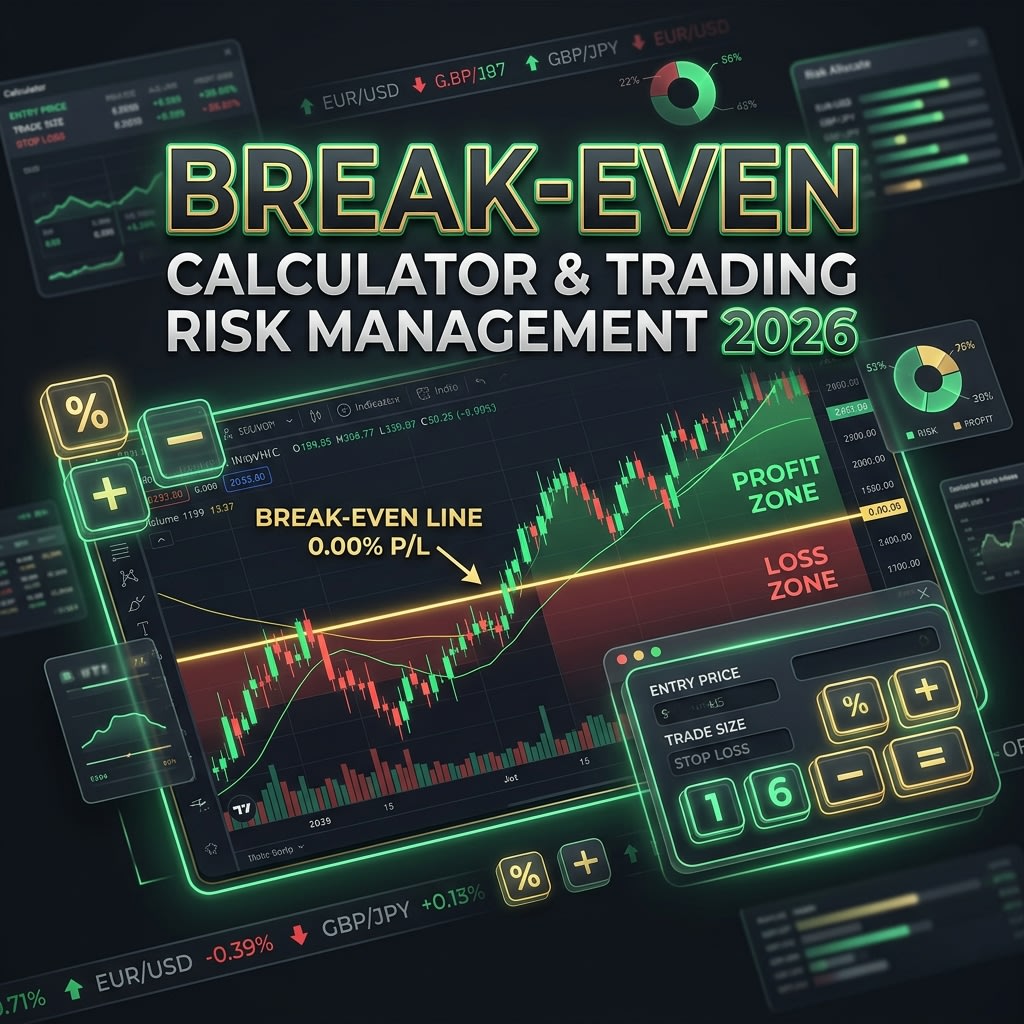
The break-even point in trading is the price at which a trade covers all costs — including your entry price, trading fees, and any spreads — resulting in zero profit and zero loss. It is the minimum price movement required before a trade becomes profitable.
Understanding your break-even point before entering any trade is not optional. It is the foundation of disciplined risk management. Every trader who has ever blown an account could trace the disaster back to one consistent mistake: entering trades without knowing exactly where they needed the price to go just to get even.
Why Break-Even Calculation Is the Most Overlooked Trading Skill
New traders obsess over entries and exits. They study chart patterns, indicators, and news catalysts. But most never answer the single most important pre-trade question: at what price do I simply not lose money?
Without this number, you cannot accurately set stop-losses, calculate realistic profit targets, or assess the true risk-reward ratio of a trade. You are essentially driving without knowing the speed limit.
Professional traders calculate break-even as automatically as they check the chart. It takes seconds — and it changes every trading decision you make.
The Break-Even Formula for Traders
For a standard long (buy) trade:
Break-Even Price = Entry Price + (Total Fees ÷ Position Size)For a short (sell) trade:
Break-Even Price = Entry Price - (Total Fees ÷ Position Size)Example (Long trade):
- Entry price: $50.00 per share
- Shares purchased: 100
- Total commission (round trip): $10
- Break-even = $50.00 + ($10 ÷ 100) = $50.10
The stock must rise above $50.10 before you make a single dollar of profit. Not $50.01 — $50.10.
For derivatives (options, futures, leveraged CFDs), the formula expands to include premium paid, overnight financing costs, and position multipliers — making manual calculation increasingly error-prone. This is exactly where a Break-Even Calculator eliminates costly mistakes.
How Fees Destroy Trades You Think Are Profitable
Consider an active day trader who executes 10 trades daily with a $0.005 per share commission and 100-share position sizes. That's $1.00 per trade for a $100 round-trip cost per day. Over a month of 20 trading days, that's $2,000 in commissions alone — before spreads, slippage, and overnight financing.
A trader with a 55% win rate and an average 1% move per trade sounds profitable. But once fees are correctly subtracted from break-even calculations, that same trader may be net negative.
The math never lies. The fees always apply. Calculate break-even accurately, or the fees will quietly liquidate your account over time.
Break-Even in Options Trading: A Different Calculation
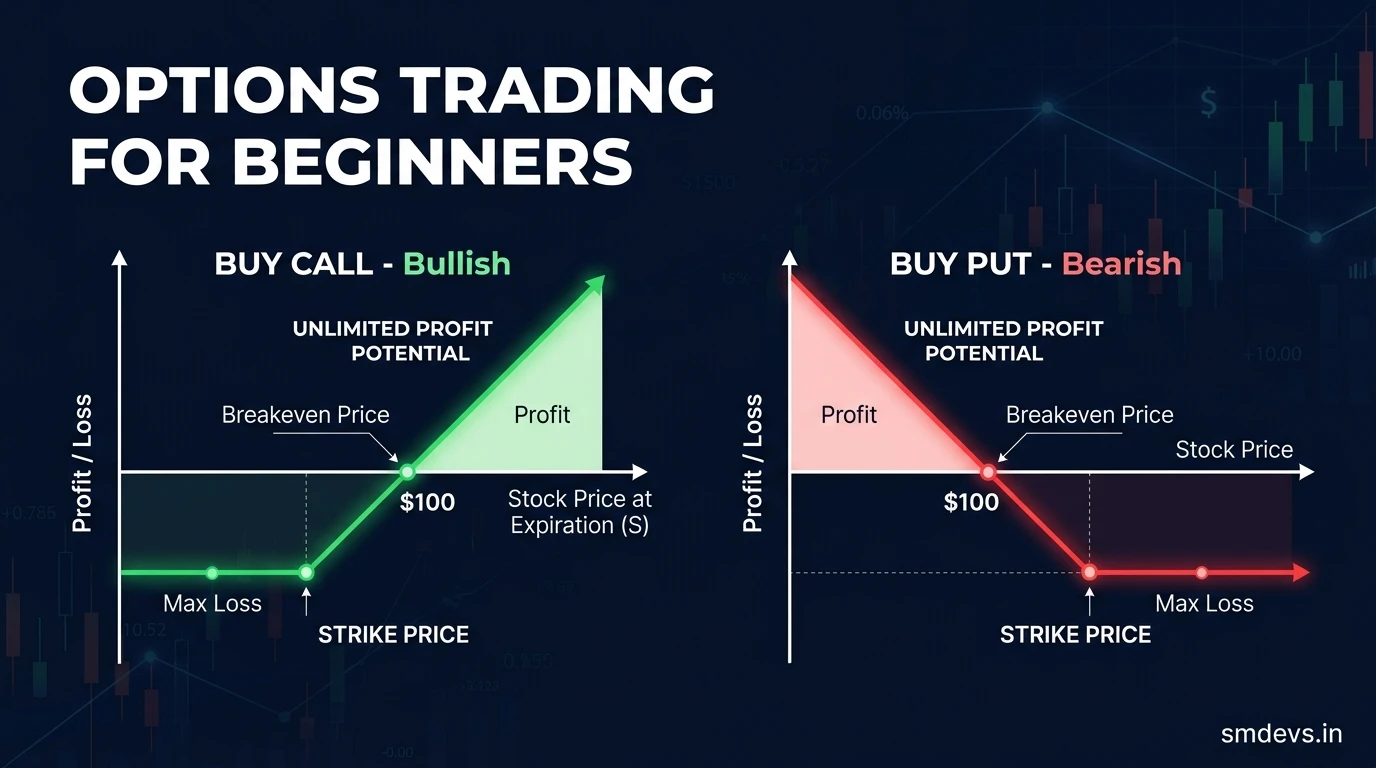
Options trading requires a separate break-even formula because you pay a premium upfront regardless of whether the option expires in or out of the money.
Call Option Break-Even:
Break-Even = Strike Price + Premium PaidPut Option Break-Even:
Break-Even = Strike Price - Premium PaidExample: You buy a call option with a $100 strike price for a $5 premium.
- Break-even = $100 + $5 = $105
- The underlying asset must reach $105 just for you to recover your premium
- Profit only begins above $105
This is why many options buyers lose money even when they correctly predict the direction of the move — they don't account for the premium in their break-even calculation.
Break-Even and Risk-Reward Ratio: How They Work Together
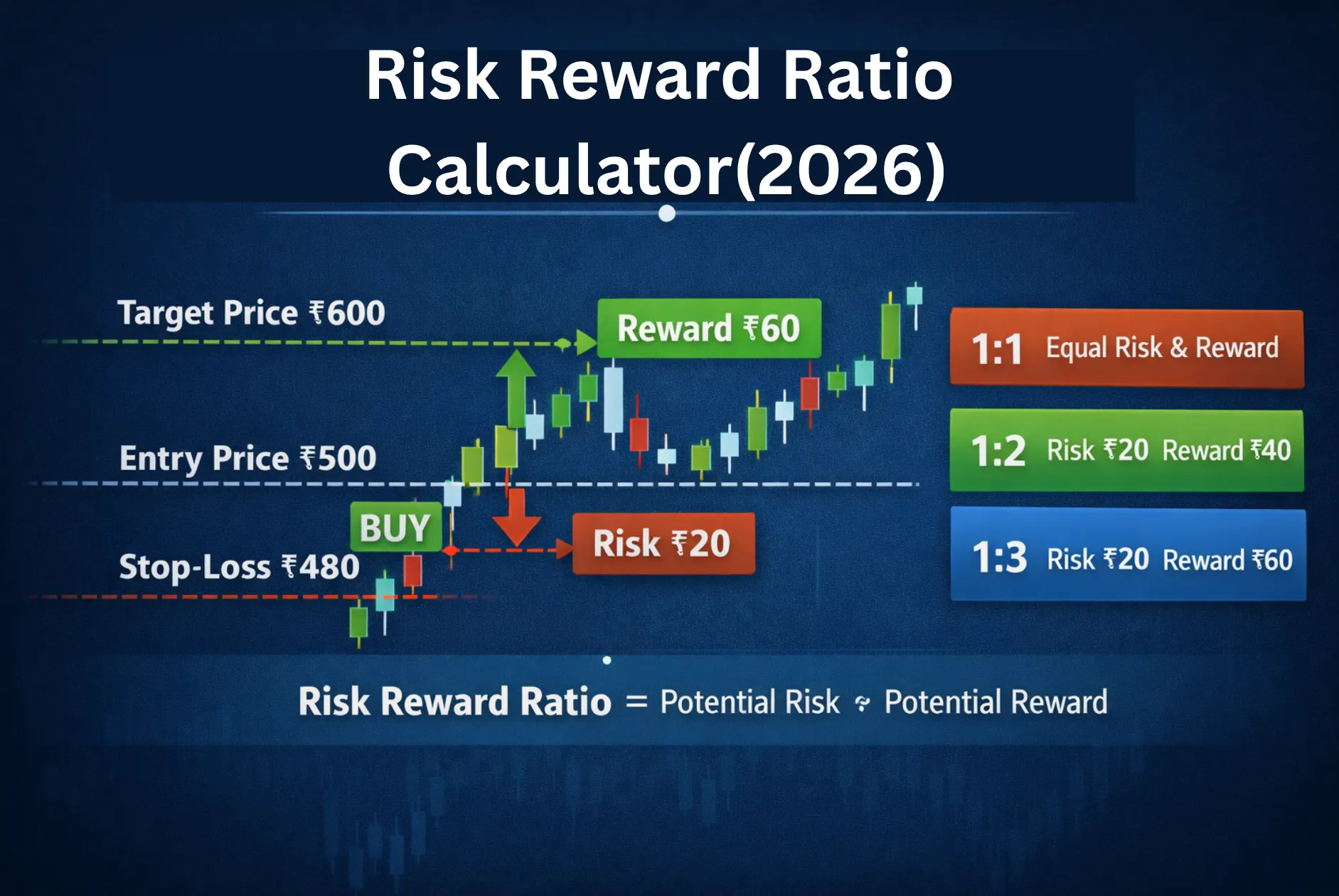
Break-even price defines your floor. Risk-reward ratio defines your ceiling. Used together, they build the framework of every professional trading decision.
The process:
- Calculate your break-even price (entry + all costs)
- Set your stop-loss below break-even (for longs) by your maximum acceptable loss amount
- Set your profit target at a minimum 2:1 or 3:1 ratio above break-even
- Only enter the trade if the potential reward justifies the defined risk
Without knowing the break-even, step 1 is incomplete — and every subsequent decision is built on a false foundation. Use the Risk-Reward Calculator alongside break-even calculations for a complete pre-trade analysis.
Moving Stop-Loss to Break-Even: The Professional Technique
One of the most powerful moves in active trading is moving your stop-loss to your break-even price once the trade moves in your favor. This technique — sometimes called a "trailing break-even stop" — achieves something profound: it converts a speculative trade into a risk-free trade.
Once your stop is at break-even:
- The worst outcome is zero profit and zero loss
- You can hold the position through pullbacks without anxiety
- Your capital is effectively protected while potential upside remains open
The timing of this move matters. Move the stop to break-even too early, and minor volatility will stop you out before the trade reaches its target. The general guideline: move the stop to break-even once the price has moved at least one full unit of your defined risk in your favor.
Break-Even in Forex Trading: Including Spread
Forex traders face a unique cost that most calculators ignore: the spread. The spread is the difference between the bid and ask price — effectively an instant transaction cost that applies at entry.
Forex break-even formula:
Break-Even = Entry Price + Spread + Commission (in pips)On a EUR/USD trade with a 1.5 pip spread and a 0.5 pip commission, your break-even is 2 pips above your entry on a long trade. A "quick scalp" targeting 3 pips is actually a 1-pip net profit trade — and one pip of slippage can turn it into a loss.
For position sizing in forex trades, use the Position Size Calculator to ensure every trade uses correctly sized lots relative to your account size and risk tolerance.
Common Break-Even Calculation Mistakes
- Ignoring the spread: Spreads are real costs that push break-even further from your entry. Always include them.
- Using only one-way commission: Most calculators forget the commission to close the position. Break-even must account for the round-trip cost.
- Not recalculating when adding to a position: Averaging into a position changes your average entry price and therefore your break-even. Recalculate every time.
- Ignoring overnight financing: For CFDs, ETFs on margin, and futures, overnight swap rates or financing charges increase your effective break-even each day you hold a position.
- Not accounting for taxes: In some jurisdictions, capital gains taxes reduce effective profit — your real break-even after tax may be significantly higher than your pre-tax calculation.
Key Takeaways
- Break-even is the price at which all costs are covered and the trade nets zero — it is your minimum required price movement to not lose money
- Always calculate break-even before entering any trade, not after
- Fees, spread, commission, and financing all push break-even further from your entry
- Options traders must add premium paid to the strike price to find true break-even
- Moving your stop to break-even after a favorable move creates a risk-free trade
- Use SM Developers' free Break-Even Calculator to get exact numbers in seconds
What is break-even in trading?
Break-even in trading is the exact price at which a trade covers all associated costs — entry price, commissions, spread, and financing — resulting in zero profit and zero loss. Every price above break-even (for long trades) represents actual profit. Knowing this number before entering any trade is fundamental to professional risk management.
How do you calculate break-even price for a trade?
For a long trade: Break-Even = Entry Price + (Total Round-Trip Fees ÷ Number of Units). For a short trade: Break-Even = Entry Price - (Total Round-Trip Fees ÷ Number of Units). For options: Call Break-Even = Strike Price + Premium Paid. Put Break-Even = Strike Price - Premium Paid. Use a dedicated calculator to include all cost variables accurately.
Why should I move my stop to break-even?
Moving your stop-loss to break-even after a trade moves in your favor converts a speculative position into a risk-free trade. The worst possible outcome becomes zero — you cannot lose money even if the market reverses sharply. This is a core capital preservation technique used by professional traders across all asset classes.
Is break-even the same as entry price?
No. Break-even is always higher than your entry price on long trades (and lower on shorts) because it must account for transaction costs. On a $50 stock with $0.10 in total fees per share, your break-even is $50.10. Treating your entry price as break-even is one of the most common and costly mistakes beginning traders make.