Key Takeaways
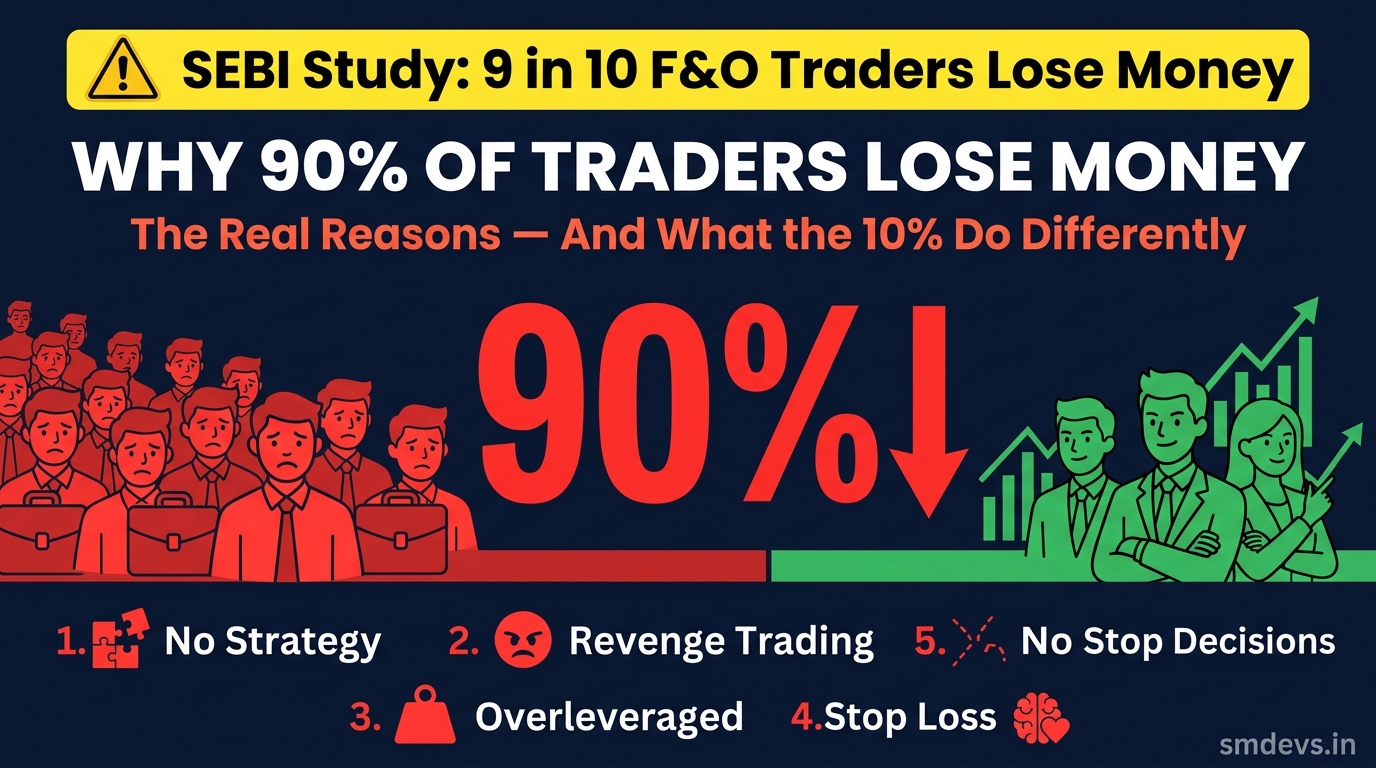
- SEBI's 2024 study found that 93% of individual F&O traders in India lost money over a 3-year period. Nine out of ten. This isn't a pessimistic view — it is documented data. Yet every month, lakhs of I
The SEBI Data That Every Trader Must See
In January 2024, SEBI (Securities and Exchange Board of India) released a comprehensive study of individual F&O (Futures & Options) traders on Indian exchanges. The findings were stark:
- 93% of individual F&O traders lost money over the 3-year study period (FY2022–FY2024)
- The average net loss per person was ₹1.1 lakh
- Despite this, over 3.6 crore unique individuals traded in F&O in FY2024 — a 4.7x increase from FY2022
- Only 1% of traders earned more than ₹1 lakh in net profit annually
- Transaction costs (brokerage + STT + exchange charges) accounted for 57% of total trading losses
Translation: For every 100 people trading F&O in India, 93 are losing money. Of the 7 who profit, only 1 makes a meaningful profit after costs.
This is not to scare you away from trading. It's to tell you that without understanding why this happens, you will be among the 93%.
10 Real Reasons Why Most Traders Lose Money
Reason 1: Trading Without a Written Strategy
Ask any losing trader for their trading strategy in writing. They can't show you one. They trade based on tips, YouTube videos, gut feel, and what's trending in WhatsApp groups. Professional traders trade a system — with specific entry rules, exit rules, position sizing, and conditions under which they don't trade.
What winners do: They have a written trading plan — specific, testable, and followed consistently. They know before entering a trade: entry condition, stop loss level, target, and maximum position size.
Reason 2: No Stop Loss — The Account-Killer
"I don't keep stop loss because it always hits before the reversal." This is the single most common and devastating mistake. Without a stop loss, one bad trade can wipe out 10 good trades. Trading without stop losses is not a strategy — it's gambling with unlimited downside.
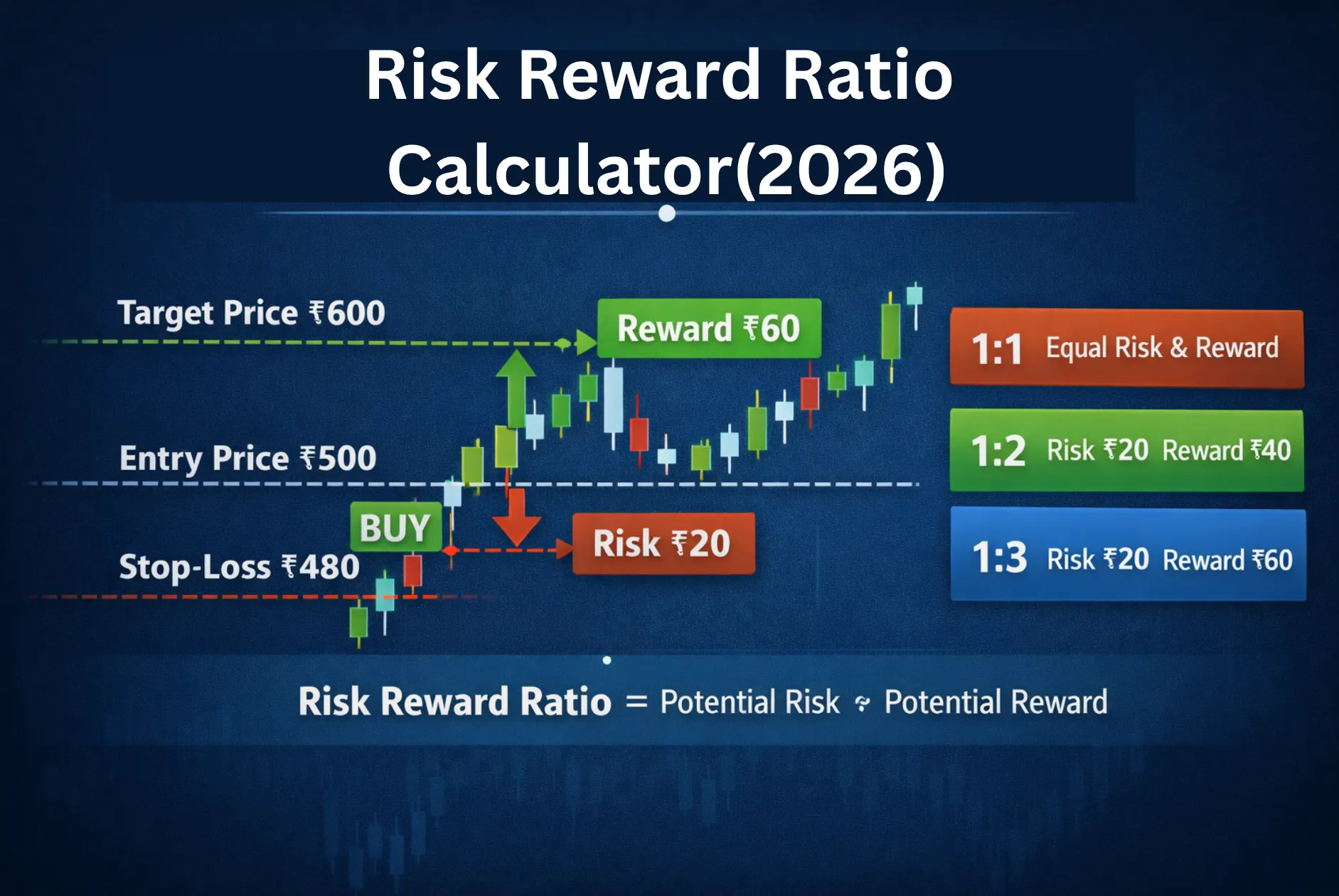
The math is brutal: If you lose 50% on a trade, you need a 100% gain just to break even. If you lose 70%, you need a 233% gain. A stop loss at 2% means you need just a 2.04% gain to recover.
What winners do: Every single trade has a stop loss set at order placement time, not "mentally." No exceptions. Use our Risk-Reward Calculator to size positions correctly with built-in stop levels.
Reason 3: Overleveraging — The Fast Track to Zero
Options and futures give 5x–50x leverage. This amplifies wins — but equally amplifies losses. A beginner buying 10 lots of Bank Nifty options with a ₹50,000 account can lose the entire account in a single bad day. Professional traders rarely use more than 10–20% of their capital in any single trade.
What winners do: Risk 1–2% of total capital per trade. If their account is ₹5 lakh, maximum loss on any trade is ₹5,000–₹10,000. This means 50–100 losing trades in a row before they go broke — giving the strategy time to play out.
Reason 4: Revenge Trading After a Loss
You lose ₹5,000 on a morning trade. The emotion takes over — "I need to get it back." You increase position size, take a low-probability setup, and turn a ₹5,000 loss into a ₹25,000 loss by noon. This pattern — revenge trading — is responsible for the largest single-day losses of most retail traders.
What winners do: They have a daily loss limit — a maximum amount they are allowed to lose in a single day. Once hit, they close all positions and stop trading for the day. No exceptions. The market will be open tomorrow.
Reason 5: Ignoring Transaction Costs
SEBI's study found that transaction costs (brokerage, STT, exchange charges, GST, SEBI fees) consumed 57% of gross trading losses for individual traders. A trader who buys and sells Nifty options 5 times a day pays ₹500–₹2,000 in charges daily — ₹10,000–₹40,000 per month — without making a single rupee of profit.
What winners do: They trade less, not more. They use discount brokers (Zerodha, Upstox) to minimise brokerage. They calculate expected cost before entering a trade and only trade setups where potential profit significantly exceeds costs.
Reason 6: Trading FOMO and Social Media Tips
"This stock will 10x" — WhatsApp group tip at 9:15 AM. You buy. The operator dumps his position. You lose 30% by 10 AM. Tips from social media, Telegram channels, and YouTube are almost universally useless for making money — and often pump-and-dump schemes designed to exit the promoter's position using retail buyers.
What winners do: They never trade tips without independent analysis. They have their own analysis framework and trade only what they understand.
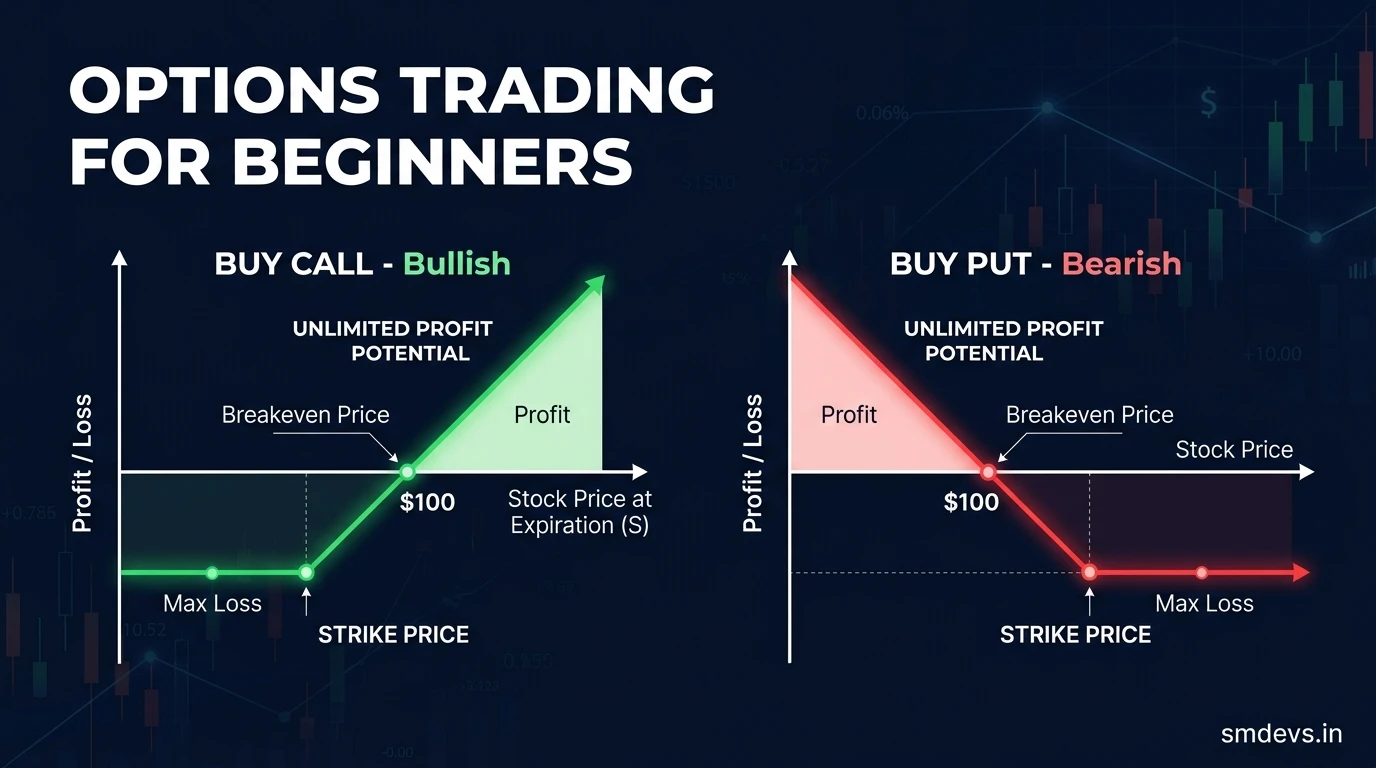
Reason 7: Buying Far Out-of-the-Money (OTM) Options
"I can buy 10 lots of Nifty 25000 CE for ₹2 — if it hits, I make ₹50,000!" This logic kills accounts. Deep OTM options expire worthless 95%+ of the time. Theta (time decay) erodes their value daily. Buying cheap OTM options feels low-risk but is statistically one of the most expensive ways to trade.
What winners do: They buy ATM or slightly ITM options with real delta, or they sell OTM options (with defined risk through spreads) rather than buy them.
Reason 8: No Understanding of Market Structure
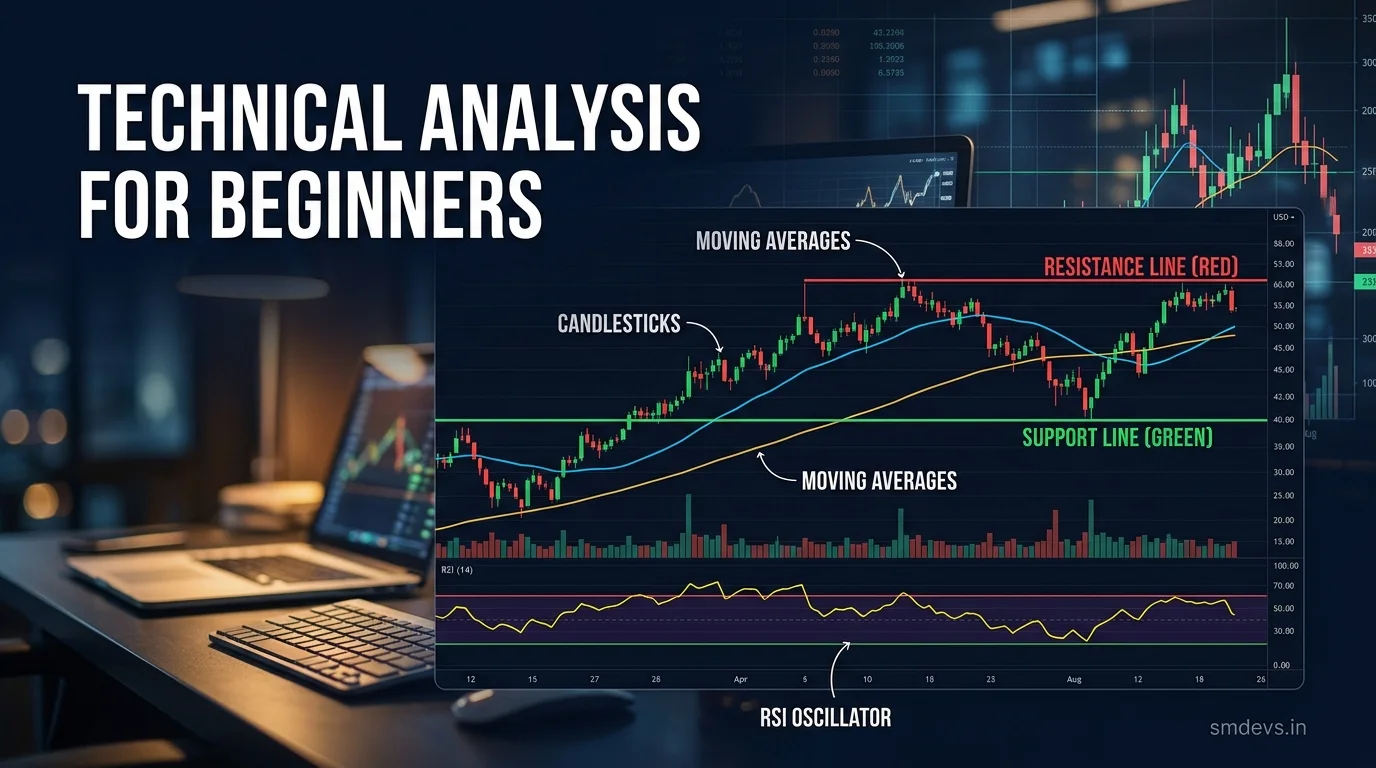
Most retail traders look at charts but don't understand market structure — higher highs and higher lows for uptrend, lower highs and lower lows for downtrend, the significance of support and resistance, and how to identify trend continuation vs reversal. Without this foundation, every trade is a guess.
What winners do: They understand price action — how markets trend, consolidate, and reverse. They read pivot levels (see our Pivot Point Calculator), support/resistance, and volume before entering any trade.
Reason 9: Ignoring the Broader Market / Index Direction
Buying a long call on a stock when Nifty is in a strong downtrend is fighting the tide. 70–80% of stocks follow the index direction. Retail traders often ignore the Nifty/Sensex trend and trade individual stocks against the market's momentum.
What winners do: They always check the Nifty trend first. Long trades only when index is uptrending or neutral; short trades when downtrending. They use RSI and MACD on the index as trend filters.
Reason 10: Treating Trading as a Get-Rich-Quick Scheme
Trading is a skill — like surgery, law, or engineering — that takes years to develop. The expectation of making ₹50,000/month from trading with ₹1 lakh of capital within 3 months is not a plan, it's a fantasy. This unrealistic expectation leads to taking excessive risks to chase returns, which leads to blowing accounts.
What winners do: They treat trading as a business. They track every trade in a journal. They measure their win rate, risk-reward ratio, and maximum drawdown. They improve incrementally. They don't expect overnight success.
What the Profitable 10% Do Differently — Summary
| Losing 90% | Profitable 10% |
|---|---|
| No written strategy | Specific, tested trading plan |
| No stop loss | Stop loss on every trade, always |
| Risk 20–50% per trade | Risk 1–2% per trade maximum |
| Trade after losses to recover | Stop trading after hitting daily loss limit |
| Follow tips and social media | Trade only own-analysed setups |
| Overtrade (10+ trades/day) | Trade less, trade better (2–4 quality setups) |
| Never review performance | Daily trading journal, weekly review |
| Expect quick riches | Treat it as a long-term skill to develop |
FAQs: Why Traders Lose Money
What percentage of traders make money in India?
According to SEBI's 2024 study, only 7% of individual F&O traders made any profit over FY2022–FY2024. Of these, only 1% earned more than ₹1 lakh net annually. The study covered over 1 crore unique traders across the study period.
Why do most F&O traders lose money?
The top reasons are: no defined strategy, trading without stop losses, excessive leverage (especially in options buying), transaction costs eating into profits, revenge trading after losses, following social media tips, and unrealistic profit expectations. SEBI data shows 57% of losses are from transaction costs alone — meaning most retail traders aren't even losing on bad calls; they're losing on fees.
Is it possible to make consistent profit from trading?
Yes — but it requires treating trading as a professional skill that takes years to develop. Consistent profitable traders have a testable edge (a strategy that has demonstrated positive expectancy), strict risk management, emotional discipline, and detailed performance tracking. The 7% who profit are not luckier — they are more disciplined and systematic.