Key Takeaways
- On-page SEO involves optimizing individual web page elements to rank higher in search results.
- Key factors include title tag optimization, meta descriptions, heading hierarchy, keyword density, and internal linking.
- A free on-page SEO checker tool automates the audit process, saving hours of manual work.
- SM Developers' on-page SEO checker analyzes 15+ ranking factors in real-time.
- Regular on-page audits (monthly) can significantly improve your organic search traffic within 60–90 days.
You've written a great article. You've done your keyword research. But weeks later, your page is buried on page 3 of Google — and you don't know why. Sound familiar?
The answer is almost always on-page SEO. While great content is essential, how you structure and optimize that content for search engines determines whether Google surfaces it to users. And the fastest way to find your on-page SEO gaps is with a free on-page SEO checker tool.
In this comprehensive guide, we'll cover what on-page SEO is, why it matters, which elements you must optimize, and how to use SM Developers' free tool to audit any page in seconds.
What Is On-Page SEO?
On-page SEO (also called on-site SEO) refers to all the optimization actions you perform directly on your web pages to improve their rankings in search engine results pages (SERPs). Unlike off-page SEO (backlinks) or technical SEO (site speed, crawling), on-page SEO is entirely within your control and can be improved immediately.
Key on-page SEO elements include:
- Title tags and meta descriptions
- Heading structure (H1, H2, H3 hierarchy)
- Keyword placement and density
- Content quality, length, and depth
- Internal linking strategy
- Image alt text optimization
- URL structure
- Page loading speed
- Mobile responsiveness signals
The 10 Most Critical On-Page SEO Factors in 2026
1. Title Tag Optimization
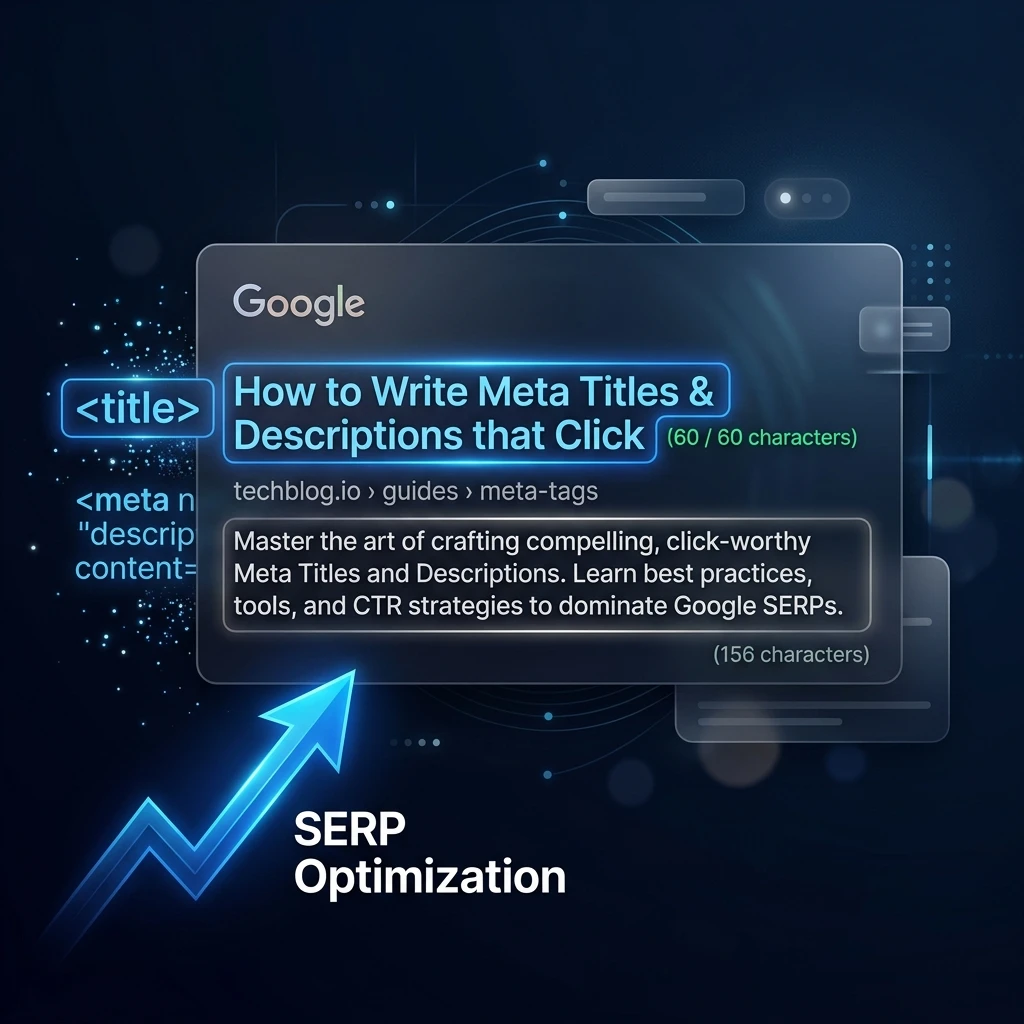
Your title tag is the most important on-page SEO element. It appears as the blue clickable headline in search results and should:
- Be between 50–60 characters (to avoid truncation)
- Include your primary keyword near the beginning
- Be compelling and click-worthy
- Be unique across every page on your site
2. Meta Description
While meta descriptions are not a direct ranking factor, they heavily influence click-through rate (CTR) — which IS a ranking signal. Aim for 120–155 characters, include your keyword naturally, and write it as an advertisement for your page.
3. H1 Heading
Every page should have exactly one H1 heading that clearly states the page's main topic. Your primary keyword should appear in the H1, ideally early in the tag. Never use multiple H1s on a single page.
4. Heading Hierarchy (H2–H6)
Use H2 headings for major sections and H3–H4 for subsections. A logical heading hierarchy helps both users (readability) and search engines (content structure understanding). Our on-page SEO checker audits your full heading structure automatically.
5. Keyword Density & Placement
Your focus keyword should appear:
- In the first 100 words of content
- In at least one H2 heading
- Naturally throughout the body (1–2% density)
- In at least one image alt text
Avoid keyword stuffing — Google's algorithms are sophisticated enough to detect and penalize it. Use our Keyword Density Checker to find the perfect balance.
6. Content Length and Depth
For competitive keywords, longer, more comprehensive content tends to outrank thin content. Studies consistently show that pages ranking on the first page of Google have an average of 1,400+ words. However, length without value is useless — every paragraph must serve the reader.
7. Internal Linking
Internal links help Google discover and understand the relationship between your pages. They also distribute "link equity" across your site. Aim for 3–5 internal links per article, using descriptive anchor text.
8. Image Alt Text
Every image on your page should have descriptive alt text that includes your keyword where relevant. This helps with image search rankings and accessibility for visually impaired users.
9. URL Structure
URLs should be short, descriptive, and include your primary keyword. Avoid numbers, dates, or random strings. Example: /tools/seo/on-page-seo-checker vs. /page?id=4821.
10. Core Web Vitals
Google's Core Web Vitals measure page loading performance, interactivity, and visual stability. Poor CWV scores can drag down even excellent on-page content. Optimize images, minimize JavaScript, and use efficient hosting.
How to Use SM Developers' Free On-Page SEO Checker
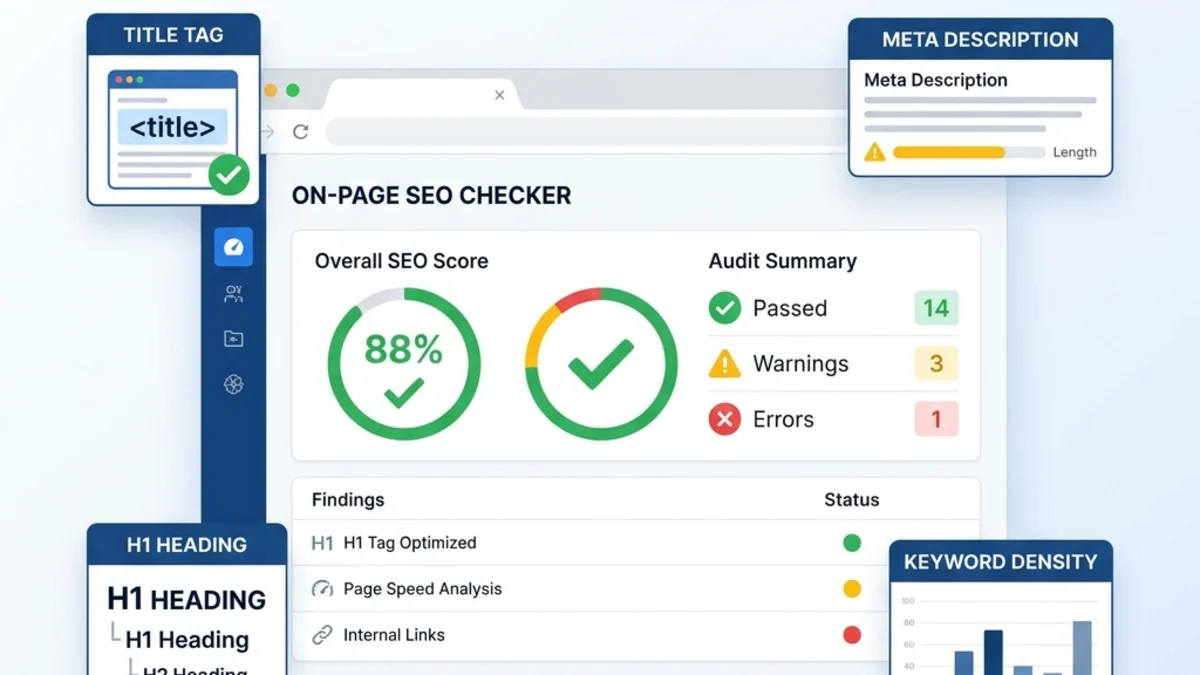
Our free on-page SEO checker gives you a comprehensive audit without the complexity of enterprise tools. Here's how:
- Go to the tool: Visit smdevs.in/tools/seo/on-page-seo-checker
- Enter your URL or paste HTML: You can audit a live page or paste your HTML source code directly
- Enter your target keyword: This helps the tool assess keyword optimization specifically
- Click "Analyze": Results appear instantly
- Review the SEO score: Each element is rated and color-coded (green/yellow/red)
- Fix issues: Follow the specific recommendations for each flagged element
On-Page SEO Audit Checklist
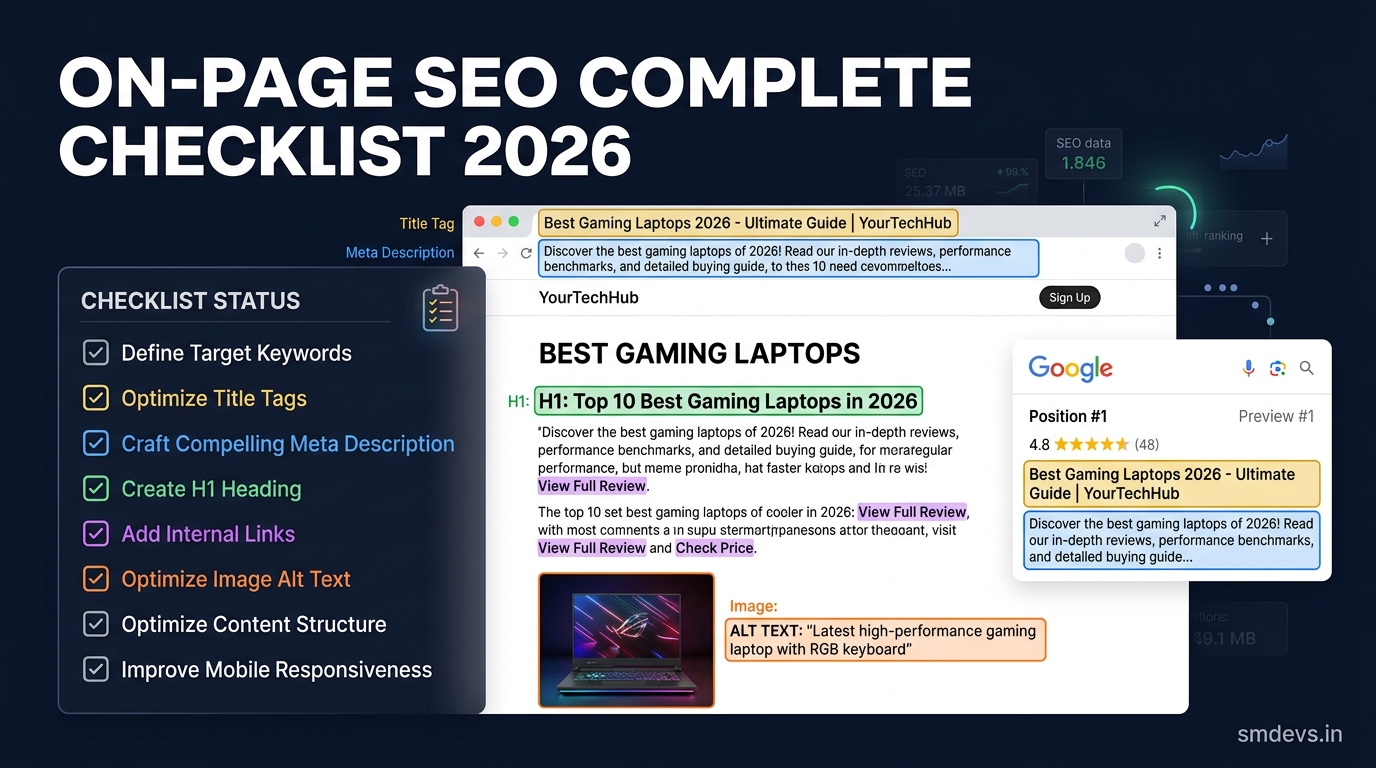
Use this checklist alongside our tool to ensure nothing is missed:
- ☐ Title tag is 50–60 characters and includes primary keyword
- ☐ Meta description is 120–155 characters with a call-to-action
- ☐ Page has exactly one H1 heading with keyword included
- ☐ H2 headings organize major sections logically
- ☐ Primary keyword appears in first 100 words
- ☐ Keyword density is between 0.5% and 2%
- ☐ 3+ internal links to relevant pages
- ☐ All images have descriptive alt text
- ☐ URL is short, keyword-rich, and hyphenated
- ☐ Page loads in under 3 seconds
- ☐ Content is at least 800 words for competitive keywords
- ☐ No duplicate title tags or meta descriptions site-wide
How Often Should You Run On-Page SEO Audits?
For active websites, run on-page audits:
- Monthly: On your highest-traffic pages
- After every major update: Whenever you significantly edit content
- After algorithm updates: Google core updates can shift ranking factors' importance
- For new pages: Before publishing every new piece of content
Frequently Asked Questions
What is the difference between on-page SEO and off-page SEO?
On-page SEO refers to optimizations made directly on your website — content, headings, meta tags, internal links. Off-page SEO refers to external factors like backlinks, brand mentions, and social signals that influence your site's authority and rankings.
How long does it take to see results from on-page SEO?
On-page SEO improvements can show measurable results in as little as 2–4 weeks for existing pages that Google has already indexed. For new pages, expect 3–6 months for significant ranking improvements as Google evaluates the page's quality and relevance over time.
Can I use the on-page SEO checker for any type of website?
Yes! Our on-page SEO checker works for any website — blogs, e-commerce stores, landing pages, service pages, and more. Simply enter the URL of any publicly accessible page.
What's the ideal keyword density for on-page SEO?
Aim for a keyword density between 0.5% and 2% for your primary keyword. This means your keyword appears approximately 1–2 times per 100 words. Focus on using it naturally, and supplement with LSI (Latent Semantic Indexing) keywords and related terms.
Final Thoughts: Make On-Page SEO a Habit, Not an Afterthought
The websites that consistently dominate search results aren't lucky — they're meticulous about on-page optimization. Every page they publish is thoroughly audited before going live, and existing content is regularly revisited and improved.
You can achieve the same results without expensive SEO software. Our free on-page SEO checker gives you professional-grade analysis at zero cost. Start auditing your pages today and watch your organic traffic grow.