Key Takeaways
- Keyword intent (or search intent) is the underlying goal a user has when typing a query into Google.
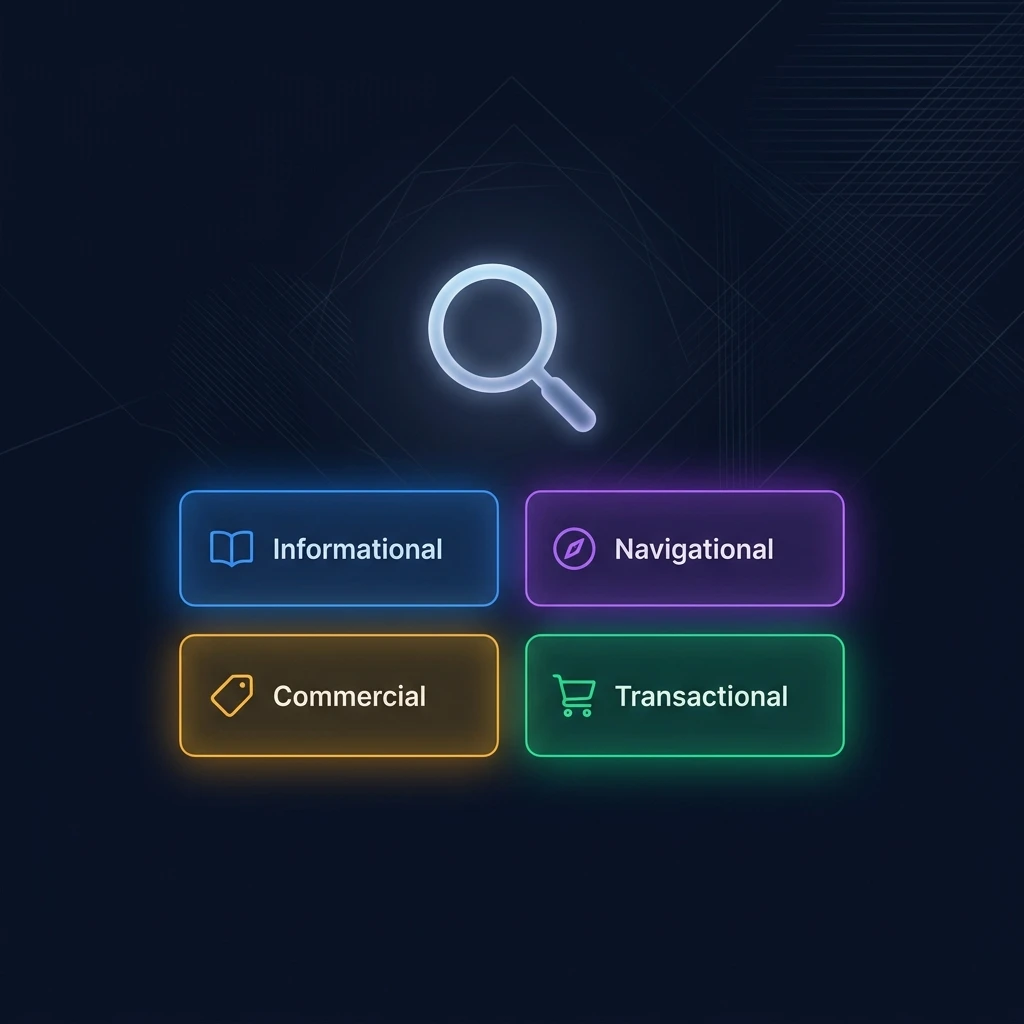
- There are 4 types: Informational, Navigational, Commercial, and Transactional.
- Mismatching content type to keyword intent is one of the most common reasons pages fail to rank despite good writing.
- Google's algorithm is explicitly designed to reward content that satisfies the intent behind a query.
- Use our free Keyword Intent Analyzer to instantly classify any keyword before building a content strategy.
What Is Keyword Intent?
Keyword intent — also called search intent or user intent — is the underlying goal or purpose behind a search query. It answers the question: What does this user actually want to accomplish?
When someone types "best running shoes" into Google, they're not just looking for a definition of running shoes. They're comparing options before making a purchase decision. When someone searches "Nike Air Max," they probably want to go directly to the Nike website or a specific product page. Understanding this difference is the foundation of keyword intent analysis.
Google's algorithm has become remarkably sophisticated at detecting and matching intent. Its Helpful Content System and RankBrain model rank pages primarily based on whether they satisfy the intent of the query — not just keyword frequency or backlinks. This is why intent-matching is the highest-leverage SEO skill in 2025.
Why Keyword Intent Matters for SEO
Consider this scenario: you write a 3,000-word blog post about "enterprise CRM software" — comprehensive, well-researched, beautifully formatted. But you rank at position 18 and can't break onto page one, despite having strong domain authority.
The likely reason: "enterprise CRM software" is a commercial investigation keyword. Users searching it want product comparison pages with pricing, features, and reviews — not a blog post. Google shows comparison pages and landing pages for that query. Your blog post is great content matched to the wrong intent.
Matching intent correctly means you're giving Google exactly the type of content it expects to satisfy that query. When you do, ranking becomes significantly easier even without more backlinks.
The 4 Types of Keyword Intent
1. Informational Intent
The user wants to learn, understand, or find an answer. These queries often start with "what is," "how to," "why," "guide to," or "examples of." The user is not ready to buy — they're in research mode.
Examples:
- "what is keyword intent"
- "how to create an XML sitemap"
- "what is schema markup"
- "how to calculate break-even price"
Best content type: Blog posts, guides, how-to articles, definitions, tutorials. These users need depth, clear explanations, and structured answers. FAQ schema markup helps Google surface your informational content in rich results.
2. Navigational Intent
The user wants to reach a specific website, brand, or page. They already know where they want to go — they're just using Google as the address bar.
Examples:
- "Google Search Console login"
- "Ahrefs keyword explorer"
- "SM Developers SEO tools"
- "GitHub Next.js repository"
Best content type: Your homepage, branded landing pages, login pages. These searchers rarely click on non-branded results. Trying to rank for navigational keywords of other brands is generally a waste of effort — and Google won't reward it.
3. Commercial Investigation Intent
The user is researching before making a decision. They're comparing options, reading reviews, and evaluating alternatives. They're closer to buying than informational searchers but haven't committed yet.
Examples:
- "best free SEO tools"
- "Ahrefs vs SEMrush comparison"
- "keyword density checker review"
- "top trading calculators for beginners"
Best content type: Comparison articles, "best X" roundups, product reviews, tool comparison tables. These pages should include clear evaluation criteria, pros/cons lists, and honest assessments.
4. Transactional Intent
The user is ready to act — buy, sign up, download, or use a tool right now. These queries have direct commercial or conversion value.
Examples:
- "free schema markup generator"
- "xml sitemap generator online"
- "keyword intent checker tool"
- "pivot point calculator"
Best content type: Tool pages, product pages, landing pages with clear CTAs. These users should hit a page where they can immediately take action — not a blog post that makes them navigate further.
How to Analyze Keyword Intent
There are three reliable methods for determining the intent behind any keyword:
Method 1: Analyze the SERP Yourself
The most accurate way to identify intent is to Google the keyword and look at what type of content already ranks on page one. Google has already done the intent classification for you — the pages it shows are the content types it believes best satisfy the query.
- If page one shows Wikipedia articles, "what is X" guides, and YouTube tutorials → Informational
- If page one shows a brand's homepage and social profiles → Navigational
- If page one shows "best X" lists and comparison articles → Commercial
- If page one shows tool pages, sign-up pages, and product listings → Transactional
Method 2: Analyze the Keyword Itself
Certain words and phrases signal intent clearly:
- Informational signals: what is, how to, why, guide, tutorial, examples, definition, explained
- Navigational signals: [brand name], login, official, homepage, website
- Commercial signals: best, top, vs, comparison, review, alternatives, pros and cons
- Transactional signals: free, tool, checker, generator, calculator, download, buy, price
Method 3: Use a Keyword Intent Checker Tool
Our free Keyword Intent Analyzer automatically classifies any keyword by its dominant intent type. Paste a keyword, and the tool tells you whether it's informational, navigational, commercial, or transactional — along with content type recommendations. Use it before building a content brief to make sure you're creating the right format from the start.
Keyword Intent Tags in SEO Tools
Many SEO platforms (Ahrefs, SEMrush, Moz) now add keyword intent tags directly to their keyword research data. You'll see labels like "I" (informational), "N" (navigational), "C" (commercial), "T" (transactional) next to each keyword. These labels come from SERP analysis algorithms similar to Method 1 above.
When building a content calendar, filter your keyword list by intent to ensure you're planning the right content type for each keyword cluster. A balanced content strategy covers all four intent types across different stages of the user journey.
How to Match Content to Keyword Intent
| Intent Type | Content Format | Key Page Elements |
|---|---|---|
| Informational | Blog post, guide, definition | H1 answer, clear structure, FAQ schema, internal links to tools |
| Navigational | Homepage, brand page | Brand keywords in title, fast load time, clear navigation |
| Commercial | Comparison, "best X" list | Comparison table, criteria explained, honest pros/cons |
| Transactional | Tool page, landing page | Tool above the fold, clear CTA, no friction, benefit-led copy |
What is keyword intent analysis?
Keyword intent analysis is the process of identifying the underlying goal or purpose behind a search query to determine what type of content best satisfies it. It involves analyzing the keyword itself (words like "how to" signal informational intent, "free tool" signals transactional), reviewing the SERP to see what content Google already ranks, and classifying the query as informational, navigational, commercial, or transactional. The output is used to guide content format decisions.
What are keyword intent tags?
Keyword intent tags are labels assigned to keywords in SEO tools like Ahrefs, SEMrush, and Moz that classify the dominant search intent of each query. Common tags include I (Informational), N (Navigational), C (Commercial), and T (Transactional). These tags are automatically generated by analyzing the type of content Google ranks for each keyword, and they help content strategists quickly identify the right format to create for each target keyword.
Can a keyword have mixed intent?
Yes — some keywords show mixed results in the SERP, with Google unsure of the dominant intent. For example, "best SEO tools" might show both comparison articles (commercial) and tool pages (transactional) on page one. In these cases, consider creating a page that satisfies both intents — a comparison article that also prominently features your own tool with a direct CTA. Mixed intent keywords often represent content opportunities where you can rank for multiple intent types simultaneously.
How does keyword intent affect content length?
Intent heavily influences ideal content length. Informational queries ("what is keyword intent") typically reward longer, comprehensive content (1,500–3,000+ words) because users want depth. Transactional queries ("keyword intent checker free") are best served by concise landing pages with the tool above the fold — a 3,000-word page before the tool would hurt conversion. Commercial queries ("best keyword intent tools") reward medium-length comparison content (1,000–2,500 words) with structured tables and clear recommendations.