Key Takeaways
- Ideal keyword density is 1–2% — it's a guardrail, not a ranking formula
- Google uses semantic understanding and entity recognition, not keyword counting
- Stuffing keywords above 3% risks SpamBrain over-optimization penalties
- TF-IDF is more actionable than raw density for competitive analysis
- Use SM Developers' free Keyword Density Checker to audit your content
What Is Keyword Density? The Answer Every SEO Gets Wrong
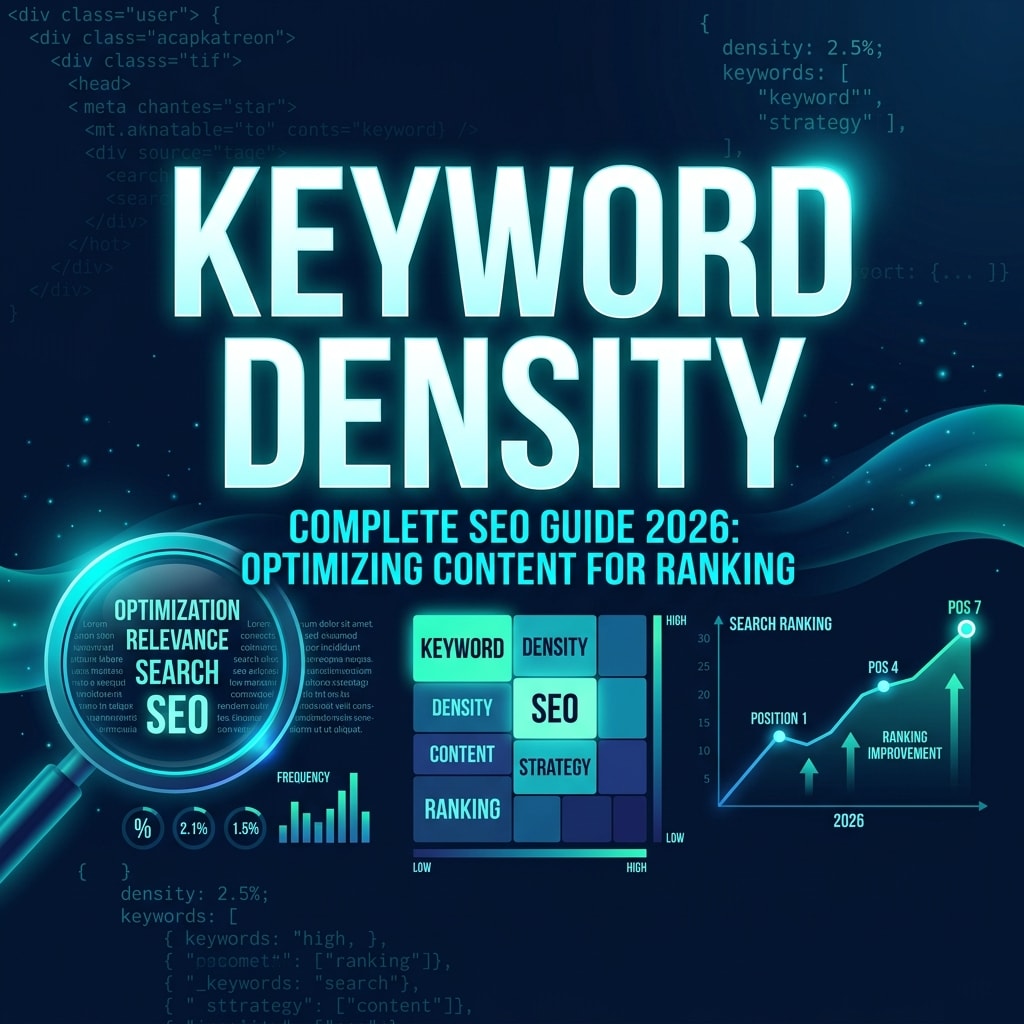
Keyword density is the percentage of times a target keyword appears on a webpage relative to the total word count. The classic formula is simple: divide keyword frequency by total words, then multiply by 100.
For example: if your article is 1,000 words long and your primary keyword appears 10 times, your keyword density is 1%. That number sounds harmless — and in most cases, it is.
But here's what most SEO guides won't tell you: Google stopped using keyword density as a direct ranking signal years ago. What replaced it is far more nuanced, and understanding the difference is what separates amateur SEO from professional-grade optimization.
The Real History of Keyword Density in SEO
Back in the late 1990s and early 2000s, search engines were primitive. They matched pages to queries by counting how many times a word appeared. Webmasters quickly figured out they could "stuff" pages with keywords to rank higher. A footer with 200 invisible white-on-white keywords? Absolutely common.
Google's algorithms evolved rapidly. Hummingbird (2013), RankBrain (2015), BERT (2019), and MUM (2021) shifted the entire ranking model toward semantic understanding. Today, Google doesn't count your keywords — it understands your topic.
So why does anyone still talk about keyword density? Because it still functions as a sanity check — not a magic ranking lever.
What Is the Ideal Keyword Density for SEO in 2026?
There is no universally "correct" keyword density. However, the practical industry benchmark that most SEO professionals follow is:
- 1% to 2% for primary keywords in standard-length articles
- 0.5% to 1% for secondary and LSI (Latent Semantic Indexing) keywords
- Never exceed 3% — anything beyond this consistently correlates with over-optimization penalties
For a 1,500-word article, that means your primary keyword should appear naturally between 15 and 30 times. If it appears 50+ times, you have a problem — even if every instance feels "natural" to you.
| Article Length | Recommended Keyword Frequency | Density Range |
|---|---|---|
| 500 words | 5–10 times | 1%–2% |
| 1,000 words | 10–20 times | 1%–2% |
| 1,500 words | 15–30 times | 1%–2% |
| 2,000 words | 20–40 times | 1%–2% |
| 3,000+ words | 30–50 times | 1%–1.5% |
Why Keyword Stuffing Still Gets Websites Penalized in 2026
Google's Helpful Content System and SpamBrain algorithms actively detect and downgrade pages that prioritize keyword manipulation over user experience. Here's what triggers a penalty flag:
- Repeating a keyword in every sentence unnaturally
- Hiding keywords with CSS (white text, tiny fonts, off-screen elements)
- Forcing keyword variants into alt text without descriptive relevance
- Using the exact same anchor text for every internal link
- Stuffing keywords into H2 and H3 tags beyond logical hierarchy
The penalty isn't always immediate. Many sites see gradual ranking decline over months as Google reassesses trustworthiness signals.
How Google Actually Reads Your Content Today
Modern Google uses three layers of understanding:
- Entity recognition: It identifies named entities (brands, people, places, products) and their relationships to the topic.
- Semantic clustering: It groups topically related terms together — so writing about "keyword density" also needs to mention "TF-IDF," "search intent," and "LSI keywords" to signal depth.
- User signal validation: Click-through rate, bounce rate, time on page, and return visits tell Google whether your content actually delivered value.
A page that never mentions the primary keyword explicitly — but covers every sub-topic exhaustively — can outrank a page with a "perfect" 1.5% density. This is entity SEO in action.
TF-IDF: The Smarter Alternative to Keyword Density
TF-IDF (Term Frequency–Inverse Document Frequency) is the statistical measure that underlies how search engines weight terms against their usage across the entire web. Unlike raw keyword density, TF-IDF normalizes for context.
In practical terms: if every top-ranking article about "keyword density" also mentions "content optimization," "search intent," and "semantic SEO" — and your article doesn't — your content is semantically thinner than its competitors, regardless of how many times you used the primary keyword.
Tools like our free Keyword Density Checker analyze TF-IDF signals alongside raw density, giving you a fuller picture of where your content sits relative to what's already ranking.
Where to Naturally Include Your Target Keyword
Placement matters more than raw count. Here's a proven framework:
- Title tag (H1): Include exact or close-match keyword near the beginning
- First 100 words: State the topic clearly — don't bury your lead
- One H2 subheading: Not every H2, just one strategically chosen section
- Body content: Use naturally throughout, mixed with synonyms
- Image alt text: One descriptive alt tag that includes the keyword
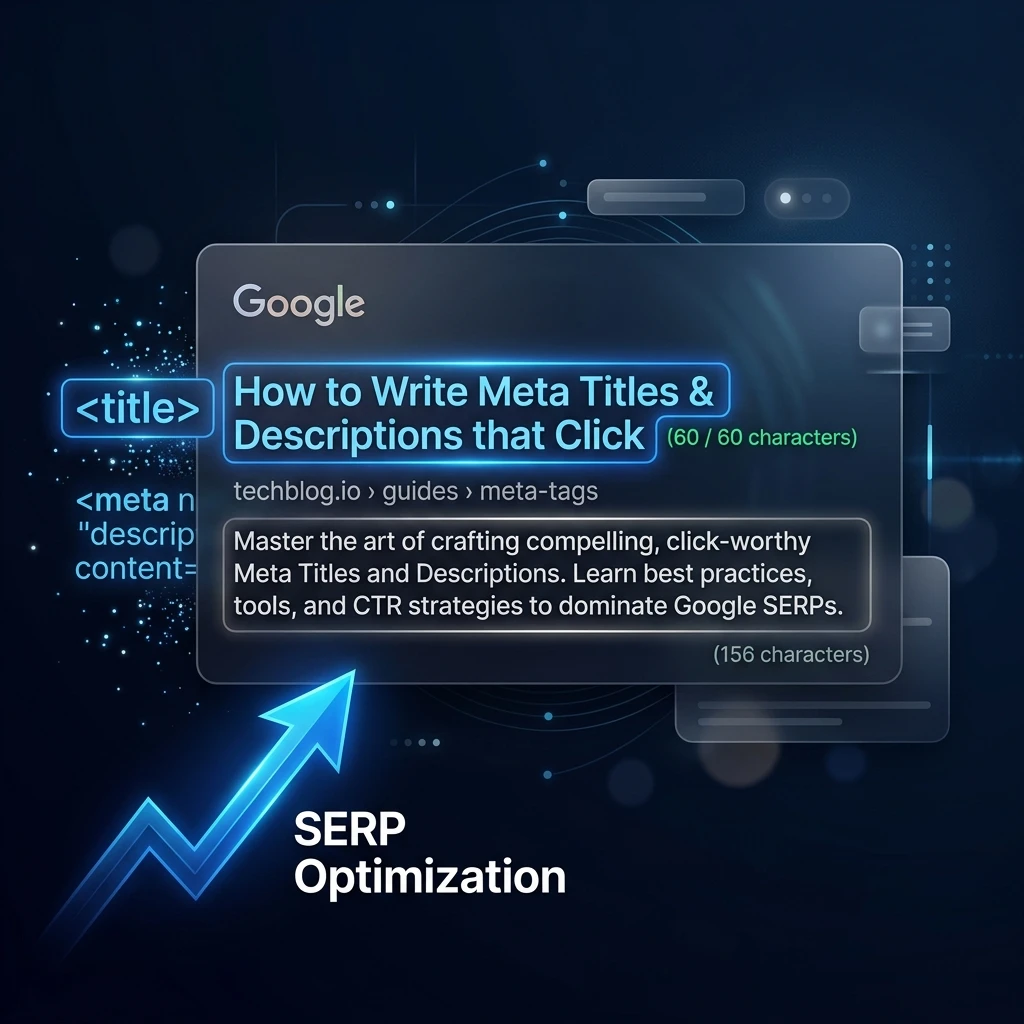
- Meta description: Include naturally — it doesn't affect ranking directly but does influence CTR
- Conclusion paragraph: A natural closing reference reinforces topical relevance
LSI Keywords: The Missing Ingredient in Most SEO Strategies
LSI (Latent Semantic Indexing) keywords are conceptually related terms that appear frequently alongside your primary keyword across the web. They signal to Google that your content is contextually rich and not just targeting a single phrase.
For "keyword density," strong LSI keywords include:
- keyword frequency
- on-page SEO optimization
- content relevance
- keyword stuffing penalty
- term frequency
- search intent matching
- semantic keywords
- natural language processing
Notice how this article naturally uses most of those phrases. That's intentional — and it's what your content needs to do too.
How to Check Keyword Density on Your Own Content
The fastest method: use our Keyword Density Checker tool. Paste your content, enter your target keyword, and get an instant breakdown of density percentage, total word count, and keyword distribution across the page.
What to look for in your analysis:
- Primary keyword density between 1–2%
- Even distribution across the article (not front-loaded)
- Presence of semantic variants and related terms
- No single paragraph containing the keyword more than twice
If you're also optimizing your page's broader structure, pair this with the On-Page SEO Checker for a complete technical audit.
5 Keyword Density Mistakes That Kill Rankings
- Optimizing for density before intent: Understanding what the searcher actually wants is step one. No amount of keyword optimization saves content that answers the wrong question.
- Ignoring secondary keywords: Single-keyword pages are thin by definition. Cover the topic cluster.
- Not using keyword variants: "SEO strategy," "search engine optimization strategy," and "organic search strategy" are all the same concept — use them all.
- Treating every page the same: A product page, a blog post, and a landing page have different keyword density norms. Blog posts can naturally be lower density than highly targeted landing pages.
- Checking density and stopping there: Always follow up with a full SEO structure analysis to catch issues keyword density tools miss.
Key Takeaways
- Keyword density (1–2%) is a sanity check, not a ranking formula
- Google ranks based on topic depth, entity relationships, and user satisfaction — not keyword count
- TF-IDF is more actionable than raw density in 2026
- Natural semantic variation is more powerful than exact keyword repetition
- Keyword stuffing above 3% risks algorithmic over-optimization penalties
- Use a keyword density checker to audit content before publishing
What is a good keyword density percentage for SEO?
The industry benchmark is 1–2% for primary keywords. This means a 1,000-word article should mention the target keyword 10–20 times. Anything above 3% risks over-optimization signals. More important than the number is natural placement in H1, first paragraph, subheadings, and body copy with semantic variants throughout.
Does Google penalize for high keyword density?
Yes — Google's SpamBrain and Helpful Content systems can algorithmically downgrade pages that prioritize keyword manipulation. The threshold isn't fixed, but consistently exceeding 3–4% density, especially with exact-match repetition, is a recognized risk pattern. Focus on natural language and topic depth instead.
What's the difference between keyword density and TF-IDF?
Keyword density measures how often a term appears as a percentage of total words on one page. TF-IDF (Term Frequency–Inverse Document Frequency) compares your keyword usage against how it's used across thousands of competing documents. TF-IDF is the more sophisticated signal because it tells you whether your keyword usage is normal for the topic or outlier-heavy.
How do I check the keyword density of my content?
Paste your content into SM Developers' free Keyword Density Checker tool at smdevs.in/tools/seo/keyword-density-checker. It instantly calculates the density percentage, total word count, keyword frequency, and distribution pattern — all without requiring a signup or download.
Is keyword density still important in 2026?
It remains a useful guardrail, not a primary strategy. In 2026, Google's ranking algorithms prioritize semantic depth, entity coverage, user engagement signals, and EEAT (Experience, Expertise, Authoritativeness, Trustworthiness) over raw keyword metrics. Think of keyword density as a floor constraint — stay above 0.5% and below 3% — while focusing your real effort on content depth.