Key Takeaways
- SEO (Search Engine Optimisation) is the practice of improving your website to get higher rankings in search engine results. This complete beginner's guide covers everything you need to know: how search engines work, on-page SEO, off-page SEO, and technical SEO fundamentals.
What is SEO?
SEO (Search Engine Optimisation) is the process of improving your website's content, structure, and authority so it ranks higher in organic (unpaid) search engine results. Higher rankings = more visibility = more traffic = more business.
There are approximately 8.5 billion Google searches per day. The top 5 results receive over 75% of all clicks. If your site isn't on page 1, you're essentially invisible to most searchers.
How Search Engines Work
Search engines like Google work in three main stages:
1. Crawling
Googlebot (a robot program) continuously visits websites, following links from page to page. It discovers new pages and updates information about existing ones.
2. Indexing
After crawling, Google analyses each page's content, images, videos, and other media. It stores this information in its search index — a massive database of all web pages Google knows about.
3. Ranking
When someone searches, Google's algorithm analyses hundreds of ranking signals to determine which pages are most relevant and authoritative, presenting the results in order of relevance.
The Three Pillars of SEO
1. On-Page SEO
Optimising the content and HTML elements on your actual pages:
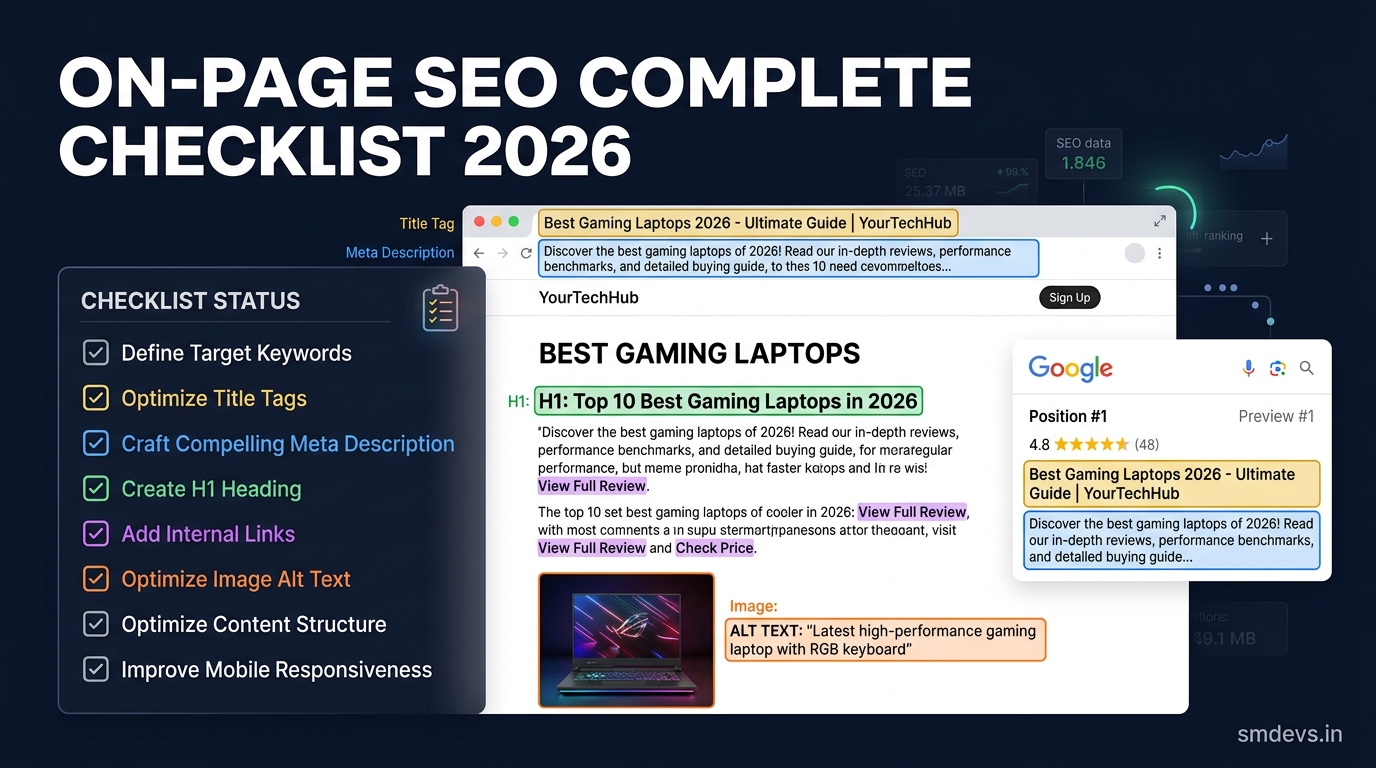
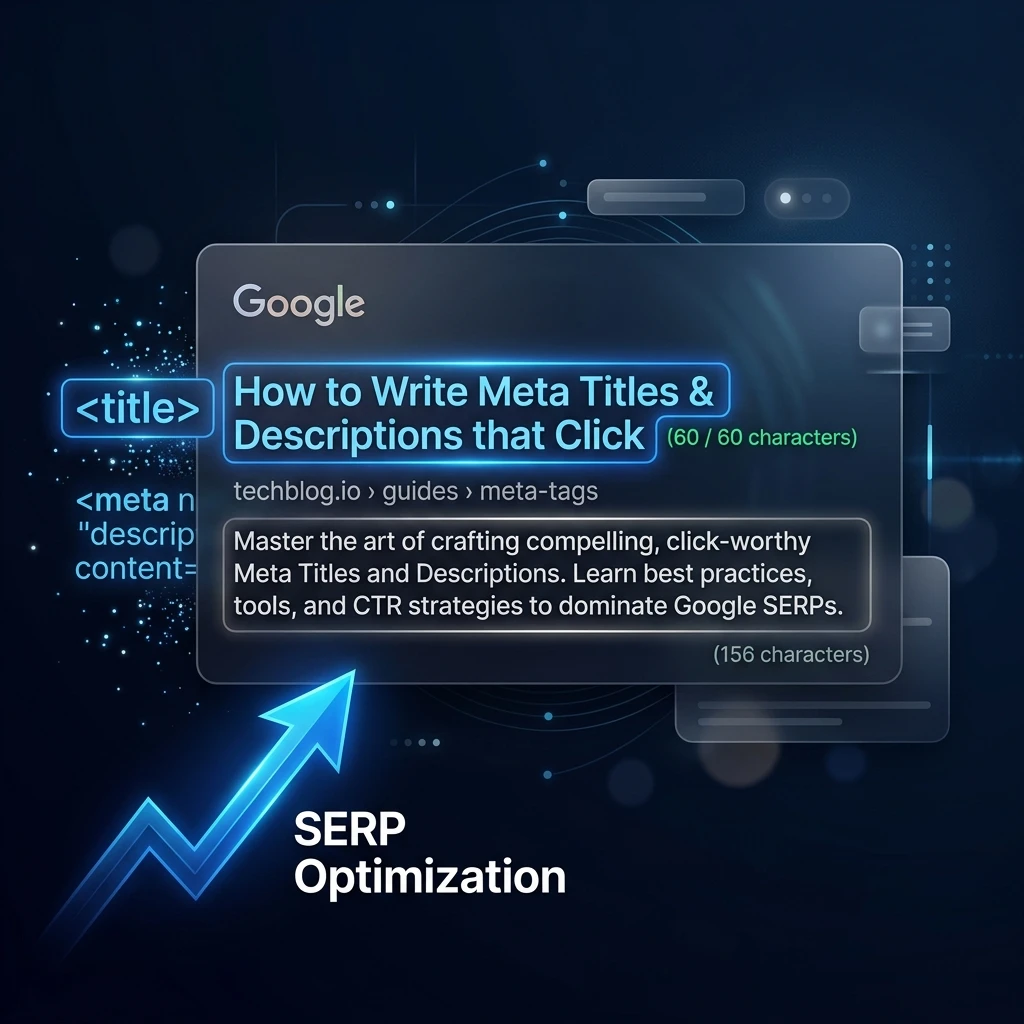
- Title tag: The clickable blue link in search results. Include your keyword. Keep under 60 characters.
- Meta description: The preview text under the title. Describe the page compellingly. 150–160 characters.
- Headings (H1, H2, H3): Organise content. One H1 per page containing the main keyword.
- Content quality: Comprehensive, original, helpful content that satisfies user intent.
- Keyword usage: Use target keywords naturally — in the title, first paragraph, headings, and throughout the content.
- Images: Compress, use descriptive alt text, use descriptive filenames.
2. Off-Page SEO (Link Building)
Building authority through links from other websites:
- Backlinks from high-authority sites (DA 50+) significantly boost rankings
- Earn links through great content, outreach, guest posting
- Avoid buying links or using link farms (Google penalty risk)
- Brand mentions (even without links) contribute to E-E-A-T signals
3. Technical SEO
Ensuring search engines can efficiently crawl and index your site:
- Fast page load speed (Core Web Vitals)
- Mobile-friendly design
- HTTPS security
- XML sitemap
- Proper robots.txt
- Structured data (Schema markup)
SEO Timeline: When to Expect Results
- Month 1–2: Technical fixes, publishing first content
- Month 3–4: First rankings appearing for long-tail keywords
- Month 6–9: Meaningful organic traffic from 50+ articles
- Month 12+: Significant traffic if consistent publishing and link building
SEO is a long-term investment. Don't expect overnight results — but also don't underestimate the compounding power of sustained effort.
SEO Ranking Factors (2026)
Google uses 200+ ranking signals. The most important ones are:
- Content quality and relevance to the query
- Backlink quality and quantity
- Core Web Vitals (page speed, interactivity)
- E-E-A-T (Experience, Expertise, Authoritativeness, Trustworthiness)
- On-page optimisation (title, content, headings)
- User experience signals (engagement, bounce rate)
- Mobile-friendliness
Free SEO Tools to Get Started
- Google Search Console: Track rankings, clicks, indexation issues — completely free
- Google Analytics: Understand your traffic and user behaviour
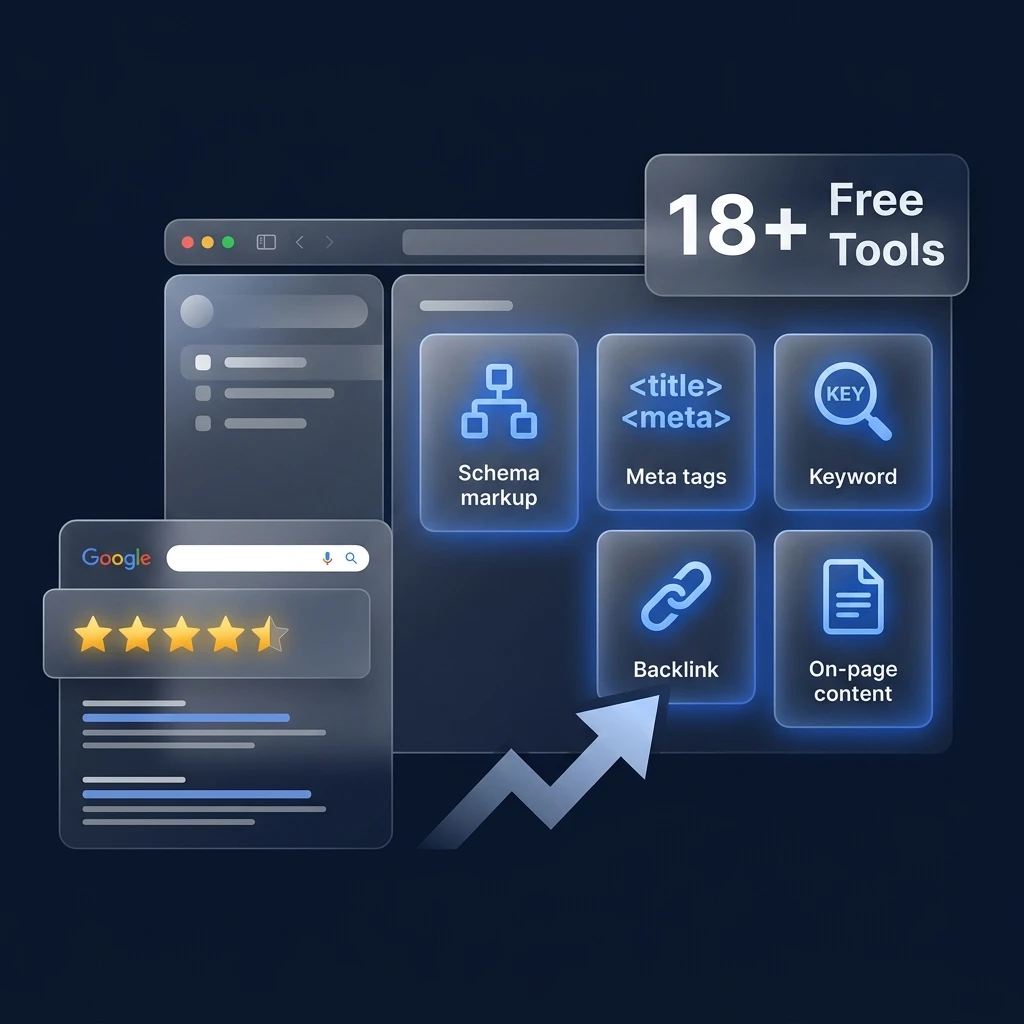
- SM Developers SEO Tools: Free keyword density checker, schema generator, sitemap generator, and more
- Ubersuggest: Keyword research (limited free daily searches)
- Screaming Frog: Site audit tool (free up to 500 URLs)