Key Takeaways
- Keyword research is the foundation of every successful SEO strategy. This guide shows you exactly how to find the right keywords, analyse competition, understand search intent, and prioritise which keywords to target for maximum traffic.
What is Keyword Research?
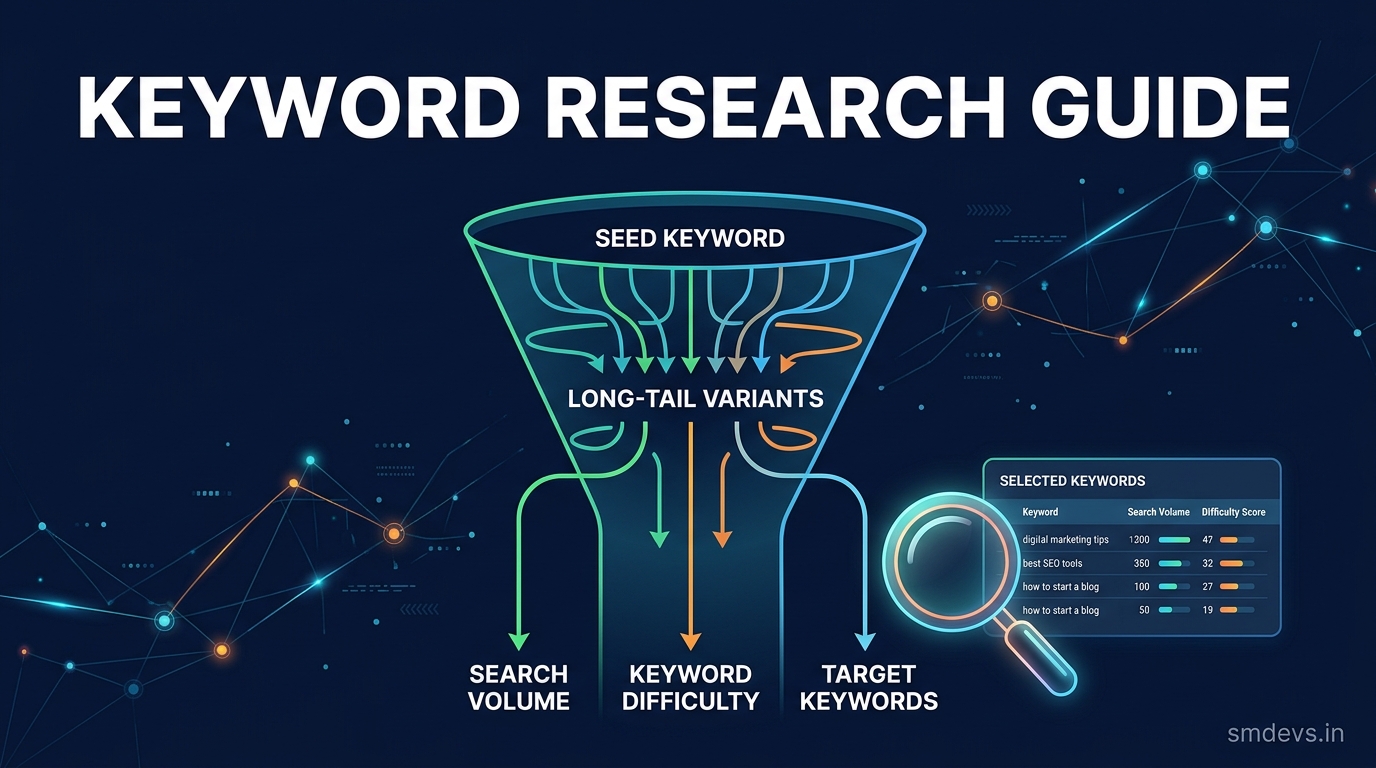
Keyword research is the process of discovering what words and phrases people type into search engines to find information, products, or services. It's the foundation of SEO — choosing the right keywords determines whether your content gets found or buried on page 10.
Effective keyword research answers three questions: What are people searching for? How often? How hard is it to rank?
Why Keyword Research Matters
- Without keyword research, you're guessing what to write about
- The right keyword can bring thousands of visitors per month
- Wrong keywords = content that nobody searches for
- Keyword research reveals exactly what your audience wants
Key Metrics in Keyword Research
1. Search Volume
How many times per month people search for that keyword. High volume = more potential traffic. But high volume also usually means high competition.
2. Keyword Difficulty (KD)
A score (0–100) indicating how hard it is to rank on page 1. KD 0–30 = easy, KD 31–60 = medium, KD 61–100 = hard. New sites should target KD under 30.
3. Search Intent
The reason behind the search:
- Informational: "what is keyword research" (learning)
- Navigational: "Ahrefs login" (going somewhere)
- Commercial: "best keyword research tools" (comparing)
- Transactional: "buy Ahrefs subscription" (buying)
4. CPC (Cost Per Click)
How much advertisers pay per click for that keyword in Google Ads. High CPC keywords often have high commercial value.
Step-by-Step Keyword Research Process
Step 1: Define Your Niche and Audience
Before searching for keywords, know who you're writing for. An SEO blog targeting beginners should use simple educational terms. A trading site targeting professionals can use more technical vocabulary.
Step 2: Brainstorm Seed Keywords
Seed keywords are broad terms that describe your topic. For an SEO tools site: "SEO tools", "keyword checker", "meta tag generator". For a trading site: "stock trading", "technical analysis", "trading calculators".
Step 3: Expand with Free Tools
- Google Autocomplete: Type your seed keyword and note suggestions
- People Also Ask: Click the PAA boxes in Google for related questions
- Google Keyword Planner: Free with Google Ads account
- Ubersuggest: Free limited daily searches
- Answer the Public: Question-based keyword discovery
Step 4: Analyse Keyword Metrics
For each keyword, check: search volume, keyword difficulty, search intent, and CPC. Filter for keywords that match your current domain authority and content goals.
Step 5: Check SERP Competition
Google your target keyword and analyse the top 10 results:
- Are they high-authority sites (Wikipedia, Forbes)? Hard to beat.
- Are they thin or outdated articles? You can outrank them.
- Do they match your content type? If top results are all videos, a blog post may struggle.
Step 6: Group Keywords by Topic
Group related keywords under topic clusters. All variations of "what is keyword research" belong to the same article. "Keyword research tools", "best free keyword tools", "keyword planner free" can all be one article targeting the tool comparison angle.
Step 7: Prioritise and Schedule
Prioritise based on: traffic potential × likelihood of ranking × business value. Low-competition, medium-volume keywords should come first for new sites.
Long-Tail vs Short-Tail Keywords
| Type | Example | Volume | Competition | Best For |
|---|---|---|---|---|
| Short-tail | "SEO" | Very high | Very high | Established sites |
| Mid-tail | "SEO tools" | High | High | Growing sites |
| Long-tail | "free SEO tools for beginners 2026" | Low | Low | New sites |
Long-tail keywords are 3–5+ words and account for 70% of all searches. They're easier to rank for and have higher conversion rates because intent is clearer.
Best Free Keyword Research Tools (2026)
- Google Search Console: See which keywords already bring traffic to your site
- Google Keyword Planner: Volume and CPC data (requires Ads account)
- Ubersuggest: 3 free daily searches with KD and volume
- Keywords Everywhere: Browser extension with volume data
- SM Developers Keyword Suggestion Tool: Free unlimited suggestions
Common Keyword Research Mistakes
- Targeting keywords that are too competitive for your domain authority
- Ignoring search intent — writing informational content for transactional queries
- Keyword stuffing in content instead of natural usage
- Not refreshing keyword research regularly (trends change)
- Targeting only high-volume keywords and ignoring long-tail opportunities