Key Takeaways
- GEO (Generative Engine Optimization) is optimizing content to be cited by AI answer engines — Google AI Overviews, ChatGPT, Perplexity, and Gemini
- AI systems prefer structured, definition-first, entity-rich content with clear section hierarchy
- Schema markup — especially FAQ, HowTo, and Article — is a direct GEO signal
- Content must be independently retrievable section by section, not just as a whole page
- E-E-A-T signals (experience, expertise, authoritativeness, trustworthiness) are amplified in GEO ranking decisions
What Is GEO and Why Does It Matter Right Now?
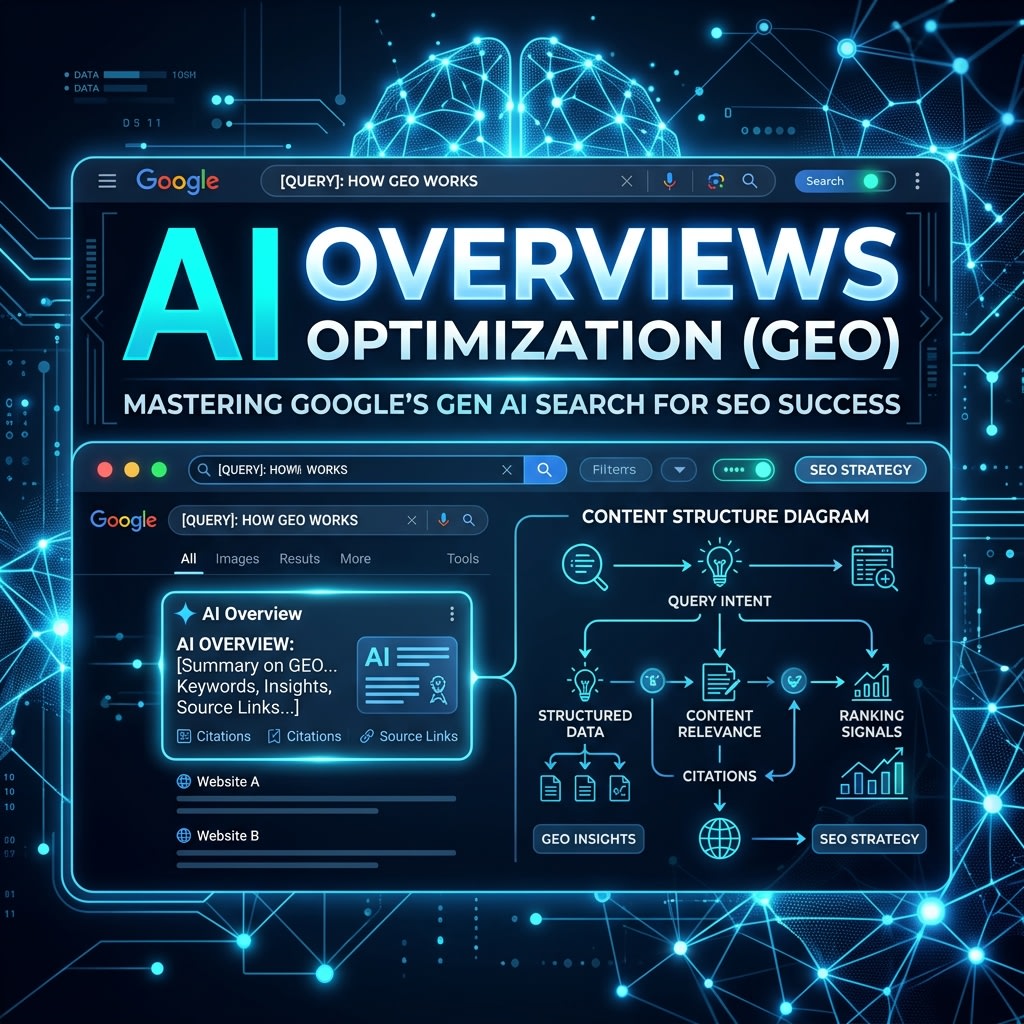
Generative Engine Optimization (GEO) is the practice of optimizing your content to be cited, retrieved, and surfaced by AI-powered answer engines — including Google AI Overviews, ChatGPT, Perplexity, Gemini, and Claude.
The shift is significant. Google AI Overviews now appear on an estimated 47% of all Google searches, according to tracking data from multiple SEO platforms. When an AI Overview appears, it occupies the entire visible above-the-fold space. Organic listings are pushed below it. The websites Google's AI cites in these overviews receive massive visibility — the sites it doesn't cite become invisible to that query's traffic.
GEO is not a replacement for SEO. It is an extension of it — one that has become urgent in 2026 because the window for early adoption is still open. Most content published before 2024 was never written with AI retrieval in mind. That gap is your opportunity.
How Google AI Overviews Actually Select Content
Google has not published a technical specification for AI Overview content selection. However, extensive analysis of which pages get cited reveals consistent patterns:
- Definition-first structure: Pages that open with a direct, clear definition of the topic within the first paragraph are consistently preferred. AI systems need an immediate authoritative answer to the core question — not a 200-word preamble.
- Independent section retrievability: Every H2 section should be able to stand alone as a complete, useful answer. AI systems can extract individual sections independent of the full page context.
- Structured data presence: Pages with FAQ schema, HowTo schema, and Article schema are significantly more likely to be cited because schema provides machine-readable confirmation of the content's structure and intent.
- Entity saturation: High-ranking GEO content mentions all the semantically expected entities for a topic — tools, techniques, people, brands, and concepts that appear alongside the primary topic across the training data.
- Source authority signals: E-E-A-T (Experience, Expertise, Authoritativeness, Trustworthiness) is more heavily weighted in AI retrieval than in traditional organic ranking. AI systems are specifically trained to prefer authoritative sources.
The 7 GEO Content Signals — A Practical Framework
Signal 1: Direct Answer Blocks
Every major section must open with a concise 40–60 word answer to the question implied by the heading. This format exactly matches the structure AI systems use when constructing their answers. If your H2 asks "What is topical authority?" — the first paragraph must answer it directly, not build to the answer over three paragraphs.
Signal 2: Definition Clarity
Name the concept explicitly in the first sentence. "X is Y" sentence structures are disproportionately represented in AI Overview citations. Ambiguous or delayed definitions are consistently skipped by AI retrieval models.
Signal 3: Numbered and Bulleted Structure
AI systems convert your content into structured summaries. Content that is already in list format requires less transformation — making it more likely to be cited verbatim. How-to steps, checklists, and comparison tables are the highest-retrieval content formats.
Signal 4: FAQ Formatting
FAQ sections with real questions (based on actual People Also Ask data) implemented with FAQPage schema are among the most consistently cited GEO content formats. Google's AI directly pulls from FAQ schema when answering conversational queries.
Signal 5: Statistical Specificity
Content that includes specific numbers, percentages, timelines, and benchmarks is preferred over vague qualitative claims. "Improve your rankings" is ignored. "Reduce page load time below 2.5 seconds to meet Google's LCP 'Good' threshold" is cited.
Signal 6: Schema Markup Coverage
Implement at minimum: Article schema (with author, datePublished, publisher), FAQPage schema for FAQ sections, and BreadcrumbList schema for navigation context. Use the free Schema Generator and validate with the Schema Validator to ensure zero errors before publishing.
Signal 7: Canonical Authority
Each page must have a proper canonical tag pointing to its own URL — not to the homepage or a parent category. AI systems use canonical URLs to attribute citations. A misconfigured canonical is one of the most common reasons well-written content is never cited. Use the Meta Tag Generator to ensure every page's canonical is correctly set.
GEO vs Traditional SEO: The Key Differences
| Factor | Traditional SEO | GEO |
|---|---|---|
| Primary goal | Rank in the blue links | Be cited in the AI answer |
| Content structure | Keyword density + headings | Definition-first + retrievable sections |
| Schema importance | Helpful for rich results | Direct citation signal |
| Backlinks | High importance | Moderate — E-E-A-T signals dominate |
| Answer format | Optimizes for click | Optimizes for zero-click extraction |
| Content length | Longer is often better | Depth matters more than length |
| Update frequency | Moderate | High — AI systems prefer recently updated content |
How to Write Content That Gets Retrieved by AI
The GEO writing framework operates at both the page level and the section level.
Page Level:
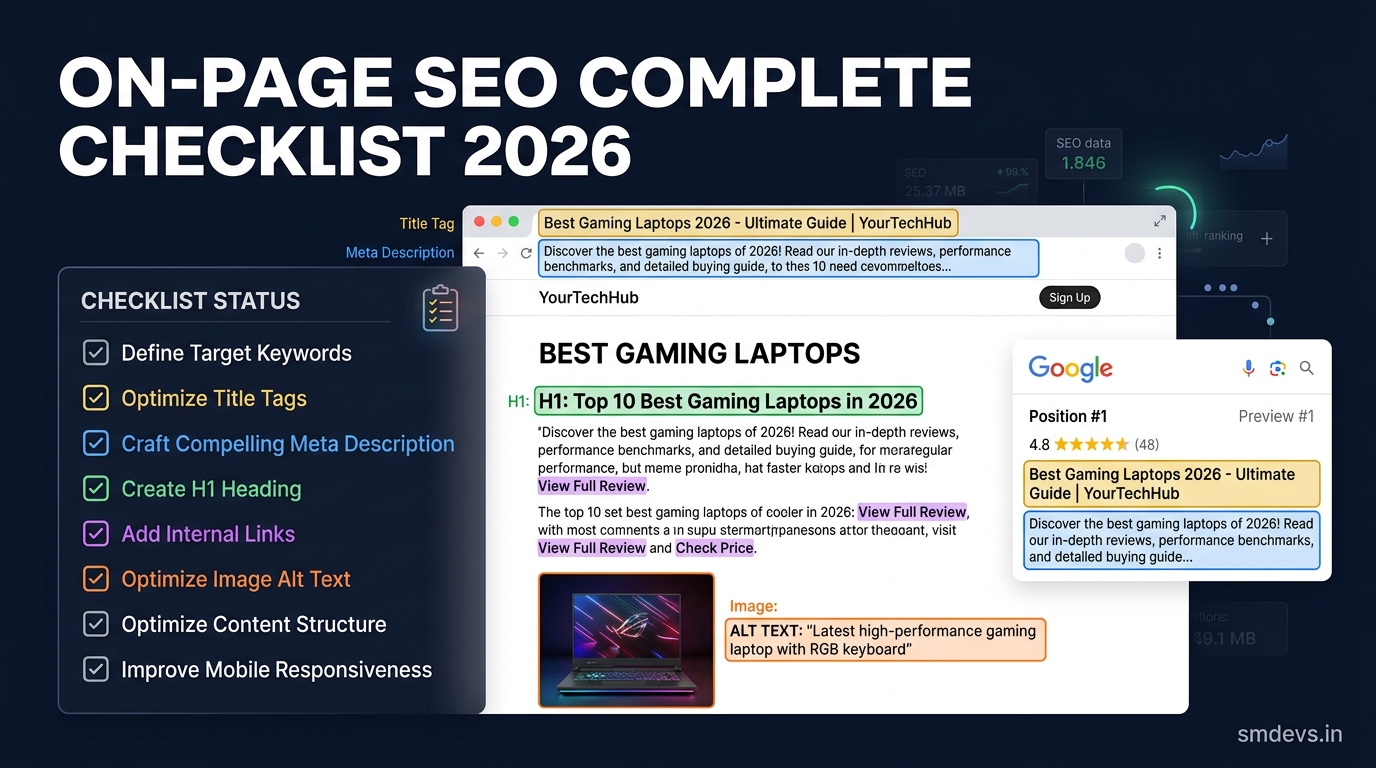
- Title should be a direct question or a clear "what is / how to" statement
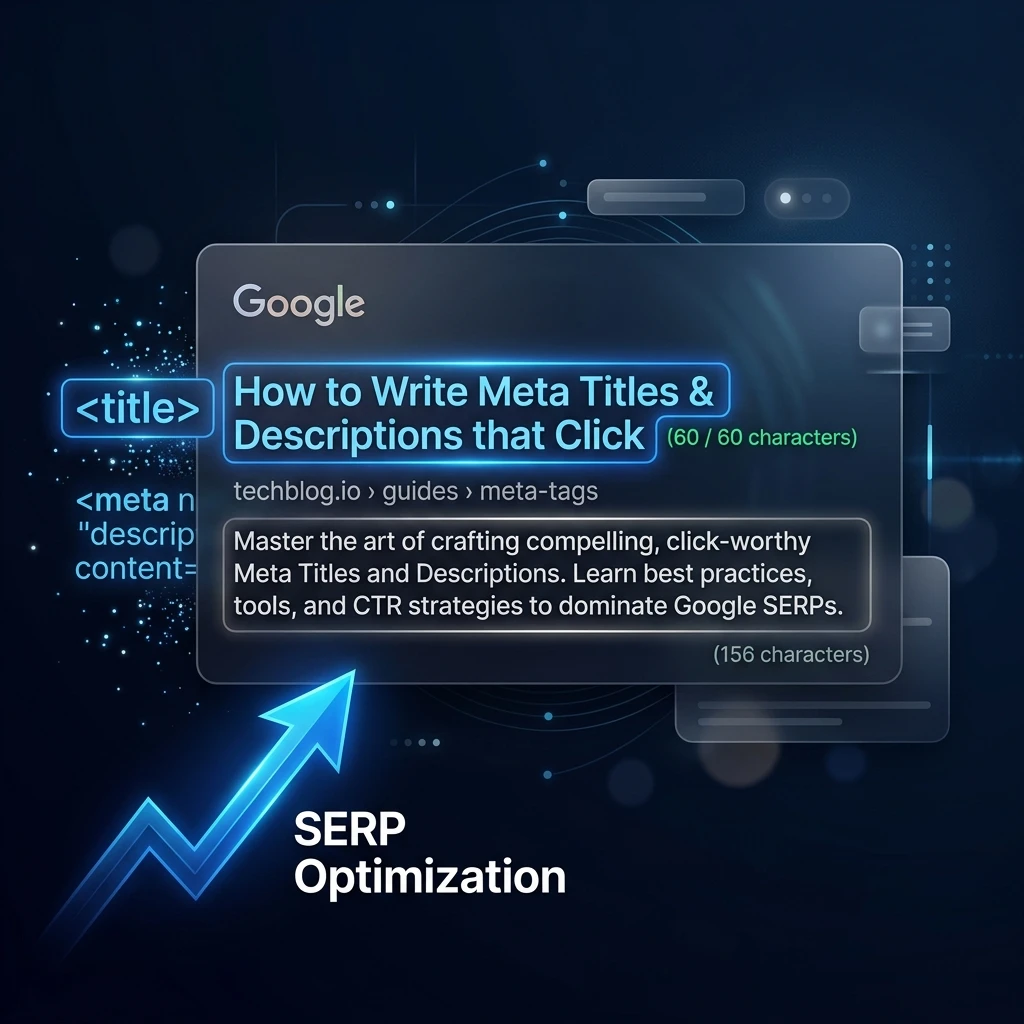
- Meta description should be a self-contained answer to that question (Google uses it)
- H1 should match or closely mirror the primary query
- First 100 words must contain a clear, direct answer to the core question
Section Level (for each H2):
- Open with a 40–60 word direct answer block
- Follow with supporting evidence, examples, or data
- Close with a clear summary statement or key takeaway
- Use schema at the FAQ section level via FAQPage markup
Which AI Systems to Optimize For — and How They Differ
| AI System | Primary Citation Signal | Content Preference |
|---|---|---|
| Google AI Overviews | Organic ranking + schema + E-E-A-T | Definition-first, structured, cited sources |
| Perplexity | Web index + recency | Specific, data-driven, recently published |
| ChatGPT (with browse) | Domain authority + fresh content | Authoritative, in-depth, well-linked |
| Gemini | Google Search index alignment | Mirrors Google AI Overviews preferences |
| Claude | Training data + Bing index | Clear structure, neutral tone, evidence-based |
The GEO Audit: 8 Things to Check on Every Page
- Does the page open with a direct definition in the first 100 words?
- Does every H2 start with a direct answer to the section question?
- Is FAQPage schema implemented with real PAA-based questions?
- Is Article schema present with author, datePublished, and publisher?
- Is the canonical tag pointing to the page's own URL (not the homepage)?
- Does the content contain specific statistics, benchmarks, or named entities?
- Is there a BreadcrumbList schema for navigation context?
- Has the page been updated within the last 6 months?
Run every page through the On-Page SEO Checker to audit structural signals, and through the Schema Validator to confirm structured data is error-free.
Key Takeaways
- GEO is the practice of optimizing content to be cited by AI answer engines — Google AI Overviews, ChatGPT, Perplexity, and Gemini
- AI systems prefer definition-first, section-retrievable, schema-rich content
- FAQ schema, Article schema, and correct canonicals are direct GEO signals
- Write for section-level extraction — every H2 must be independently complete
- The window for GEO early adoption is open now — most existing content was written before AI retrieval was a factor
What is GEO (Generative Engine Optimization)?
GEO stands for Generative Engine Optimization — the practice of structuring and writing content specifically so AI-powered answer engines (Google AI Overviews, ChatGPT, Perplexity, Gemini) retrieve and cite it when answering user queries. GEO builds on traditional SEO by adding definition-first formatting, enhanced schema markup, and section-level answer completeness as core optimization signals.
How do I get my content featured in Google AI Overviews?
To appear in Google AI Overviews: (1) Open every page with a direct definition in the first 100 words. (2) Structure each H2 section as a self-contained answer. (3) Implement FAQPage and Article schema with complete author and publisher data. (4) Ensure your canonical tag is correct — not pointing to the homepage. (5) Include specific statistics and named entities throughout. (6) Update content regularly — AI systems prefer recently published or updated pages.
Is GEO different from SEO?
GEO and SEO are complementary disciplines. Traditional SEO optimizes for position in Google's blue link results — clicks and rankings. GEO optimizes for being cited in AI-generated answer panels (AI Overviews, Perplexity answers, ChatGPT responses) where the AI summarizes information rather than displaying a ranked list. Strong SEO is a prerequisite for GEO — but GEO requires additional structural, schema, and formatting signals that standard SEO doesn't address.
What schema markup is most important for AI Overviews?
The three most important schema types for GEO are: (1) FAQPage schema — directly used by Google to pull FAQ content into AI Overviews; (2) Article schema with author, datePublished, dateModified, and publisher fields — signals content authority and freshness; (3) BreadcrumbList schema — provides navigational context that AI systems use to understand page hierarchy. Validate all schema with Google's Rich Results Test or the free Schema Validator at smdevs.in/tools/seo/schema-validator.
Does schema markup help rank in ChatGPT and Perplexity?
Schema markup primarily benefits Google AI Overviews and Bing Copilot, which read structured data directly. ChatGPT and Perplexity use web browsing to find and cite sources — they respond more to content clarity, domain authority, recency, and specificity than to raw schema. However, well-implemented schema typically correlates with higher-quality, better-structured content that all AI systems prefer to cite.