Key Takeaways
- Your break-even price is the price at which a trade covers all costs (entry price + all fees) with zero profit or loss.
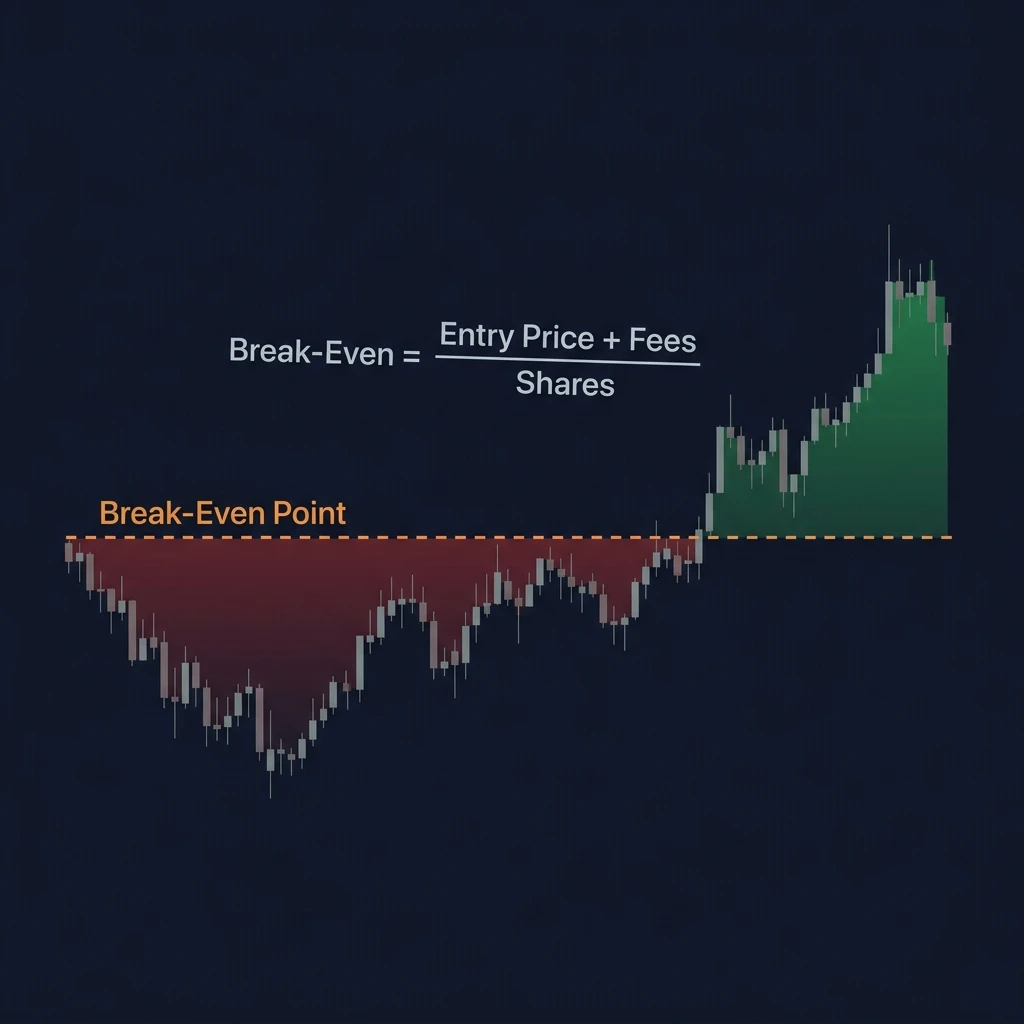
- The basic formula: Break-Even Price = Entry Price + (Total Fees ÷ Number of Shares).
- For short trades: Break-Even Price = Entry Price − (Total Fees ÷ Number of Shares).
- Always include brokerage fees, STT, exchange charges, GST, and SEBI turnover fees for accurate calculation.
- Use our free Break-Even Calculator to compute your exact break-even point before entering any trade.
What Is Break-Even in Trading?
Your break-even price in trading is the exact price at which a position generates zero profit and zero loss — the point where your total revenue from selling equals your total cost of buying, including all transaction fees. If you exit the trade at the break-even price, you walk away with the same amount of money you started with.
Understanding your break-even point is a fundamental risk management concept. Every trade you enter has a cost: brokerage commissions, exchange fees, taxes, and spreads. These costs mean you're already slightly "in the red" the moment you enter a position. Your break-even price accounts for all these costs and tells you exactly how far the price needs to move in your favor just to cover them.
Why Break-Even Price Matters
Many beginner traders ignore fees when planning trades, which leads to systematic underperformance. If you're buying 100 shares at ₹500 each and your total fees are ₹200, your break-even isn't ₹500 — it's ₹502. Every trade you exit between ₹500 and ₹502 feels like a small win but is actually a loss once you account for transaction costs.
For high-frequency traders and options traders where fees represent a larger percentage of position size, this difference is even more significant. Accurate break-even calculation is the difference between a sustainable trading strategy and one that slowly bleeds capital through transaction costs.
The Break-Even Price Formula (Long Trades)
For a standard long (buy) position:
Break-Even Price = Entry Price + (Total Fees ÷ Number of Shares)Where Total Fees = all costs to enter + all costs to exit the trade, including:
- Brokerage commission (entry)
- Brokerage commission (exit)
- Securities Transaction Tax (STT) — on sell side for equity delivery
- Exchange transaction charges
- GST on brokerage
- SEBI turnover fees
- Stamp duty
The Break-Even Price Formula (Short Trades)
For a short (sell first, buy later) position:
Break-Even Price = Entry Price − (Total Fees ÷ Number of Shares)Since you profit when price falls, your break-even is below your entry price — you need the stock to drop enough to cover transaction costs before you're in profit.
Worked Example: Long Trade With All Fees Included
Scenario: You buy 200 shares of XYZ at ₹1,000 each. You're using a flat-fee broker charging ₹20 per order. Here's the full fee breakdown:
| Fee Type | Amount |
|---|---|
| Brokerage (buy order) | ₹20.00 |
| Brokerage (sell order) | ₹20.00 |
| STT (0.1% on sell value of ₹200,000) | ₹200.00 |
| Exchange charges (0.00345% on turnover ₹400,000) | ₹13.80 |
| GST (18% on brokerage + exchange) | ₹12.08 |
| SEBI fee (₹10 per crore turnover) | ₹0.40 |
| Stamp duty (0.015% on buy value) | ₹30.00 |
| Total Fees | ₹296.28 |
Calculation:
Break-Even Price = ₹1,000 + (₹296.28 ÷ 200 shares)
Break-Even Price = ₹1,000 + ₹1.48
Break-Even Price = ₹1,001.48
You need XYZ to trade above ₹1,001.48 for this trade to be profitable. Any exit between ₹1,000 and ₹1,001.48 results in a net loss after fees.
Break-Even Formula Including Entry and Exit Fees Separately
For a more precise calculation where entry and exit fees differ (common in options trading):
Break-Even Price = Entry Price + (Entry Fees ÷ Quantity) + (Exit Fees ÷ Quantity)This is particularly important for options contracts where premium, STT on options (applied differently on exercise vs expiry), and brokerage all vary depending on how you exit the position.
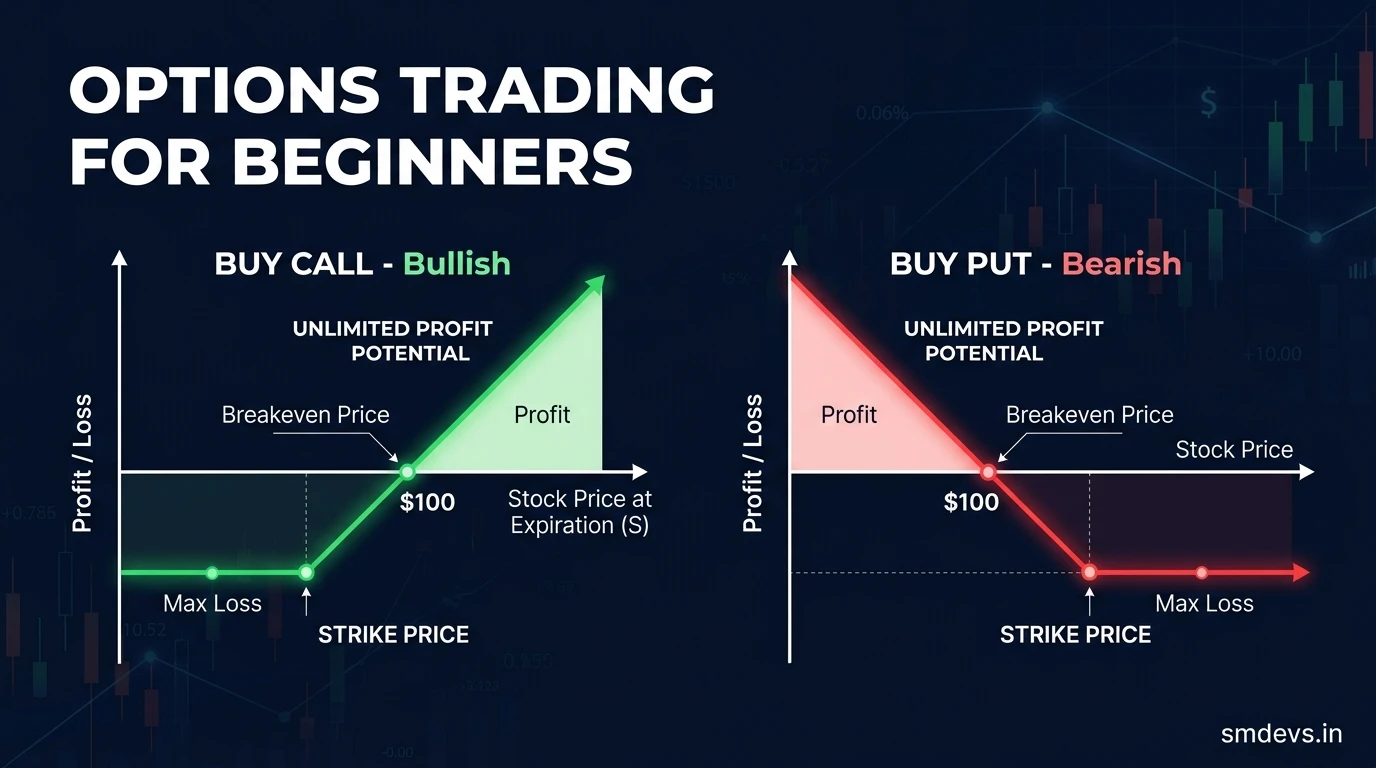
Break-Even in Options Trading
For options, break-even calculation works differently because you're dealing with premium paid, not share price:
For a Long Call Option:
Break-Even = Strike Price + Premium Paid + (Total Fees ÷ Lot Size)For a Long Put Option:
Break-Even = Strike Price − Premium Paid − (Total Fees ÷ Lot Size)Example: You buy a Nifty 23,000 CE (call) at a premium of ₹150. Lot size is 75. Total fees = ₹60.
Break-Even = 23,000 + 150 + (60 ÷ 75)
Break-Even = 23,000 + 150 + 0.80
Break-Even = 23,150.80
Nifty must close above 23,150.80 on expiry for this trade to be profitable.
How to Use the Break-Even Calculator
Instead of manually calculating all fee components, use our free Break-Even Calculator. Enter your entry price, number of shares/lots, and your broker's fee structure — the tool calculates your exact break-even point in seconds, accounting for all applicable charges.
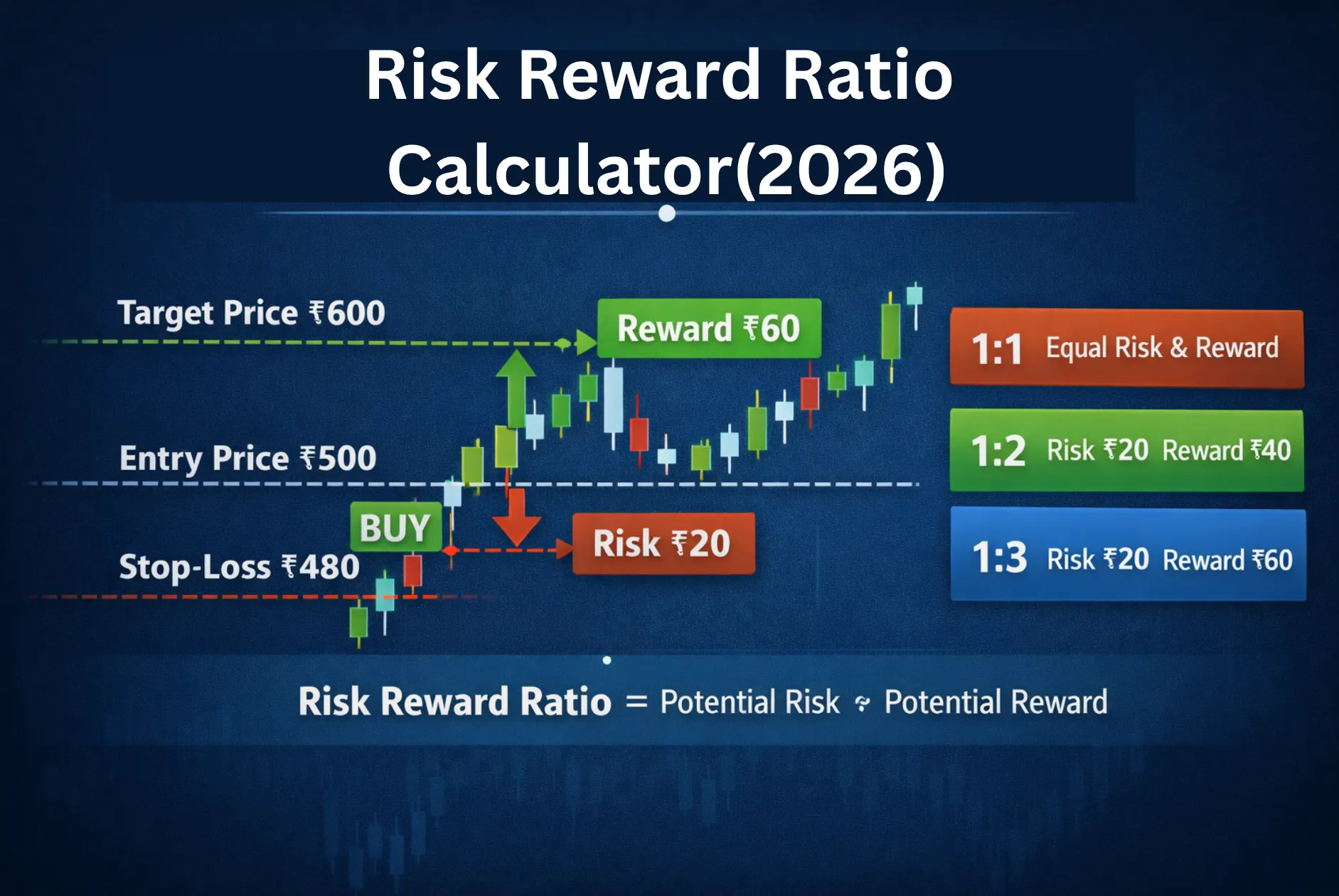
You can also pair this with our Risk/Reward Calculator to set profit targets and stop-losses based on your actual break-even, not just your entry price.
Break-Even as a Position Sizing Tool
Knowing your break-even price also helps with position sizing. If your total fees on a small position are ₹500 but your position is only ₹2,000, your break-even is 25% above entry — making the trade unworkable. Larger positions spread the fixed fee cost over more shares, reducing the break-even gap and making the trade viable.
As a rule of thumb, your target profit should be at least 3× your total transaction fees. Anything less and your risk/reward ratio becomes unsustainable over a series of trades.
What is break-even in trading?
Break-even in trading is the price at which a trade generates exactly zero profit and zero loss after all transaction costs are accounted for. It is the minimum price movement required in your favor to cover all fees (brokerage, taxes, exchange charges) and bring the trade to a neutral P&L. Exits above the break-even price are profitable; exits below result in a net loss even if the stock moved in the intended direction.
How do you calculate break-even price including trading fees?
The break-even price formula for a long trade is: Break-Even Price = Entry Price + (Total Fees ÷ Number of Shares). Total fees include brokerage on both entry and exit, STT, exchange transaction charges, GST on brokerage, SEBI turnover fee, and stamp duty. For a short trade, subtract instead of add: Break-Even Price = Entry Price − (Total Fees ÷ Number of Shares).
What is the break-even point formula for options?
For a long call option: Break-Even = Strike Price + Premium Paid + (Total Fees ÷ Lot Size). For a long put option: Break-Even = Strike Price − Premium Paid − (Total Fees ÷ Lot Size). The underlying asset must reach the break-even price at expiry for the options position to be profitable on a net basis after all costs.
Why is break-even price different from entry price?
Your break-even price is always different from your entry price because every trade incurs transaction costs — brokerage commissions, exchange fees, taxes, and spreads. These costs are paid out of your trading capital the moment you enter (and again when you exit) a position. The break-even price accounts for all these costs and represents the true minimum price at which you're not losing money on the trade.