Key Takeaways
- A content calendar is the backbone of any successful SEO strategy. This guide shows you how to build a 12-month content calendar using keyword research, topic clusters, seasonal trends, and publishing cadence to drive consistent organic traffic.
What is an SEO Content Calendar?
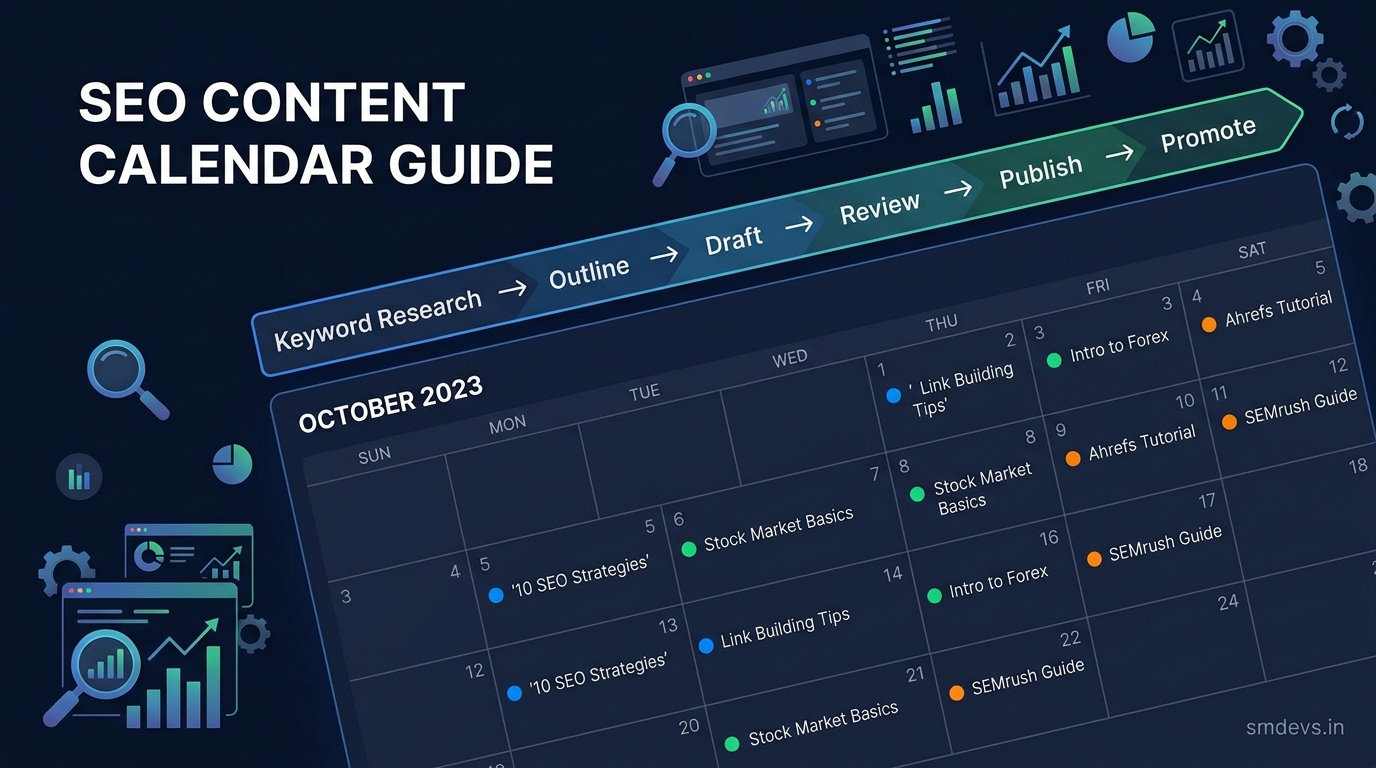
An SEO content calendar is a planning tool that organises what content you'll publish, when, and targeting which keywords. It ensures consistent publishing, strategic keyword targeting, and coordinated content efforts across your team.
Why You Need a Content Calendar
- Consistency: Google rewards sites that publish regularly
- Strategic: Ensures you target the right keywords at the right time
- Seasonal: Allows planning content around seasonal trends (Diwali, IPO season, etc.)
- Cluster building: Ensures you build complete topic clusters, not random articles
- Team coordination: Keeps writers, editors, and publishers aligned
Step 1: Define Your Content Pillars
Content pillars are the main topic categories your site covers. For an SEO tools site:
- SEO Fundamentals (beginner guides)
- Technical SEO
- Content SEO
- Link Building
- SEO Tools Guides
For a trading site: Technical Analysis, Fundamental Analysis, Trading Strategies, Indicators, Market Education.
Step 2: Build a Keyword Database
Research 100–200 target keywords across all pillars. For each keyword, record:
- Keyword phrase
- Search volume
- Keyword difficulty
- Search intent
- Content type (guide, tutorial, comparison, listicle)
- Priority score (volume × difficulty × relevance)
Step 3: Assign Content to a Cluster Structure
Group related keywords into topic clusters:
- Pillar page: "What is Technical Analysis" (broad, competitive)
- Cluster pages: RSI guide, MACD guide, Bollinger Bands, Support & Resistance, Chart Patterns
Publish cluster pages first (easier to rank), then the pillar page after cluster pages are live and linking to it.
Step 4: Plan Your Publishing Cadence
Realistic publishing schedules by team size:
- Solo blogger: 2–4 posts/week
- Small team (2–3): 5–7 posts/week
- Dedicated content team: 1–3 posts/day
Consistency > Volume. 3 posts/week every week beats 10 posts one week and zero the next.
Step 5: Align with Seasonal Trends
Plan content around predictable traffic spikes:
- January: Goal-setting, new year finance planning, tax saving
- March: Financial year end, ITR filing, mutual fund investments
- April: New financial year, IPO season
- October/November: Diwali sales, year-end investment
- December: Year-in-review, predictions for next year
These should be planned 6–8 weeks in advance to rank before the trend peaks.
Content Calendar Template
| Date | Title | Keyword | Category | Volume | Status |
|---|---|---|---|---|---|
| Week 1 | What is RSI? | rsi indicator | Trading | 22K/mo | Published |
| Week 1 | Keyword Research Guide | keyword research | SEO | 40K/mo | Draft |
| Week 2 | Bollinger Bands | bollinger bands | Trading | 18K/mo | Planned |
Tools for Content Calendar Management
- Google Sheets: Free, simple, collaborative
- Notion: Flexible, great for teams
- Airtable: Database-style with views
- Trello: Kanban view for workflow stages