Key Takeaways
- Futures = obligation to buy/sell at a set price on expiry date — both parties must fulfill
- Options = right but not obligation to buy/sell — buyer chooses, seller is obligated
- Options buyers have limited risk (premium paid); options sellers have unlimited risk
- Time decay (Theta) destroys option value every day — works against buyers
- F&O profits taxed as non-speculative business income in India (not STCG)
Futures and Options — collectively called F&O or Derivatives — are financial contracts whose value is derived from an underlying asset such as a stock, an index (Nifty 50, Bank Nifty), a commodity (gold, crude oil), or a currency pair. In India, F&O trading happens on the NSE's Futures & Options segment and is one of the largest derivatives markets in the world by contract volume.
Understanding Futures and Options is essential for any serious market participant — not just traders, but also investors who use options for hedging, businesses managing commodity price risk, and professionals who work in financial services. This guide explains both instruments clearly, from first principles.
What Are Futures Contracts?
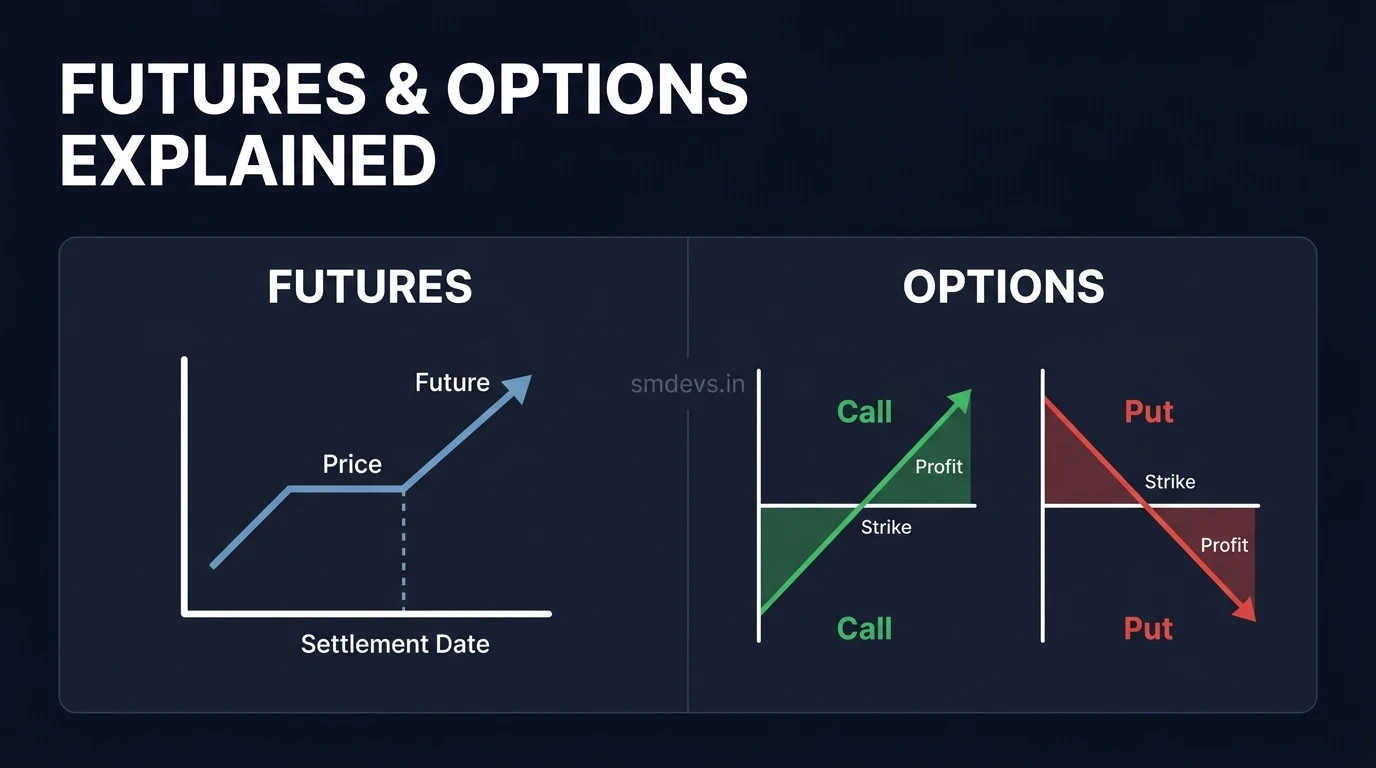
A futures contract is a standardized agreement to buy or sell a specific asset at a predetermined price on a specific future date (the expiry date). Both parties — the buyer and the seller — are legally obligated to fulfill the contract at expiry.
Key features of futures:
- Standardization: NSE futures contracts have standardized lot sizes (e.g., Nifty 50 futures = 75 units per lot), standardized expiry dates (last Thursday of the month), and standardized margin requirements.
- Leverage: Futures require only a margin deposit (typically 10–20% of contract value) rather than the full contract value. This creates significant leverage — both for gains and losses.
- Mark-to-Market (MTM): Futures positions are settled daily. Profits are credited to your account each day; losses are debited. If your margin falls below the minimum maintenance margin, your broker issues a margin call.
- Expiry & Rollover: Futures expire on the last Thursday of each month (in India). Traders who want to maintain a position past expiry must "roll over" — closing the near-month contract and opening the next-month contract.
- Settlement: Most index futures (Nifty, Bank Nifty) are cash-settled. Stock futures can be physically settled at expiry.
Example: You buy one lot of Nifty 50 futures at 24,000 (1 lot = 75 units). Contract value = 24,000 × 75 = ₹18,00,000. Margin required ≈ ₹1,35,000 (approximately 7.5%). If Nifty moves to 24,200, your profit = 200 × 75 = ₹15,000 on a ₹1,35,000 margin deposit — an 11.1% gain on margin even though Nifty only moved 0.83%.
What Are Options Contracts?
An options contract gives the buyer the right, but not the obligation, to buy or sell an asset at a specific price (the strike price) on or before the expiry date. Unlike futures, the buyer of an option pays a premium upfront for this right — and the maximum loss for the buyer is limited to the premium paid.
Two types of options:
- Call Option (CE): Gives the buyer the right to buy the underlying at the strike price. Call buyers profit when the underlying price rises above the strike price.
- Put Option (PE): Gives the buyer the right to sell the underlying at the strike price. Put buyers profit when the underlying price falls below the strike price.
Four positions in options trading:
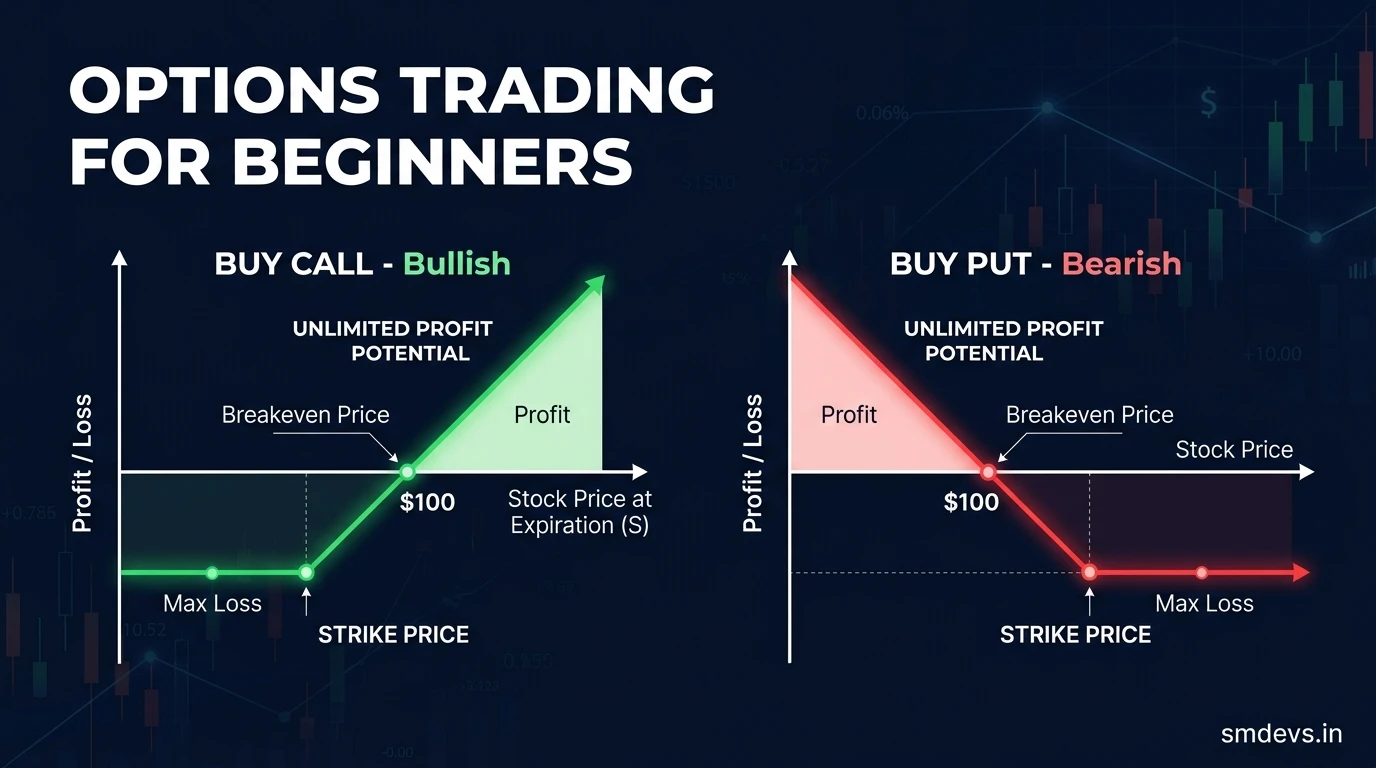
- Buy Call (Long Call): Bullish. Maximum loss = premium paid. Unlimited profit potential above strike + premium.
- Sell Call (Short Call): Bearish to neutral. Maximum profit = premium received. Unlimited potential loss if underlying surges.
- Buy Put (Long Put): Bearish. Maximum loss = premium paid. Profit increases as underlying falls below strike.
- Sell Put (Short Put): Bullish to neutral. Maximum profit = premium received. Large losses if underlying falls sharply.
Key Takeaways
- Futures obligate both parties; options obligate only the seller. The buyer of an option has a right, not an obligation — the seller is obligated to fulfill if the buyer exercises.
- Options buyers have limited risk; options sellers have unlimited risk. Premium buyers lose only their premium. Premium sellers (option writers) face potentially much larger losses.
- Time decay (Theta) destroys option value every day. Options lose value as they approach expiry, all else equal. This works against option buyers and in favour of option sellers.
- India is the world's largest derivatives market by contract volume. NSE F&O segment sees over 10 crore contracts traded daily — more than any other exchange globally.
- F&O trading requires SEBI's mandatory income and net worth criteria. All traders must declare income, net worth, and trading experience before being allowed to trade F&O.
Key Options Concepts Every Trader Must Know
Strike Price and Moneyness
- In-the-Money (ITM): A call option is ITM when the underlying price is above the strike price. A put option is ITM when the underlying is below the strike price. ITM options have intrinsic value.
- At-the-Money (ATM): Strike price equals (or is very close to) the current underlying price. ATM options have the highest time value and are the most actively traded.
- Out-of-the-Money (OTM): A call is OTM when underlying is below strike; a put is OTM when underlying is above strike. OTM options have no intrinsic value — only time value. They are cheaper but expire worthless most of the time.
The Greeks — How Options Are Valued
| Greek | What It Measures | Practical Meaning |
|---|---|---|
| Delta (Δ) | Rate of change in option price per ₹1 move in underlying | ATM call has Delta ≈ 0.5 (option gains ₹0.50 per ₹1 Nifty move) |
| Theta (Θ) | Time decay — option value lost per day | Option sellers collect Theta; buyers pay it. Accelerates near expiry. |
| Vega (ν) | Sensitivity to implied volatility changes | Rising IV increases option premium; falling IV decreases it |
| Gamma (Γ) | Rate of change in Delta | High Gamma near ATM at expiry — options can swing wildly |
Implied Volatility (IV)
Implied Volatility is the market's expectation of future price movement embedded in the option premium. High IV means options are expensive (buyers pay more, sellers receive more). Low IV means options are cheap.
India VIX (the Indian volatility index) reflects market-wide fear and uncertainty — when VIX rises, option premiums expand; when VIX falls, premiums contract. Option sellers prefer low-IV environments (cheaper options to sell, less risk of large moves).
Futures vs. Options — Which Is Better?
| Factor | Futures | Options (Buying) | Options (Selling) |
|---|---|---|---|
| Risk | Unlimited (both sides) | Limited to premium | Unlimited (theoretically) |
| Margin required | High (MTM daily) | Only premium cost | High (similar to futures) |
| Time decay effect | Neutral | Negative (hurts buyer) | Positive (helps seller) |
| Directional sensitivity | Very high (1:1 with underlying) | Moderate (Delta) | Moderate |
| Best for | Directional trades, hedging | Defined-risk directional bets | Premium collection, hedging |
| Complexity | Medium | Medium | High |
Common F&O Strategies
For Beginners — Buying Calls and Puts
The simplest way to start with options: buy a call when you expect the underlying to rise, buy a put when you expect it to fall. Risk is limited to premium paid. Start with ATM or slightly ITM options for better Delta and lower decay risk.
Covered Call
You own the underlying stock (or futures) and sell a call option against it to collect premium income. If the stock stays flat or rises modestly, you keep the premium. If the stock rises above the strike, your shares are called away at the strike price. The most common options strategy among equity investors for enhancing returns.
Bull Call Spread
Buy a lower-strike call and sell a higher-strike call in the same expiry. Reduces premium cost but caps the maximum profit at the difference between the two strikes. Suitable for moderate bullish views with defined risk.
Iron Condor
Sell an OTM call and an OTM put, while buying a further OTM call and put for protection. Collects premium if the underlying stays within a range. Popular with premium sellers who expect low volatility. Risk is limited; maximum profit is the net premium collected.
F&O Taxation in India
F&O profits are treated as non-speculative business income in India — not capital gains. Key tax rules:
- Profits taxed at income tax slab rates (not flat capital gains rates)
- F&O losses can be set off against any business income (except salary) in the same year
- F&O losses can be carried forward for up to 8 years
- Tax audit mandatory if turnover exceeds ₹1 crore (or ₹10 crore with 95%+ digital transactions)
- STT (Securities Transaction Tax) is charged on options at 0.0625% on premium for buying, 0.125% on strike value at exercise
Frequently Asked Questions
What is the difference between futures and options in simple terms?
Futures: Both buyer and seller are obligated to complete the deal at expiry — no choice. Options: The buyer has a choice (right but not obligation). The seller of an option is obligated to fulfill if the buyer exercises their right. Think of futures as a binding forward contract between two parties, and options as buying an insurance policy — you pay a premium for the protection (right), and if you don't need it, the premium is lost but your downside was limited.
Who should NOT trade F&O?
F&O is not suitable for: beginners who haven't profitably traded cash equities for at least 1–2 years; anyone without a clear understanding of leverage and its downside risks; traders without a defined strategy and risk management framework; and anyone who cannot afford to lose the capital they are deploying. The leverage in F&O can accelerate losses to account-wipeout levels much faster than cash equity trading.
What is the minimum amount to start F&O trading in India?
Nifty 50 futures require approximately ₹1.2–1.5 lakh in initial margin per lot (varies by volatility and broker). Bank Nifty requires approximately ₹40,000–60,000. Stock futures vary widely. For buying options, you only need to pay the premium — a single ATM Nifty option can cost ₹5,000–15,000 depending on IV and time to expiry. However, trading with only the minimum margin leaves no buffer for adverse moves. Most advisors recommend at least 3–5× the minimum margin as your trading capital.
What is weekly vs. monthly expiry in F&O?
In India, index options (Nifty, Bank Nifty, Sensex, etc.) have weekly expiry contracts — expiring every Thursday. Monthly expiry contracts expire on the last Thursday of each month. Stock F&O contracts have only monthly expiry. Weekly options are popular with active traders for short-duration premium collection and directional bets, but they have very high Theta decay (time decay) that can destroy option value rapidly, especially in the final 2–3 days before expiry.
Your Next Step
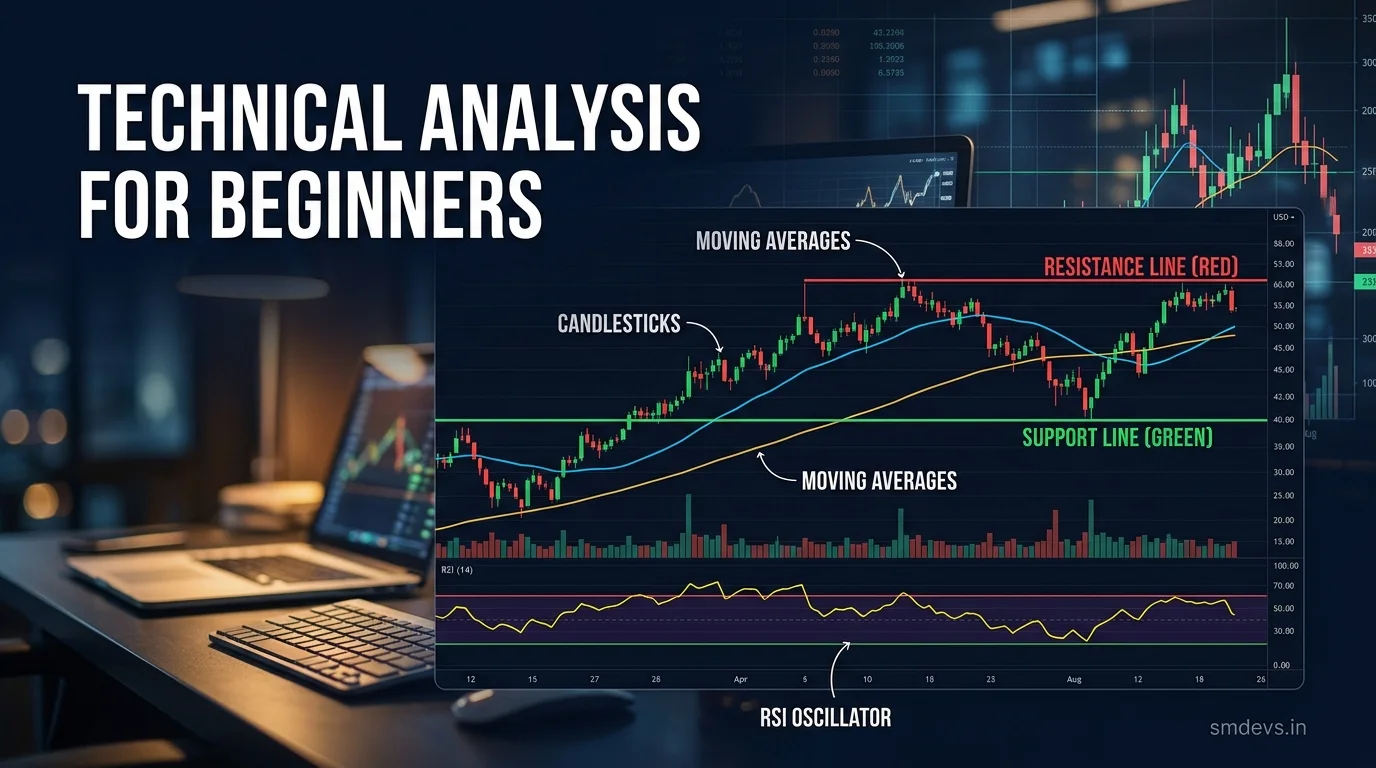
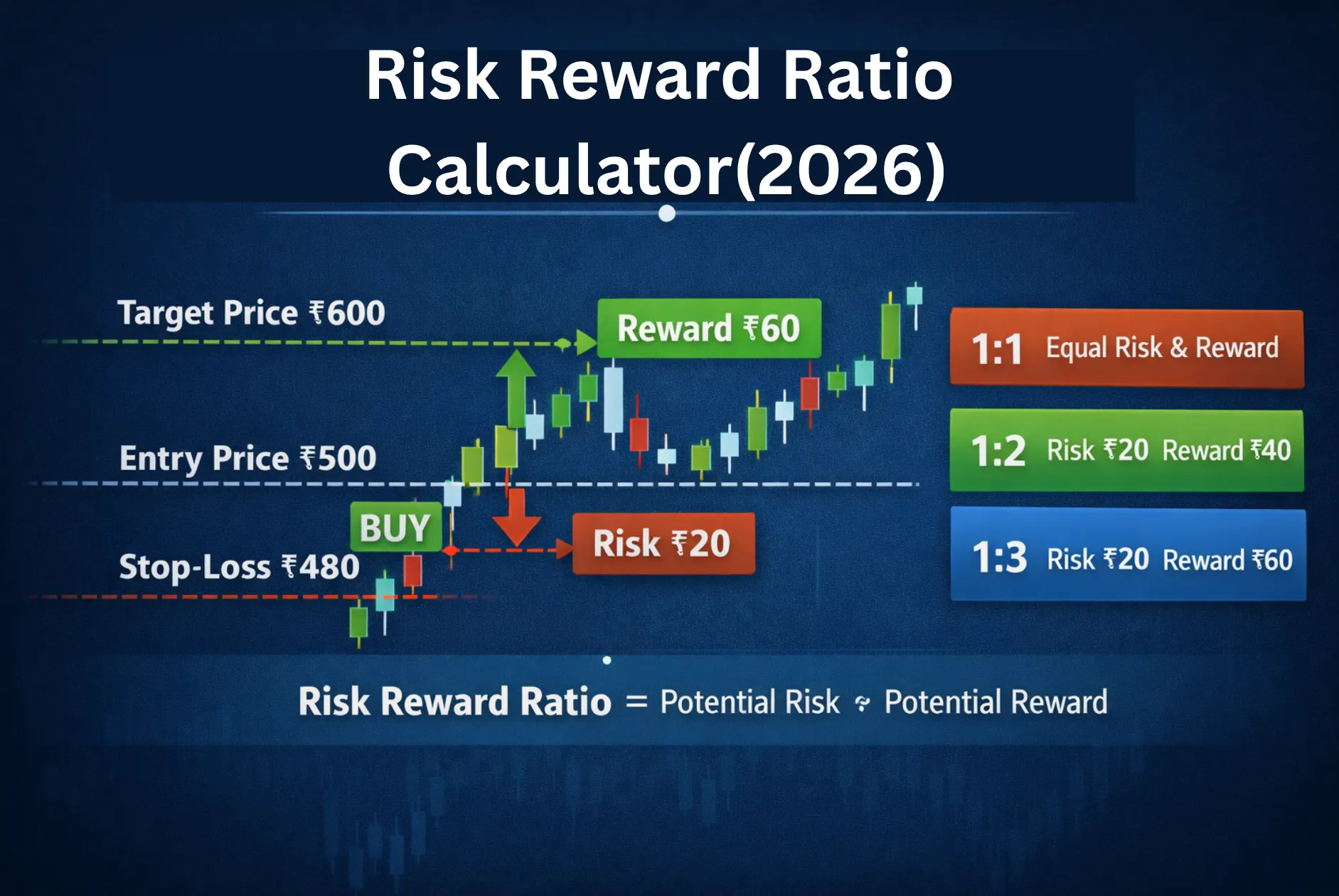
Before trading F&O, master cash market technical analysis: study the Technical Analysis for Beginners guide and the 5 Golden Rules of Trading Risk Management infographic. Use the free trading calculators to practice position sizing before putting real capital at risk.