SIP Guide India — Power of Rupee Cost Averaging & Compounding
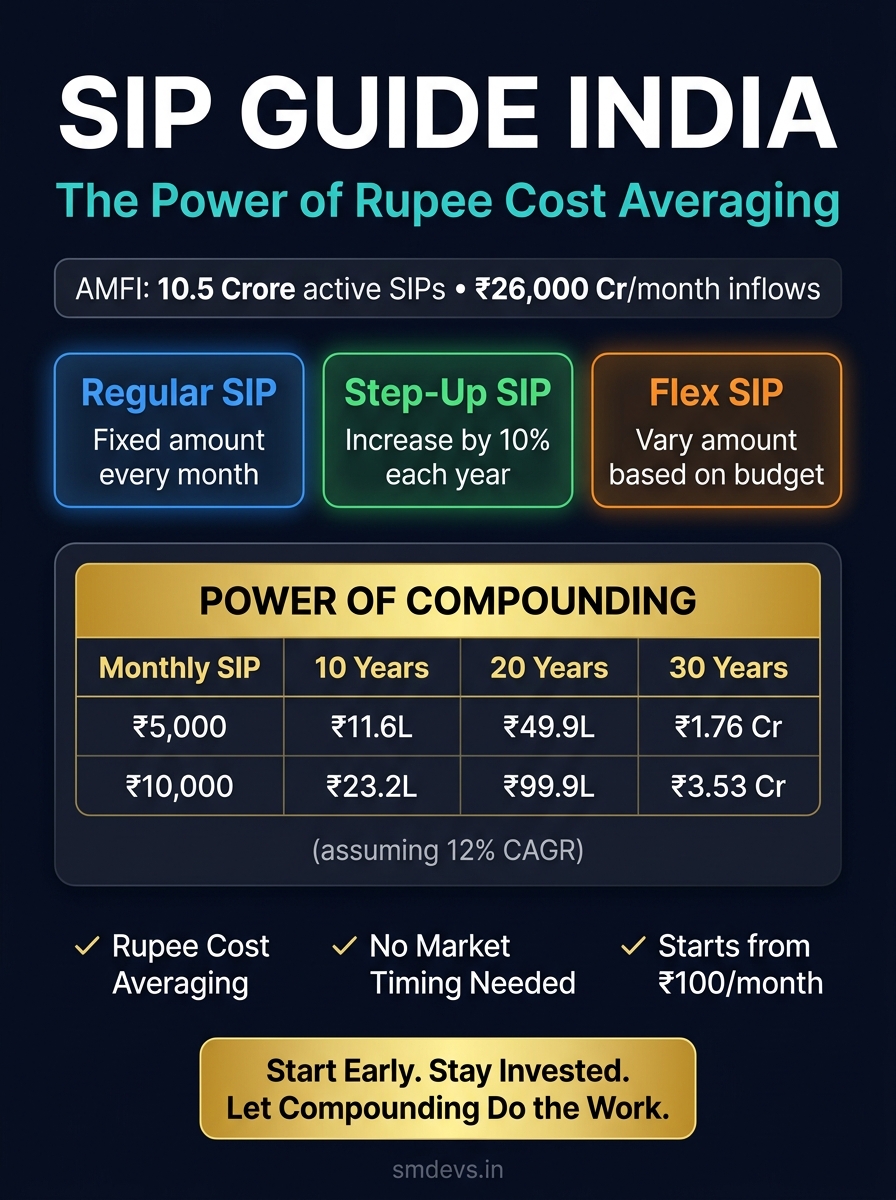
India's SIP stats, 3 types of SIPs, compounding returns table (₹5K/month → ₹1.76 Cr in 30 years at 12%), and 3 core benefits — in one clean reference.
Click to open full-screen view · Free to share with attribution
About This Infographic
Systematic Investment Plans (SIPs) are India's most popular retail investment vehicle, with 10.5 crore active SIP accounts and ₹26,000 crore flowing in every month as of 2026 (AMFI data). This infographic explains everything a beginner needs to know in a single visual. The three SIP variants are covered: Regular SIP (fixed monthly amount — the most common and easiest to start), Step-Up SIP (increase contribution by 10% each year to match income growth — most powerful long-term), and Flex SIP (vary the amount based on monthly budget — best for variable income earners). The compounding returns table is the centrepiece: a ₹5,000/month SIP grows to ₹11.6 lakh in 10 years, ₹49.9 lakh in 20 years, and ₹1.76 crore in 30 years at 12% CAGR. For ₹10,000/month the figures double. Three core SIP benefits are highlighted: Rupee Cost Averaging (automatically buy more units when markets fall, fewer when they rise — averaging your cost down over time), No Market Timing Required (remove the need to predict market tops and bottoms), and Low Minimum Start (as little as ₹100/month on many platforms). The closing callout drives home the cardinal principle: start early, stay invested, and let compounding do the work.
Related Infographics

5 Golden Rules of Trading Risk Management
The 5 non-negotiable rules every trader must follow to protect capital and stay in the game long-term.

Position Sizing Formula — How Much to Risk Per Trade
The exact formula and worked example for calculating the perfect position size on every trade — no guesswork, no over-leveraging.
MACD Indicator — 4 Trading Signals You Must Know
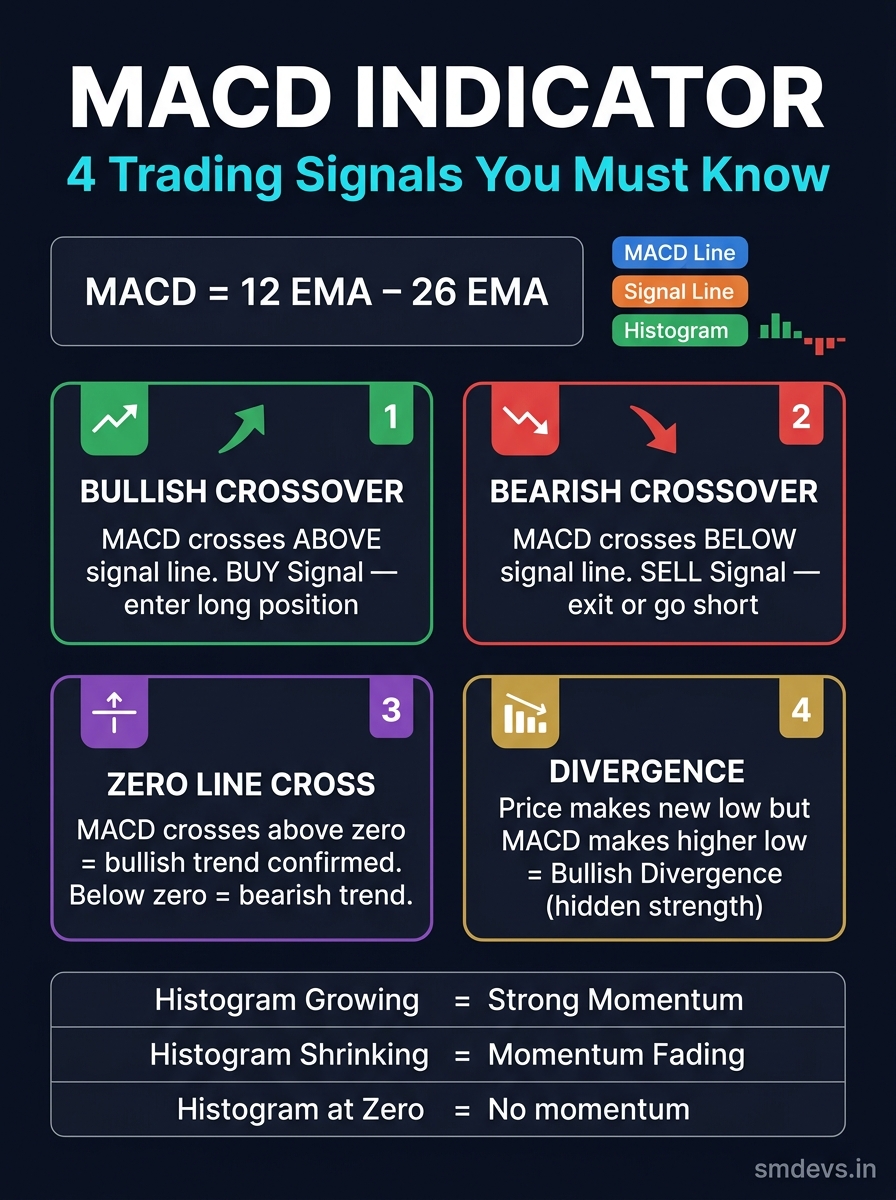
All 4 MACD signals explained: bullish crossover, bearish crossover, zero-line cross, and divergence — with the histogram quick-reference table.
Need Help Growing Your Website?
Use our free SEO tools to audit and optimize your site — no signup required.